Chancellor Healey unveils £150m Northern scale-up fund to back start-ups and university spin-outs
Key Takeaways
- •Chancellor John Healey will commit £150m from the British Business Bank's existing budget to support start-ups and university spin-outs in five Northern English cities: Liverpool, Manchester, Leeds, Sheffield and Newcastle.
- •The fund is intended to support fast-growing firms and attract further private investment, backing Prime Minister Andy Burnham's devolution agenda of delivering growth in every part of the country.
- •The focus on regional scale-ups addresses the concentration of UK equity investment in London and the South East, with all five cities hosting research-intensive universities producing spin-outs in sectors such as advanced manufacturing and health technology.
- •Healey, who delivers his first Budget next month, will argue that city regions with real power and public investment are needed to unlock private investment, while business leaders are calling for action on employment costs, business rates and energy bills.
- •The Conservatives criticised the announcement as a policy-light word salad, with shadow chancellor Andrew Griffith citing concerns over potential tax rises, high government borrowing rates, and the absence of defence spending plans.
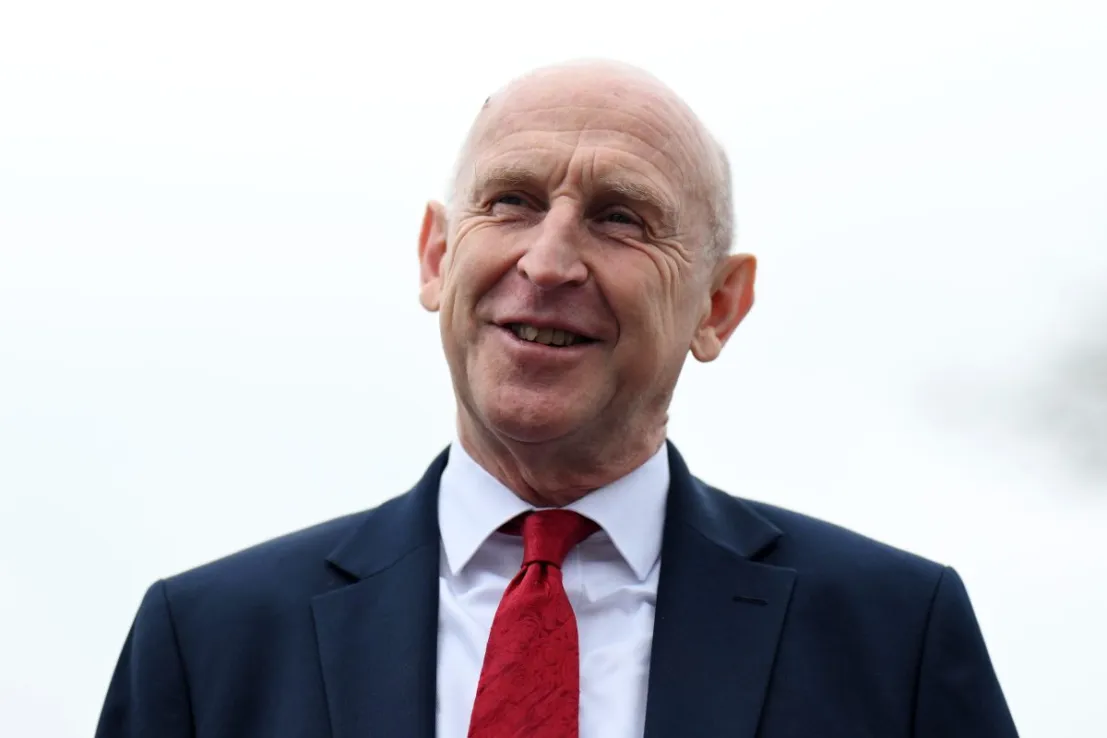
Chancellor John Healey is to commit £150m to start-ups in the North of England as part of the government's effort to use devolution to drive economic growth.
Healey will announce a new fund designed to back university spin-outs and other start-ups in Liverpool, Manchester, Leeds, Sheffield and Newcastle. The funding will be drawn from the British Business Bank's existing budget and unveiled in a speech at a leading British manufacturing site. The British Business Bank is the government-owned development bank that channels public money through private fund managers to support smaller businesses, and has previously run regional investment programmes such as the Northern Powerhouse Investment Fund, which backs early-stage and growing companies across the North.
He is expected to say the initiative will be used "to get behind the most innovative and fast-growing firms. This is not sentimentality, it's supply side economics".
The announcement is intended to provide economic backing to Prime Minister Andy Burnham's ambitious devolution drive, which he says will deliver "growth in every postcode". The £150m of government funding is designed to attract further private investment into Northern businesses. The focus on scale-ups reflects a long-standing feature of the UK venture market: a large share of equity investment is concentrated in London and the South East, and successive governments have sought to widen access to later-stage capital for companies outside those hubs. The five cities named all host research-intensive universities that have produced spin-outs in sectors such as advanced manufacturing, health technology and materials science.
Healey: 'Stronger state will deliver growth'
Healey is expected to say he will provide backing to "city regions with real power, supported by a stronger state, creating local industrial strategies and using public investment to unlock private investment, to support our innovation economy, and to create the new jobs their areas need."
The Chancellor will set out the government's vision for creating "good growth" across the country, saying: "Ask an economist what growth is and you'll get a number. But ask the country and you'll get a different answer.
"A young person getting a new job in a company that's on the up. A sole trader winning a new contract that pays for a holiday with their kids. A business winning a new export order, giving the community around it a new lease of life."
Treasury officials said the Prime Minister believes he has set out a "clear diagnosis" of the problems facing the UK. Burnham has blamed neoliberalism, de-industrialisation and austerity for "decades of low growth". The reference to de-industrialisation speaks to the North's economic history, where the decline of traditional manufacturing industries from the 1980s onwards left lasting gaps in employment and productivity compared with the South East.
The Northern scale-up fund forms part of the government's broader push to convince voters and business leaders that it has the right vision for delivering economic growth.
"The solution is a fundamental shift that starts with putting power in the right places. The next chapter of Britain's growth story will be written in more places," the Chancellor will say.
'Policy-light word salad'
Healey will also set out how the newly formed No10 North fits into his economic plans for the country, saying it will work as part of a "dual mission" with the Treasury to "drive growth and productivity".
"Instead of getting in the way with complexity and red tape, we need a strong, strategic centre wired to enable local leaders and their ambitions," he will say.
"I want to see wealth creation in this country. I want to see businesses make a profit. And to create the conditions for that we need an active, accountable state at all levels to remove blockages and create the conditions for more investment."
The government's pledge to deliver growth in the UK's regions comes as Healey prepares to deliver his first Budget as Chancellor next month. He faces calls from business leaders to tackle the "cost of doing business" by easing employment costs, reforming business rates and lowering energy bills for firms.
The Conservatives have criticised the announcement, describing the trail of the Chancellor's speech as a "policy-light word salad".
Shadow chancellor Andrew Griffith said: "It will do little to comfort hard-working families and businesses across the country who are worried about more tax rises or the fact that government borrowing rates are near a 28-year high.
"We are facing serious threats from Russia and Iran on our doorstep, as well as threats to the Falkland Islands. Yet the Chancellor, the man who resigned over defence spending, seemingly does not want to mention our Armed Forces or how we will reach 3 per cent of GDP on defence."
