CFTC warns crypto ATM users that transfers are immediate and irreversible
Key Takeaways
- •The CFTC's consumer advisory cautions that crypto ATM transfers settle instantly and cannot be reversed, unlike credit card or bank payments that can often be disputed.
- •Identity verification at crypto ATMs fulfills anti-money-laundering obligations for FinCEN-registered operators and does not provide any mechanism to undo a transaction.
- •Crypto ATMs generally impose higher fees than online exchanges, adding cost to the convenience of cash purchases.
- •The FBI's Internet Crime Complaint Center warns that scammers frequently steer victims to crypto ATMs, and the FTC has reported a sharp surge in such schemes.
- •Some state lawmakers are debating transaction caps and refund requirements that could turn advisory warnings into binding rules for kiosk operators.
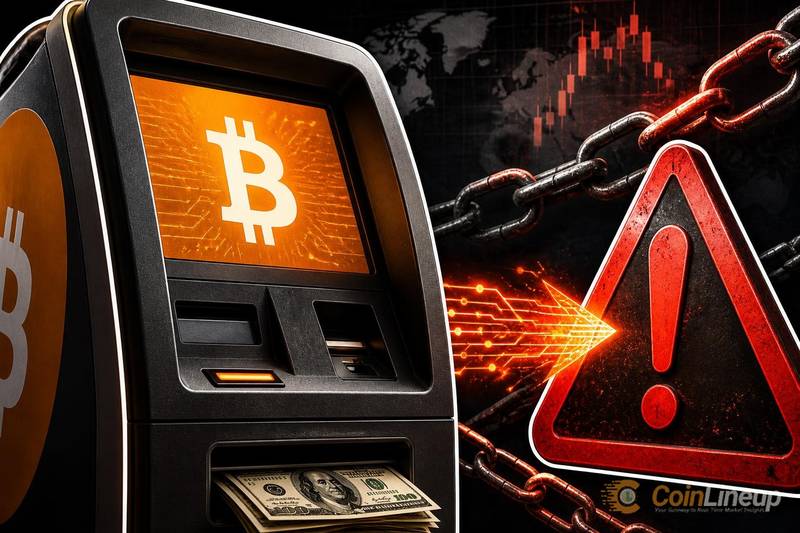
The Commodity Futures Trading Commission, the U.S. regulator that oversees derivatives and many crypto markets, is warning crypto ATM users that transactions are often immediate and irreversible. In plain terms: once you send the money, you usually cannot get it back. This CFTC crypto ATM warning is a consumer alert intended to protect everyday people, not a rule for traders.
What “immediate and irreversible” means
A crypto ATM lets users buy digital currency with cash, similar to a standard bank ATM. But the CFTC cautions that these transfers settle right away and cannot be undone, according to the agency’s consumer advisory:
The finality comes from how the money actually moves: the machine sends cryptocurrency directly to a wallet address on a public blockchain, and no bank or card network sits in the middle with the authority to reverse it.
That is very different from a credit card or bank payment, which can often be disputed or clawed back. A crypto ATM transfer works differently: once a user presses confirm, the funds move permanently. Identity checks at the machine are part of anti-money-laundering compliance for operators registered with the Treasury Department’s FinCEN unit, not a consumer safeguard — screening a buyer does not create a way to unwind a transaction. The cash convenience also tends to cost more, as crypto ATMs generally charge higher fees than online exchanges.
This is a consumer-facing warning about transaction finality. The CFTC’s focus is on the risk to the person standing at the machine, not on the businesses operating them. The regulator has broadly emphasized this kind of education in its learning resources for the public:
Why irreversibility raises the stakes
When a payment cannot be reversed, mistakes can become costly very quickly. If someone sends funds to the wrong address or falls for a scam, there is often no path to recovery.
Fraud makes the problem worse. The FBI’s Internet Crime Complaint Center has warned that criminals frequently direct victims to crypto ATMs precisely because the payments are hard to reverse, in a public service announcement:
The scripts behind these cases are rarely exotic. Federal consumer alerts describe callers posing as government agents, tech-support staff, or online love interests, all steering the victim toward a machine, and the same alerts stress that legitimate agencies and banks do not demand payment through a crypto ATM.
Speed also works against users. If something seems wrong after confirmation, it is usually too late. Scammers rely on that pressure, pushing people to act before they have time to pause and think.
Crypto ATM scams have surged. The Federal Trade Commission reported a sharp rise in these schemes, as covered by Forbes: That context is part of why regulators continue to repeat the same warning.
What to check before pressing confirm
Because the transaction cannot be undone, caution has to happen before the transfer is sent. Users should slow down and verify who is actually asking for the money.
A simple approach helps: confirm that the recipient address is correct, make sure no one is pressuring you to rush, and never send crypto to someone you have not met over the phone or online. Those prevention steps connect directly to the CFTC’s core point about finality.
If a transfer has already gone through, regulators ask for fast reporting rather than silence. The FBI takes complaints at ic3.gov, the FTC at ReportFraud.ftc.gov, and the CFTC through its own complaint channels; even when funds cannot be brought back, those reports feed the enforcement cases agencies build against fraud networks.
Regulators are increasingly leaning on consumer education alongside formal rulemaking. The CFTC has signaled that it will keep advancing crypto oversight even without the CLARITY Act, and warnings like this one are part of that effort: https://coinlineup.com/cftc-chair-crypto-market-rules-without-clarity-act. At the state level, some lawmakers have weighed going beyond advisories, discussing transaction caps and refund requirements for crypto kiosk operators. What to watch is whether that debate moves from advisory language to binding kiosk rules.
It also echoes other government efforts, such as the wave of crypto tax warnings sent by the UK’s HMRC: https://coinlineup.com/hmrc-sent-81172-crypto-tax-warnings-in-2025-26.
For newcomers who hold a small amount of crypto, the takeaway is simple. A crypto ATM is fast and final, so every confirmation should be treated like handing over cash that may never come back. That same finality is one reason fraud cases, including large crypto Ponzi schemes, can be so difficult for victims to recover from: https://coinlineup.com/crypto-ponzi-suspect-faces-25-charges-after-deportation.
Disclaimer: This article is for informational purposes only and does not constitute financial or investment advice. Cryptocurrency and digital asset markets carry significant risk. Always do your own research before making decisions.
