CFTC Grants Kraken No-Action Relief to Restart Regulated Derivatives Trading
Key Takeaways
- •The CFTC granted no-action relief on July 24 to Kraken Derivatives Exchange Inc., formerly Small Exchange Inc., allowing the dormant platform to resume regulated derivatives trading.
- •Kraken's parent company Payward acquired Small Exchange in late 2025 after the platform had been inactive for more than a year, which would have otherwise required a lengthy reinstatement process.
- •The no-action position is time-limited and subject to specific conditions, including an October 2026 deadline for compliance.
- •The relief supports Kraken's broader expansion into US-regulated derivatives, where it will compete with rivals such as Coinbase and CME Group.
- •The CFTC has previously issued similar no-action letters to other crypto-related entities, including Bitnomial Exchange and Bitnomial Clearinghouse earlier this year.
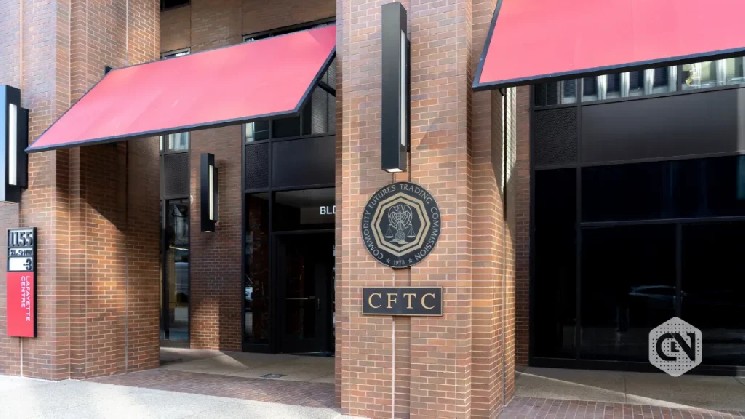
CFTC Grants Kraken No-Action Relief to Restart Regulated Derivatives Trading
On July 24, the Commodity Futures Trading Commission (CFTC) announced that it is granting no-action relief to Small Exchange — now renamed Kraken Derivatives Exchange Inc. and owned by Kraken — concerning its Designated Contract Market (DCM) procedures. The relief gives the platform greater flexibility to resume regulated derivatives trading. A DCM is a CFTC-regulated exchange that can list and trade futures and options products subject to the agency's oversight, and Small Exchange had previously built its model around smaller-sized contracts aimed at retail participants.
In a letter issued the same day, CFTC staff granted temporary relief from dormant DCM rules for the exchange. Kraken's parent company, Payward, acquired Small Exchange in late 2025, but the platform had been inactive for more than a year. Without the relief, it would have remained dormant and been forced to undergo a lengthy reinstatement process.
The no-action position will allow Kraken Derivatives Exchange to list products and restart trading without immediate risk of enforcement action, provided it complies with certain conditions and meets an October 2026 deadline. The move also supports Kraken's broader effort to expand its regulated derivatives business within the United States, where rivals including Coinbase — which closed its acquisition of crypto derivatives venue Deribit earlier this year — and incumbent CME Group have been deepening their own digital asset derivatives offerings.
The official CFTC statement read: "The Commodity Futures Trading Commission's Division of Market Oversight today announced it has issued a no-action letter to Kraken Derivatives Exchange Inc., formerly Small Exchange Inc., a designated contract market, which addresses certain procedures related to dormancy. The no-action position is time-limited and subject to the terms and conditions in the division's no-action letter."
CFTC's No-Action Approach as Crypto Regulation Evolves
The no-action letter represents significant relief for Kraken, enabling the exchange to leverage Small Exchange's existing DCM status to offer regulated futures and derivatives with fewer procedural hurdles. It also positions Kraken to extend its operations further into traditional finance beyond its core cryptocurrency offerings. For major exchanges, derivatives typically generate higher trading volumes and per-trade revenue than spot markets, making regulated derivatives venues a key area of competition as institutional participation in digital assets grows.
Kraken has been expanding into several emerging markets, including tokenized securities. Payward's xStocks platform is already tokenizing Hong Kong-listed equities and is preparing to add stocks from the UK, Europe, and South Korea, though these additions still require regulatory approval. This expansion follows the launch of US tokenized equities and is designed to give users round-the-clock on-chain access to global markets. Kraken has also partnered with GTN for execution, custody, and recordkeeping services.
Meanwhile, Kraken's Federal Reserve master account remains unused several months after approval — the first such account ever granted to a digital asset bank. The limited "skinny" account provides direct access to Federal Reserve payment systems but comes with restrictions. Kraken has described it as a major achievement for its institutional infrastructure, though it remains under regulatory review.
Arjun Sethi, co-CEO of Payward and Kraken, stated in the press release: "With a Federal Reserve master account, we can operate not as a peripheral participant in the U.S. banking system, but as a directly connected financial institution. For a Wyoming SPDI structured on a full-reserve model, this creates a uniquely resilient foundation. It gives us the ability to settle directly on Fedwire, reduce dependency on correspondent banks, and integrate regulated fiat liquidity directly into digital asset markets."
The CFTC's relief follows a pattern of targeted regulatory accommodations for cryptocurrency companies. The agency has previously issued similar letters for event contracts and swap reporting, aiming to balance industry innovation with appropriate oversight. These letters carry strict conditions and deadlines, allowing staff to monitor outcomes without rushing to enact new rules.
Earlier this year, the CFTC also granted a no-action letter to Bitnomial Exchange, LLC, a designated contract market, and Bitnomial Clearinghouse, LLC, a registered derivatives clearing organization.
Separately, on July 16, Kraken announced the launch of a new suite of options contracts on Bitcoin ($BTC) and Ether ($ETH), expanding access to the digital asset derivatives market for a broader base of professional and institutional clients. Alexia Theodorou, Director of Derivatives at Kraken, said: "Crypto options activity is still a fraction of what it is in traditional markets but the gap is closing as professional and institutional capital continues to move into digital assets."

