US court orders Fundsz operators to pay $31 million over crypto and precious metals fraud scheme
Key Takeaways
- •A US federal court ordered Fundsz operators Brian Early and Alisha Ann Kingrey to pay $15.73 million in restitution and $15.75 million in civil penalties, totaling roughly $31 million.
- •The CFTC announced the default judgment on September 30, 2026, meaning the defendants never responded to the 2023 complaint and remedies were imposed without a trial.
- •Fundsz promoters claimed weekly returns exceeding 3% from a proprietary algorithm and said a $2,500 investment could grow to $1 million in four years, but the court found the returns shown to clients were fabricated.
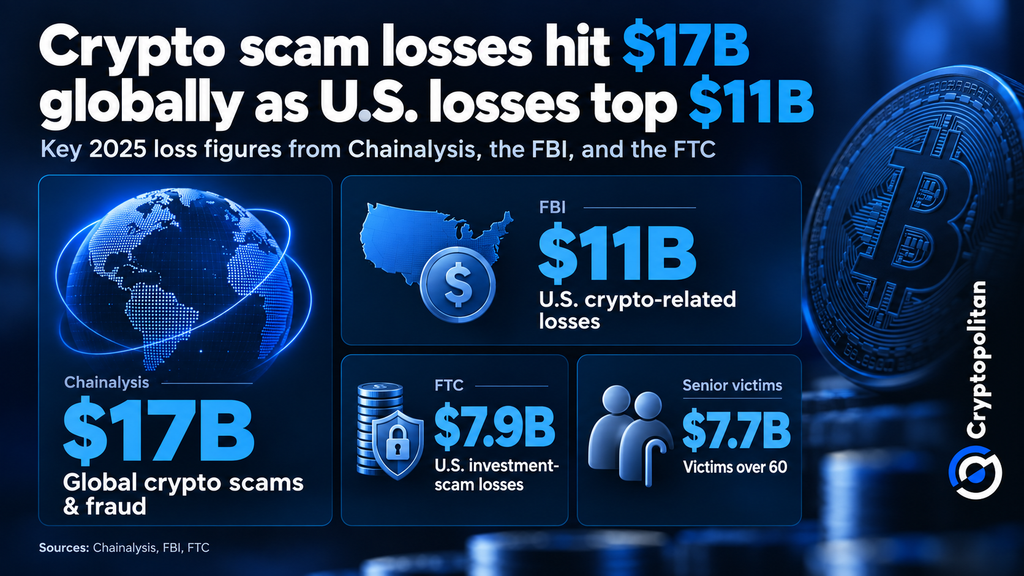
- •The judgment lands amid wider crypto-fraud losses, with the FBI recording more than $11 billion in cryptocurrency-related complaint losses in 2025 and Chainalysis estimating at least $14 billion lost to crypto scams that year.
- •The CFTC has cautioned that repayment orders do not guarantee full recovery when defendants lack sufficient assets, leaving the final restitution rate for victims unknown.
A United States federal court has ordered Fundsz operators Brian Early and Alisha Ann Kingrey to pay roughly $31 million in restitution and civil penalties over a digital-asset and precious-metals investment scheme.
The ruling stems from Commodity Futures Trading Commission v. Larralde et al., Case Number :23-cv-1445-WWB-DCI, filed in the US District Court for the Middle District of Florida on July 31, 2023. The CFTC, the US derivatives regulator, announced the default judgment on September 30, 2026, in a press release, more than three years after the case was filed. A default judgment is issued when defendants fail to answer or otherwise respond to a complaint; the allegations therefore went uncontested, and the court imposed remedies without a trial. Under the order, Early and Kingrey must pay $15.73 million in restitution, which is directed to harmed customers, and $15.75 million in civil monetary penalties, which are payable to the government.
What the CFTC says Fundsz promised
In a complaint filed in 2023, the CFTC alleged that Fundsz promised weekly returns exceeding 3%, supposedly generated by a proprietary algorithm that traded cryptocurrencies and precious metals. Promoters further claimed that a $2,500 investment could grow to $1 million within four years.
According to the regulator, customer funds were never traded as represented, and the returns shown to clients were fabricated. The court found that both Early and Kingrey made material misrepresentations about profit expectations, the degree of risk, and the investment's past performance.
The allegations mirror warning signs flagged by the FTC, particularly investment offers that downplay risk while promising unusually high returns.
The losses behind the headline figure
While significant, the Fundsz judgment is modest against the broader landscape of investment fraud, which extends well beyond any single scheme. The FBI recorded 181,565 cryptocurrency-related complaints in 2025, with losses totaling more than $11 billion. Investment fraud accounted for roughly 49% of total fraud losses, and the over-60 age group lost $7.7 billion, a 37% increase from 2024.
Also in 2025, the FTC reported scam losses of more than $7.9 billion, with the median loss per scam exceeding $10,000.
According to a Chainalysis report, at least $14 billion was lost to crypto-based scams and fraud in 2025, a figure that could surpass $17 billion once unidentified illicit addresses are included. The average loss per scam rose 253% to $2,764.
Enforcement rises, but the rulebook is uneven
Fundsz is not an isolated case. Cryptopolitan reported in August that the SEC and CFTC separately sued Goliath Ventures and founder Christopher Delgado. The SEC alleged the firm raised at least $425 million from more than 1,300 investors, while the CFTC cited roughly $397 million from about 1,600 customers.
Cross-border enforcement remains more difficult. An October 2025 review by the Financial Stability Board found significant gaps and inconsistencies in national crypto frameworks, warning that uneven implementation creates opportunities for regulatory arbitrage and complicates oversight of a global market.
What to watch next
The immediate question is how much of the ordered restitution victims ultimately recover. The CFTC has cautioned that repayment orders do not guarantee full recovery when defendants lack sufficient assets, leaving the final recovery rate uncertain.
Source: Cryptopolitan

