CFTC Clears Passive Trading Software Providers From Introducing Broker Registration
Key Takeaways
- •The CFTC's Market Participants Division issued Staff Letter 26-25 on Sept. 17, extending no-action relief to qualifying passive software providers that would otherwise need to register as introducing brokers or associated persons.
- •Eligibility rests on ten conditions, including a direct customer or membership relationship between users and the registered trading entity, user access to the firm without the software and a notice filing that accepts CFTC jurisdiction.
- •Providers that take custody of customer assets or control trade execution fall outside the covered framework, and the relief leaves CFTC authority over fraud, manipulation, and unlawful solicitation intact.
- •The letter broadens an approach first used in Staff Letter 26-09, which addressed a self-custodial crypto wallet provider, making similar relief available to passive software developers meeting the stated criteria.
- •The CFTC acted on the same day the SEC announced temporary, conditional relief for certain tokenized stock trading venues, and both moves follow the Senate's failed 49-50 cloture vote on the CLARITY Act.
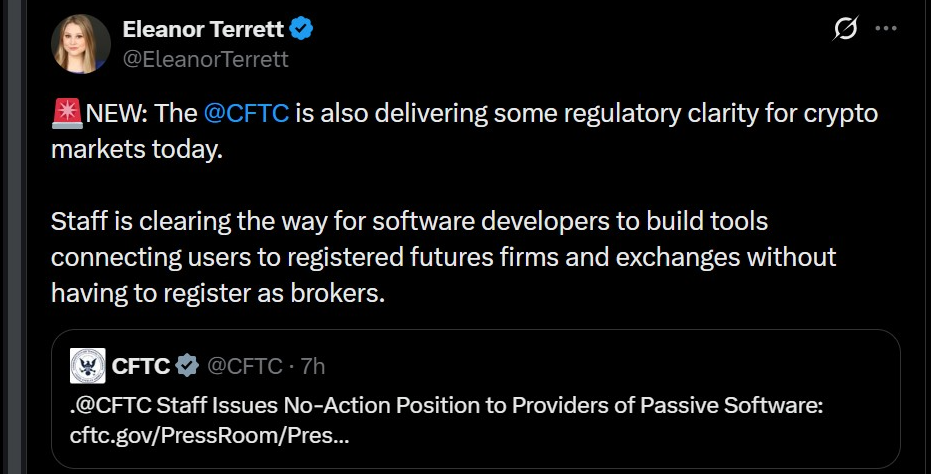
The Commodity Futures Trading Commission has opened a broader regulatory path for passive software providers that connect users with regulated derivatives markets, granting conditional relief from introducing broker registration requirements.
The agency's Market Participants Division issued Staff Letter 26-25 on Sept. 17. The letter states that CFTC staff will not recommend enforcement against qualifying providers, or relevant personnel, for failing to register as introducing brokers or associated persons. The relief remains conditional and applies only to the activities described in the staff letter.
A Conditional No-Action Path, Not a Blanket Exemption
The staff position applies only when providers offer and market software that helps users trade through firms and markets registered with the Commission. The agency tied the relief to specific conditions rather than granting a broad exemption from registration rules.
Introducing broker registration was built for intermediaries that solicit customers and route their orders to registered futures commission merchants, a framework that long predates software-based market access. Staff Letter 26-25 (announced via press release) expands an approach the CFTC used in Staff Letter 26-09. That March letter covered a self-custodial crypto wallet provider whose software allowed users to access regulated derivatives trading. The new letter makes similar relief available to passive software providers that fit the stated criteria, and the CFTC lists it under rules covering introducing brokers, registration, and associated persons.
Ten Conditions Define Eligibility
The no-action position includes 10 conditions for providers seeking the registration relief. The provider and personnel involved in the covered activities cannot face statutory disqualification. Users must hold a direct customer or membership relationship with the registered entity that handles their trading, rather than with the software provider.
Users must also retain the ability to access the registered firm or market without relying on the passive software. In addition, the provider cannot publish advertising or promotional material that would require advance approval from the National Futures Association if it operated as a registered introducing broker. These limits keep the provider's role separate from the functions a regulated intermediary performs, which means a qualifying developer can offer market access tools without itself becoming the customer-facing registered intermediary.
Before relying on the position, a provider must file a notice with the CFTC's Market Participants Division. The filing requires the provider to agree to all conditions and to accept the CFTC's jurisdiction to investigate and pursue violations connected to those activities. The relief therefore depends on continued compliance with the staff letter.
Relief Limited to Regulated Derivatives Access
The CFTC's action focuses on software that facilitates access to regulated derivatives trading. It does not authorize new derivatives products, change the rules for exchanges, or allow customers to trade products that U.S. law otherwise restricts. Registered futures commission merchants, introducing brokers, and designated contract markets must continue to meet their own regulatory duties.
The staff position also does not remove the CFTC's authority over fraud, manipulation, unlawful solicitation, or conduct outside the registration issue the letter covers. A provider that takes custody of customer assets, controls trade execution, or otherwise moves beyond a passive software role may fall outside the covered framework, so each notice filing commits a provider to staying on the passive side of that line.
Relief Arrives Alongside Separate SEC Action
The CFTC issued the letter on the same day the Securities and Exchange Commission announced temporary, conditional relief for certain tokenized stock trading venues. The SEC order allows qualifying venues to trade tokenized National Market System stocks through permissioned automated market makers and liquidity pools, subject to defined limits. The SEC said the exemptions will expire five years after publication (announcement on X).
The moves come amid stalled legislative efforts. After the Senate failed to advance the CLARITY Act, CFTC Chairman Michael Selig said the agency will continue work on crypto regulation under its existing statutory authority. The September 15 cloture vote failed 49-50, falling short of the 60 votes required to advance the bill. Selig said the CFTC is prepared to move forward with rules governing digital asset markets while Congress continues to debate broader legislation. With that bill stalled, conditional staff actions remain a key instrument agencies are using to address crypto market structure, leaving the longer-term framework to future staff letters, provider filings, and whatever legislation eventually clears Congress.
This article is for informational purposes only and does not constitute legal, financial, or investment advice. CFTC no-action positions are conditional staff positions and do not provide blanket exemptions from federal law.
Source: The Market Periodical

