CFTC Schedules August 20 Crypto Rules Meeting Amid Pending Senate Vote on CLARITY Act
Key Takeaways
- •The CFTC has set an August 20 meeting to discuss cryptocurrency regulation, building on its existing jurisdiction over digital asset derivatives and its classification of certain cryptocurrencies as commodities.
- •The CLARITY Act, intended to define the division of oversight between the CFTC and the SEC, remains unfinalized after Senate action was postponed to September.
- •The postponement of the CLARITY Act vote has attracted criticism and introduced uncertainty into the broader U.S. crypto regulatory framework.
- •If enacted, the CLARITY Act would reshape the CFTC's regulatory authority over digital asset markets and could alter the agency's rulemaking direction.
- •Firms and investors are monitoring both the CFTC meeting and the Senate vote timeline, as near-term regulatory signals may impact compliance planning and market sentiment.
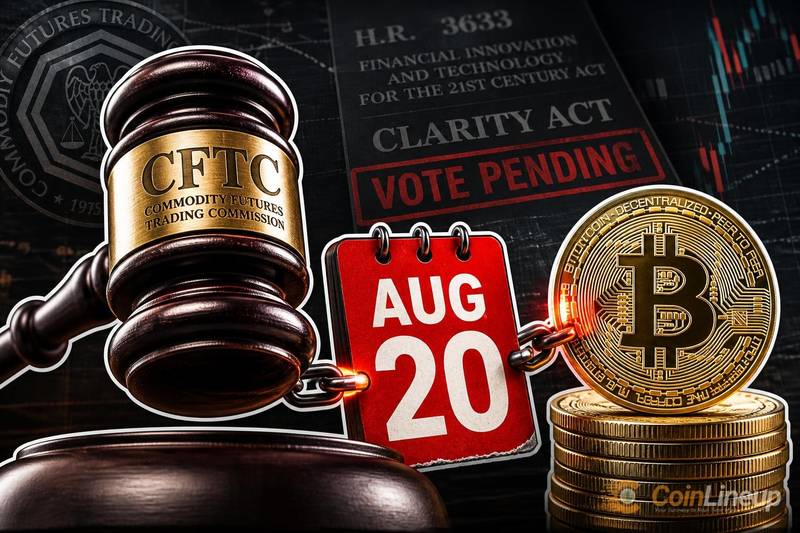
The Commodity Futures Trading Commission (CFTC) has scheduled an August 20 meeting focused on cryptocurrency regulation, a date that coincides with the still-unresolved CLARITY Act vote in the Senate, making for a pivotal week in U.S. digital asset policy.
Significance of the August 20 CFTC Meeting
The CFTC, which oversees U.S. derivatives and commodity futures markets, set the August 20 meeting to address crypto rules, placing the agency at the forefront of near-term oversight discussions. The CFTC's existing jurisdiction over digital asset derivatives and its position that certain cryptocurrencies qualify as commodities have made it a central actor in the debate over federal crypto oversight. Industry participants are focused on the scheduling itself rather than any finalized rule, as the gathering represents a milestone rather than a confirmed policy change.
The meeting builds on the CFTC's ongoing engagement with digital asset issues, including its innovation panel discussions on cryptocurrency and AI rules. Market participants—including traders, firms, and policy observers—are interpreting the session as a potential signal of the direction of federal oversight, rather than anticipating any guaranteed breakthrough.
The Pending CLARITY Act Vote
The meeting's importance is amplified by the fact that the CLARITY Act vote remains unfinalized. The CLARITY Act is part of a broader legislative effort to establish a clearer regulatory framework for digital assets, including defining the division of oversight between the CFTC and the Securities and Exchange Commission (SEC)—a jurisdictional boundary that has been contested for years and has created compliance uncertainty for crypto firms operating in the United States. Senate action on the measure was delayed toward September, leaving the legislative track unresolved even as the CFTC proceeds with its regulatory scheduling. That delay has already attracted scrutiny, with the CLARITY Act postponement facing criticism ahead of the expected September vote.
The divergence between active agency scheduling and a stalled legislative vote is the central tension of the current policy calendar. If enacted, the CLARITY Act would reshape how the CFTC's regulatory authority over digital asset markets is defined, meaning the agency's rulemaking agenda could take on a different character depending on legislative outcomes. In the meantime, an open vote introduces uncertainty into the broader U.S. crypto oversight framework, which in turn shapes how the market will interpret any messaging that emerges from the CFTC meeting.
Key Signals for Firms and Investors
The August 20 meeting is the immediate focal point, where market participants will be watching for agenda details, official statements, or follow-up guidance from the session.
Beyond the meeting, the CLARITY vote timeline remains the next critical signal. The Senate calendar can be tracked through official channels such as the Senate daily press schedule. The unresolved vote may influence how any CFTC commentary is received by the market.
Firms and investors have reason to monitor these developments closely, as near-term regulatory signals can affect compliance planning, exchange positioning, and market sentiment. The measured approach is to follow the official record from both the agency and the Senate rather than speculate on outcomes.

