Ceuta Reels After Deadly Border Surge as Most Migrants Return to Morocco
Key Takeaways
- •An estimated 50,000 to 60,000 migrants breached into Ceuta on Thursday and Friday, representing one of the largest single mass crossings into EU territory ever recorded.
- •Spanish authorities confirmed at least 72 migrant deaths from drowning and a stampede at a breakwater barrier, while Morocco reported 11 additional fatalities on its side of the border.
- •Most migrants had returned to Morocco by Sunday, though some remained in the hills surrounding Ceuta as commercial activity and daily life in the city of 84,000 gradually resumed.
- •The ease of the crossing has prompted scrutiny of long-standing border enforcement cooperation agreements between Morocco, Spain, and the European Union.
- •Moroccan authorities attributed the mass breach to misinformation and human traffickers and announced they were opening an investigation into the incident.
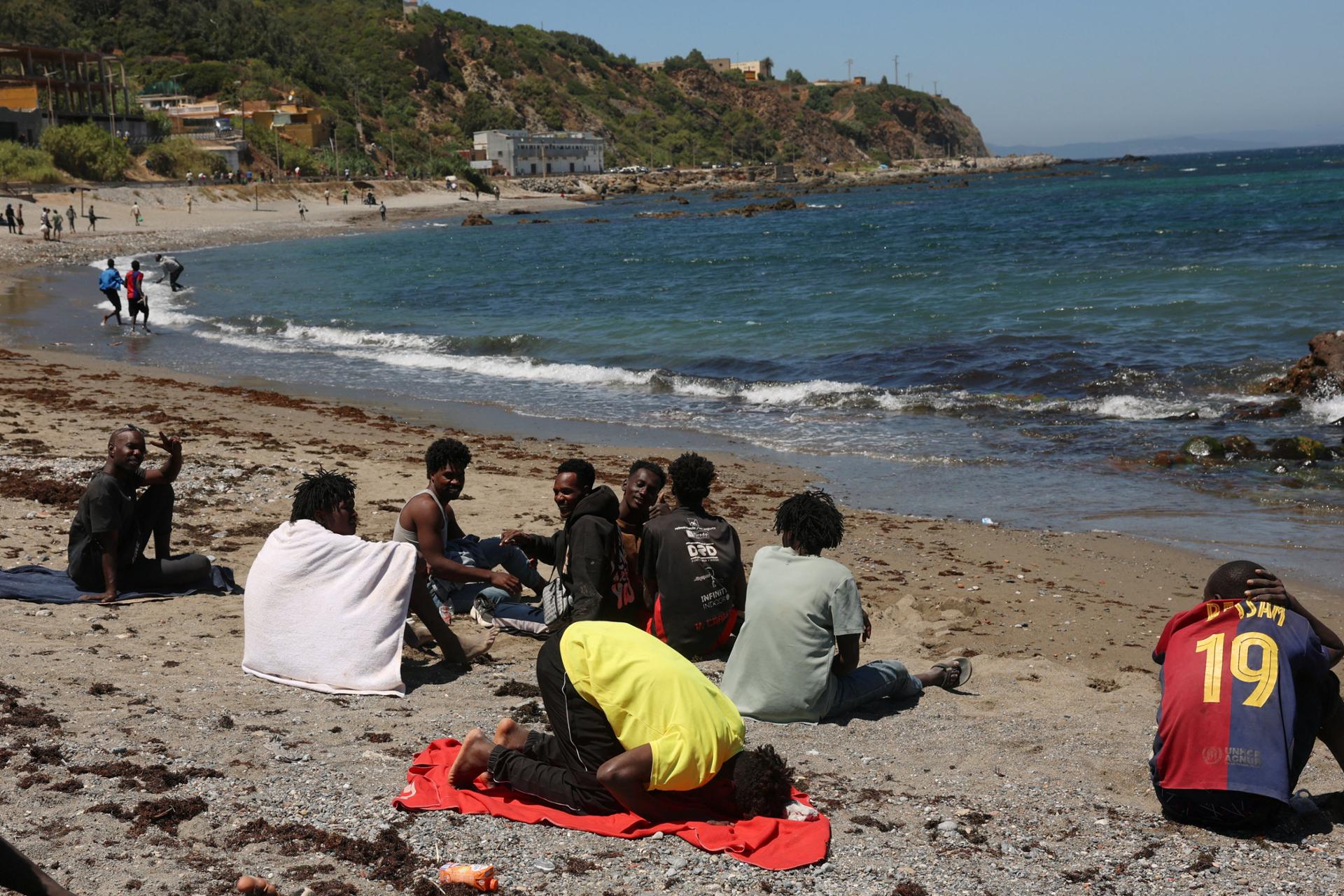
CEUTA, Spain — By the weekend, Ceuta no longer resembled a city under siege, yet residents remained shaken by the extraordinary events of the preceding days.
Most of the roughly 60,000 migrants who swam, climbed, and surged into the tiny Spanish exclave on the North African coast had walked back to Morocco by Sunday. Some, however, remained in the hills surrounding the city. Spanish authorities continued searching nearby waters for bodies along the urban beachfront that tens of thousands of migrants had breached days earlier.
Ceuta, together with neighboring Melilla, constitutes the European Union's only land border on the African continent, making the exclaves enduring flashpoints in Europe's migration debate. The scale of Thursday and Friday's breach — among the largest single mass crossings recorded into EU territory — dwarfed previous surges at the enclave.
Shops in Ceuta reopened, and the customary mix of residents and tourists in the city of 84,000 gradually returned to open-air terraces, restaurants, and cafes.
At least 72 migrants died, according to Spanish authorities, who spoke on Sunday. Some drowned while others were killed in a stampede as they attempted to cross a breakwater barrier. Morocco reported 11 deaths on its side of the border, though it was not immediately clear whether those figures were in addition to the toll reported by Spain. Moroccan authorities attributed the mass breach to misinformation and human traffickers and announced they were opening an investigation.
Morocco has long served as a key partner for Spain and the European Union in managing migration flows, receiving EU funding for border enforcement under cooperation agreements. The apparent ease of the crossing — coming after years of joint efforts to fortify the perimeter — has raised questions on both sides of the Strait of Gibraltar about the durability of that arrangement.
Ceuta, a city that takes pride in being home to four cultures, continued to wrestle with the aftermath of the border surge, with locals divided over what triggered it and who bears responsibility.
"It's not the young men's fault," said Mohamad Abdelkader Driss, 44, a waiter at a fish restaurant in the city. "If you open the border, of course everyone comes in, but the young men aren't to blame. The authorities are responsible."
Some migrants who returned to Morocco described a border that was effectively open, saying authorities did little as they watched thousands of people stream across.
The unauthorized arrivals on Thursday and Friday — estimated at 50,000 to 60,000 people, predominantly young men — swelled Ceuta's population by more than half. Driss lamented what had happened but noted that those who breached the border behaved relatively well.
"It could have been much worse," he said.
Far-Right Politicians Demand Expulsions
The humanitarian crisis set off by the sudden influx has reignited a bitter debate over immigration across Europe and beyond. Over the weekend, far-right, anti-immigrant Spanish politicians and prominent right-wing influencers descended on Ceuta, triggering counterprotests that included members of the city's large Muslim population, many of whom are of Moroccan descent.
Alvise Pérez, a far-right Spanish politician and member of the European Parliament, called on Saturday evening for the migrants to be expelled as he faced a hostile crowd of rival demonstrators. Pérez was eventually forced to shelter inside a bar while residents banged on the windows, until police escorted him to safety.
Among the counter-protesters on Saturday was 20-year-old Ceuta resident and student Noor Ahmed, who denounced the protest and the presence of figures like Pérez as opportunistic.
"They just want to take advantage of the humanitarian crisis Ceuta is currently experiencing," Ahmed said.
Santiago Abascal, leader of the far-right Vox party, visited Ceuta on Sunday and assailed the Spanish government over the surge in migrant arrivals, which he characterized as "an invasion."
"The frontiers of Ceuta and Melilla are the walls of our home and homeland, and they are not being protected by a corrupt and traitorous government," Abascal said.
Pope Leo XIV Expresses Alarm
Pope Leo XIV said on Sunday that he was "following with concern the alarming situation in Ceuta, asking God … that solutions of peace, stability and justice may be found."
Migration has been among Pope Leo's stated priorities, a commitment he underscored during a recent visit to Spain's Canary Islands, one of Europe's principal migrant entry points.

