Cerebras CEO cites strong demand for AMD joint inference product
Key Takeaways
- •Cerebras and AMD are combining AMD's Helios rack-scale solutions with Cerebras' Wafer-Scale Engine into a single inference platform designed for ultra-low-latency token generation.
- •The companies claim the joint system could deliver up to five times the tokens per second per watt compared with existing solutions.
- •AMD will deploy its Helios systems directly into Cerebras data centers, with initial availability scheduled through Cerebras Cloud in the second half of 2026.
- •Cerebras shares (NASDAQ: CBRS) rose approximately 5% following the announcement, signaling a positive investor reaction to the partnership.
- •Cerebras CEO Andrew Feldman previously led SeaMicro, which AMD acquired in 2012, adding a historical connection between the two companies to the current collaboration.
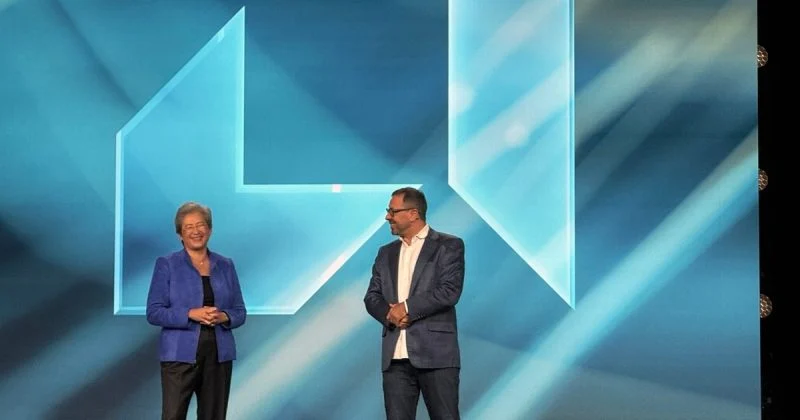
Andrew Feldman, CEO of Cerebras Systems, announced a partnership with AMD on July 23 that combines two different chip architectures into a single inference platform. Cerebras shares rose about 5% following the announcement.
The collaboration brings together AMD’s Helios rack-scale solutions and Cerebras’ Wafer-Scale Engine, a chip described as being the size of a dinner plate. The companies say the combined system is a “disaggregated inference solution” built for ultra-low-latency token generation.
What the partnership delivers
The joint system is aimed at workloads that require both real-time responsiveness and high throughput. The companies pointed to use cases such as agentic AI, coding assistants, and robotics, where a few hundred milliseconds of latency can determine whether an application is practical.
AMD and Cerebras said the system could deliver up to five times the tokens per second per watt compared with existing solutions.
Under the arrangement, AMD will deploy its Helios systems directly into Cerebras data centers. Initial availability is scheduled through Cerebras Cloud in the second half of 2026.
AMD CEO Lisa Su said the deal expands AMD’s reach into latency-sensitive applications. For Cerebras, the partnership provides a way to scale beyond the company’s own manufacturing and deployment capacity, while also putting a major supplier’s hardware inside Cerebras’ cloud offering.
Why inference is the focus
Cerebras has positioned itself as an inference specialist, in large part because of its unusual hardware design. The company’s Wafer-Scale Engine places an entire silicon wafer’s worth of transistors on a single chip, removing the communication bottlenecks that can arise when multiple smaller processors are linked together.
That focus matters because inference has become a central battleground in AI infrastructure, as model builders and cloud providers look for systems that can respond quickly enough for interactive products without giving up scale. In that context, the AMD agreement shows how vendors are pairing complementary hardware rather than relying on a single chip architecture for every workload.
Market reaction and broader context
The roughly 5% rise in Cerebras stock (NASDAQ: CBRS) suggests investors viewed the agreement as more than a routine announcement. The company went public in May 2026 at a valuation in the tens of billions, making AMD’s role as a partner rather than a competitor a notable validation point.
Feldman previously led SeaMicro, which AMD acquired in 2012, adding another layer of connection between the two companies. The collaboration also gives AMD a route into a specialized inference setup that Cerebras can offer through its cloud, with the first deployments not expected until the second half of 2026.

