The $100 Sandals That Sparked Cedisaver, Ghana's Bootstrapped Budget-Fashion Marketplace
Key Takeaways
- •Cedisaver founder Moriah Adika, a geophysics student at the University of Ghana with no coding background, taught himself web development via YouTube tutorials and launched the affordable-clothing marketplace in January 2023.
- •An incubation programme co-hosted by the British Council, Imperial College London, and the University of Ghana offered operational guidance without capital, while Adika's university classmates became the platform's first paying customers.
- •Cedisaver navigated the chicken-and-egg dilemma of two-sided marketplaces by concentrating on everyday, high-demand apparel to build the sales velocity needed to convince hesitant vendors to join.
- •The platform now serves roughly 6,000 monthly active users with an average order value of GHS 400 (about $34) and partners with 37 informal market vendors.
- •Cedisaver has scaled entirely without outside funding, and Adika says fundraising will remain a secondary priority until the company's economics and operational foundation are rock-solid.
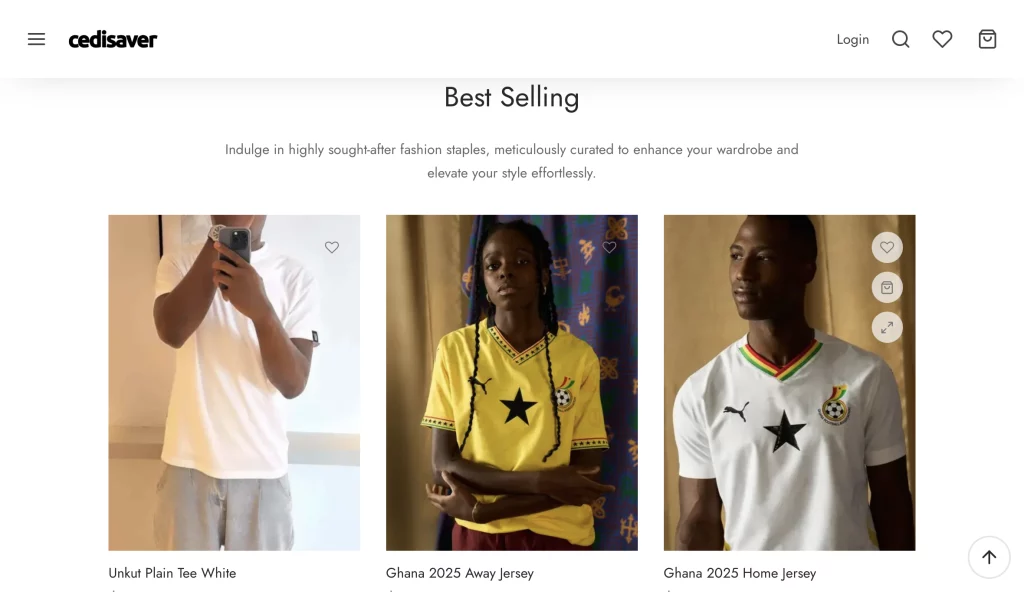
Day 1: A geophysics student at the University of Ghana wants a pair of $100 Birkenstocks, but the price tag is out of reach and affordable clothes for lectures are nowhere to be found. Day 500: He has taught himself to code through YouTube, launched a website, and is battling the classic chicken-and-egg dilemma of two-sided marketplaces. Day 1,000: His platform, Cedisaver, averages 6,000 monthly users, connects 37 informal vendors, and has scaled entirely bootstrapped.
In this edition of Day 1 to 1000, Opeyemi Kareem charts the journey of Moriah Adika — from a campus thrift struggle to building Ghana's digital marketplace for budget-friendly fashion.
It Began with a Pair of Birkenstocks
Adika's path to founding Cedisaver started with the popular German sandals. As a senior high school student at Achimota School in Ghana, he noticed that Birkenstocks commanded sticker prices upwards of $100. For students on a tight budget, acquiring a pair meant scouring second-hand markets or relying on personal favours. The challenge of finding affordable, stylish clothing persisted long after he graduated from Achimota.
"When we started university, I realised that even buying clothes for daily lectures wasn't easy," Adika says. "There were simply no affordable options."
As COVID-19 lockdowns shifted consumer habits online, Adika began exploring whether a dedicated digital platform could make budget-friendly clothing accessible. He was studying geophysics at the University of Ghana and had no background in software development or coding. Undeterred, he taught himself how to build the site using YouTube tutorials. In January 2023, while in his final year of university, he officially launched Cedisaver — an online marketplace designed to aggregate affordable clothing.
"We realised that clothing retail across Africa remains highly fragmented," Adika explains. "To find affordable items, people have to hunt through thrift stalls, navigate open-air markets, or search scattered social media vendors. We set out to consolidate those products onto a single, convenient platform that handles doorstep delivery."
Day 1: The First Customers
Cedisaver launched as a basic web platform while Adika took part in an incubation programme co-hosted by the British Council, Imperial College London, and the University of Ghana. Although the programme offered no direct equity funding, it provided crucial foundational knowledge on startup operations.
"They guided us through the mechanics of building a startup and key pitfalls to avoid," Adika says. "Even without capital injection, I credit those early lessons for our initial growth."
His university classmates served as Cedisaver's first test, purchasing footwear through the platform. That organic adoption gave Adika an early blueprint for customer acquisition before he had developed a formal marketing budget or content strategy.
"The network effect became our primary growth engine before we even figured out paid advertising or content creation," he recalls.
By the time Cedisaver completed its incubation showcase in late 2023, the platform had served 85 paying customers — establishing an early customer base while the business model was still taking shape. Adika spent the remainder of the year refining the website and expanding the inventory, focusing on listing enough products to understand customer preferences.
Day 500: Solving the Two-Sided Marketplace Dilemma
By 2024, Cedisaver had a growing catalogue and recurring buyers, but Adika's attention was temporarily divided. He was completing his mandatory national service as a quality assurance analyst at Ghana's National Petroleum Authority, travelling across regions to audit fuel facilities.
Upon returning to Cedisaver full-time, he confronted a critical supply-chain bottleneck. The business had initially sourced inventory directly from large importers rather than onboarding independent merchants, fearing that premature vendor onboarding would erode the startup's thin operational margins.
"Cedisaver needed to become a platform that attracted a critical mass of buyers first, which in turn would entice vendors," Adika explains.
This dynamic created a classic chicken-and-egg dilemma: buyers needed diverse product options to browse the platform, but vendors required proof of consistent order volume before committing their inventory. It's a cold-start problem familiar to marketplace builders across industries, from ride-hailing to e-commerce.
To break the deadlock, Cedisaver became deliberate about its listings, prioritising everyday apparel and high-demand items capable of rapid turnover.
"Some vendors were initially hesitant about our approach," Adika notes. "They weren't ready to formally onboard until they saw steady orders coming through."
That friction reshaped Cedisaver's go-to-market strategy. Realising the startup needed to demonstrate clear sales velocity to suppliers, Adika pivoted away from trying to scale every feature simultaneously, focusing instead on driving conversion for featured items.
Day 1,000: Proving the Marketplace Model
By 2025, with steady consumer demand established, Cedisaver began formally onboarding independent merchants. Today, the platform collaborates with 37 informal market vendors alongside digitally native sellers who possess existing social media catalogues — a blend that mirrors how informal apparel retail operates across many African markets, where social media storefronts have become a core sales channel for small traders.
Cedisaver now averages roughly 6,000 monthly active users, with an average order value of GHS 400 (about $34). Remarkably, the startup has achieved this scale while remaining entirely bootstrapped — a path that stands out in African tech, where venture funding has powered many of the continent's most prominent startup growth stories. Navigating capital constraints has forced the team to maintain strict fiscal discipline, safeguarding profit margins while nurturing partnerships with informal merchants. Yet, external fundraising remains a secondary goal for Adika.
"While capital is important, it isn't our immediate priority," Adika asserts. "We want to ensure our unit economics, operational strategy, and foundation are rock-solid before pursuing investment."
For now, Cedisaver remains focused on deepening inventory selection for Ghanaian consumers while proving that its marketplace model can deliver sustainable value to both buyers and merchants across the retail ecosystem. The metrics to watch from here include vendor count, growth in the current 6,000-strong monthly user base, and the unit economics Adika says must be "rock-solid" before outside capital enters the picture.
This article is based on reporting by Opeyemi Kareem, originally published by TechCabal.

