DOJ Seeks Grand Jury Indictment of Former Trump Aide Cassidy Hutchinson
Key Takeaways
- •The Justice Department's Civil Rights Division presented evidence to a federal grand jury this week alleging that Cassidy Hutchinson lied to Congress.
- •Hutchinson, a former aide to Chief of Staff Mark Meadows, testified for several days before the House committee investigating the January 6 Capitol attack, including a widely watched televised hearing in June 2022.
- •An indictment would be a formal accusation rather than a finding of guilt, and any case would turn on proving a witness spoke knowingly rather than on competing recollections.
- •Reuters has documented at least 470 targets of administration retribution by November 2025, including 112 revoked security clearances.
- •Among Hutchinson's most striking allegations was that a Secret Service agent told her Trump lunged at him while seeking to join his supporters marching toward the Capitol on January 6.
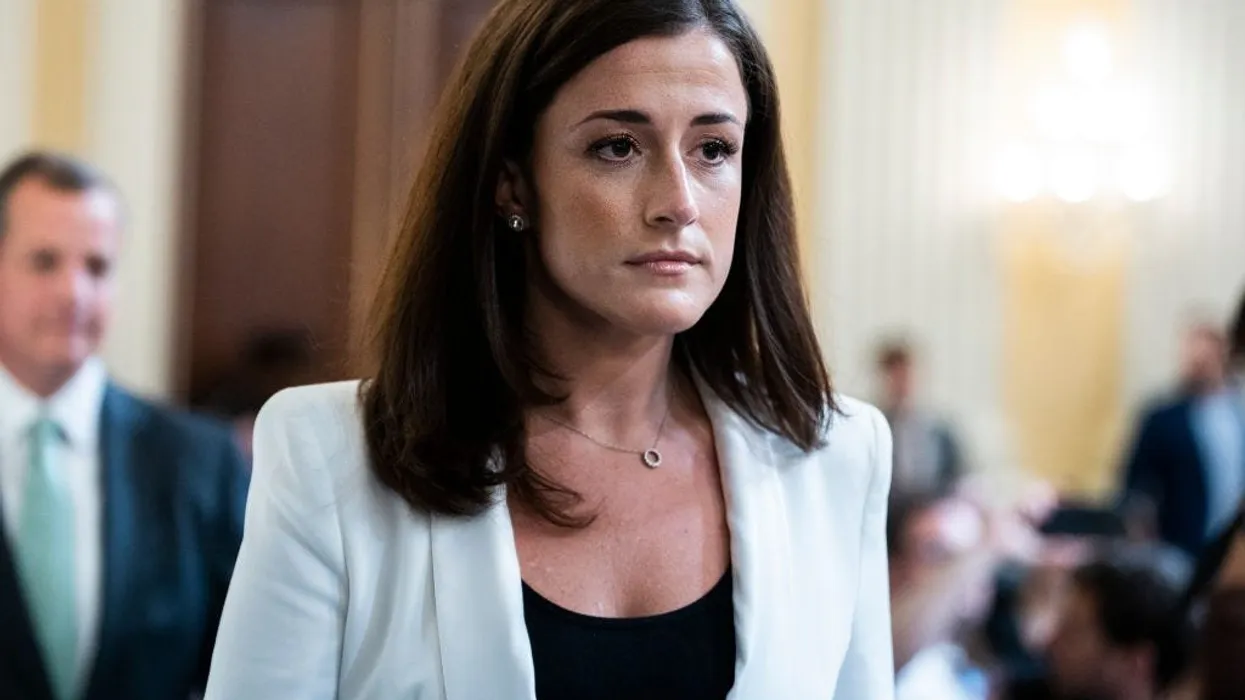
Punchbowl News reports that Cassidy Hutchinson, who worked as an aide to then-White House Chief of Staff Mark Meadows, is the latest figure on President Donald Trump's retribution list, with the Justice Department now seeking a grand jury indictment against her.
According to sources cited by the outlet's report, the Justice Department's Civil Rights Division presented evidence to a federal grand jury this week alleging that Hutchinson "lied to Congress." Grand juries decide whether prosecutors have shown enough evidence to bring charges, and an indictment is a formal accusation — not a finding of guilt.
Hutchinson spent several days testifying before the House Select Committee investigating the Jan. 6 attack on the U.S. Capitol, including a widely watched televised public hearing in June 2022. Trump has long maintained that her testimony was a lie, so a key element of the case will be whether the Justice Department can prove that something she said was false — such cases generally turn on whether a witness spoke knowingly, not merely on competing recollections. The venue could matter as well: the Washington, D.C., federal court has not been a successful venue for District Attorney Jeanine Pirro.
Among her most striking allegations was that a Secret Service agent told her the president lunged at him as he drove back to the White House following the speech at the Ellipse. According to Hutchinson, Trump wanted to go to the Capitol to see his supporters as they marched, having promised them moments earlier that he would be with them — something the Secret Service had not planned for.
She also alleged that Trump did not care that magnetometers caught his supporters carrying guns, making clear that he knew they were not there to hurt him.
Trump has so far used his Justice Department to target former FBI Director James Comey, New York Attorney General Letitia James, prosecutors who investigated him, law firms connected to opponents, and news organizations whose coverage he dislikes. Reuters has documented at least 470 targets of administration retribution by November 2025, including 112 revoked security clearances.
Even failed indictments have not stopped him. After Comey posted an image on Instagram showing seashells spelling out "86-47," he was targeted by the FBI and DOJ, which claimed the post constituted a credible threat against the life of the president.
The campaign has also extended beyond criminal investigations and the firing of government staff. Trump ordered restrictions on law firms' security clearances, federal contracts, and even access to government buildings, including the federal courts.
Trump insists he is not pursuing revenge. As recently as Wednesday, he alleged that he could have "gone after" Hillary Clinton and former Presidents Joe Biden and Barack Obama — but has not.
Critics argue the pattern turns government power into a tool for personal punishment, forcing targets to spend heavily on legal costs and face professional consequences even when prosecutions fail or courts block his executive actions.
For Hutchinson, the question now is whether the Justice Department can prove a crime — or whether the process itself becomes the punishment for testifying against Trump. The next marker to watch is whether the grand jury votes to return an indictment; if charges follow, prosecutors would still need to prove them to a trial jury beyond a reasonable doubt.

