Carville: If Trump Loses Congress in 2026, He'll 'Walk Away' From Politics
Key Takeaways
- •Carville said Trump is politically worn out and believes the president may walk away from politics after the 2026 midterms if Republicans lose ground.
- •He argued that Trump can no longer win a Republican primary and that the public is increasingly tired of him.
- •Carville said Democrat Mary Peltola is well positioned to win Alaska’s U.S. Senate seat after finishing first in the open primary.
- •He suggested Democrat Dr. Annie Andrews could have a chance in South Carolina if she faces Darline Graham, citing a weak debate answer from Graham.
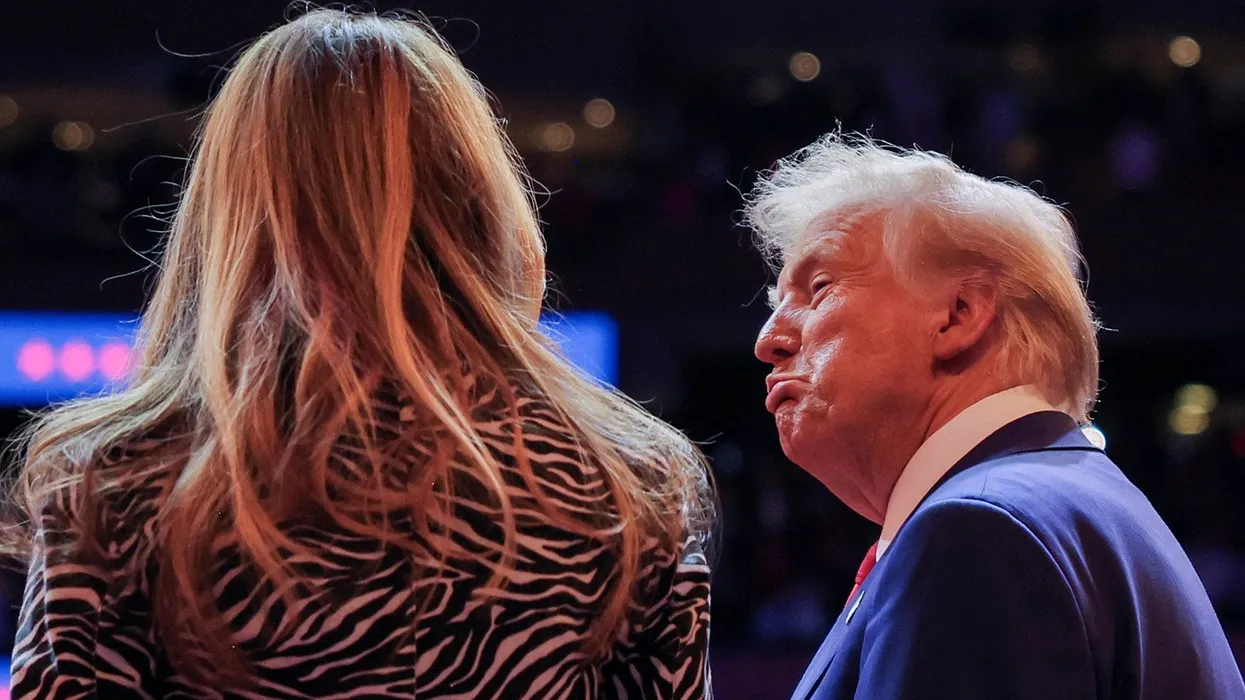
President Donald Trump has already made clear that he intends to meddle in the 2026 midterm elections to guarantee that he does not lose. Yet if he still loses control of Congress to the Republicans, longtime Democratic political strategist James Carville predicts that Trump will simply quit American politics altogether.
"I've said for a long time that Trump is just going to walk away," Carville said on Wednesday. "The situation with Trump and the American people is simply this: it's an awful marriage — and by the way, it's a marriage that on paper has over two years left to go. He's sick of the people, and the people are sick of him."
"We've been so worn down by him for so long that we haven't noticed — politically, the man is dead," Carville continued. "He can't win a Republican primary anymore, and ironically, the most anti-Trump Democrat will win Democratic primaries because that's what the base is looking for right now. But make no mistake — what you're watching is a divorce."
He added: "How do you live in the same house for another two years? I don't think we can. I think the country is done with this guy. This war will go down as one of the great foreign-policy blunders of all time, and a political blunder of the first order — the country lost a war. People are sick and tired of the president, and he's sick and tired of the job. In the words of Fannie Lou Hamer: 'I'm sick and tired of being sick and tired.' And he is that too."
Beyond predicting that Americans will reject Trump, Carville also offered an optimistic prognosis for Democrats' chances in the Senate. Midterm Senate contests often turn on a small number of competitive states, making early candidate strength, fundraising, and voting rules especially important as parties try to shape control of the chamber before November.
"First, you can raise a glass to Alaska," Carville said. "Mary Peltola, a Democrat, finished first in the open U.S. Senate primary, beating incumbent Republican Senator Dan Sullivan by five points. That means they'll go to a runoff with two other candidates in November. Three factors make her the favorite to take the seat: she's a strong candidate who's won statewide before; when Kamala Harris tried to ride her coattails on fundraising last week, Peltola said no thank you; and while Republicans will pour money into the race, there's only so much they can spend in Alaska, and she has resources of her own."
"There are a couple of minor candidates on the ballot too, but if it comes down to ranked-choice voting, which Alaska uses, she looks well-positioned," he added. "I think this is a seat Democrats have a very good chance of picking up."
Carville also suggested that Democratic nominee Dr. Annie Andrews has a chance of prevailing in the South Carolina Senate race if her opponent is Darline Graham, sister of the late Sen. Lindsey Graham (R-SC). In a race where national attention can be limited, a candidate's debate performance and readiness to answer basic policy questions can matter just as much as name recognition.
"That answer may be one of the worst debate answers in memory — even setting presidential debates aside," Carville said. "Just flatly saying 'I don't know anything about foreign policy, what am I doing here?' while running for the U.S. Senate essentially hands opponents an easy line of attack. There were so many easier ways to duck the question without looking that unprepared — something like 'that's complicated, of course we care about Taiwan, we have to be careful, and we trust the president to…' would have been far less damaging, even if it wasn't a fully satisfying answer."
Carville has previously been a harsh critic of the president. In July, he speculated that Trump does not understand the difference between communism and socialism.
"I don't think Trump knows the difference. I really don't. I think he's that stupid. I'm gonna defend him when he uses communism/socialism I think he has no idea of history. He has no idea that Sweden and Denmark and Norway and Finland and countries like that are hugely successful countries are really democratic countries, have a lot of really, really successful businesses and have a real strong program for social insurance. So, I'm going to defend Trump on the grounds that you can always defend him. He's just too f—— stupid to know what he's talking about," Carville said.
In June, he argued that people are so fed up with Trump that the president would be well advised not to trust anyone.
"I'll give you one piece of advice, Donald Trump: everybody is out for you, even your own people," Carville said. "Be scared, be very afraid. Don't trust anybody. Everybody in the administration is s–– all over you, and they're just getting warmed up."
Source: Alternet

