Former Alameda CEO Caroline Ellison takes full-time role at Manifund
Key Takeaways
- •Ellison began a work trial at Manifund on July 13 and moved into a full-time position on August 10.
- •Her responsibilities include improving systems, logistics and customer service, while project funding decisions remain outside her remit.
- •The SEC and CFTC restrictions described in the article bar or limit roles involving corporate leadership, trading and registration, but do not cover her technical position at a private charity.
- •Manifund reported financing 486 projects, raising $17.2 million and transferring $5.46 million through regrantors.
- •The hiring has prompted debate over transparency and whether Ellison’s past conduct should affect her return to professional work.
Caroline Ellison, the former CEO of Alameda Research who cooperated with prosecutors after the collapse of FTX, has taken a full-time position at Manifund, a nonprofit grant platform.
Manifund cofounder Austin Chen said in the organization’s announcement that Ellison will help improve the platform’s funding infrastructure and examine how philanthropic money can be directed more effectively. She began a work trial on July 13, moved into a full-time role on August 10, and spent her first two months working under the pseudonym “Carol.”
The nature of Ellison’s new position is central to the response from the crypto community. She is not returning to a trading desk or taking responsibility for managing a treasury. Instead, her work focuses on technical infrastructure, logistics and customer support.
One of her early assignments involved building a reconciliation tool that identified misreported transactions in Manifund’s database totaling “5-6 figures.”
Technical infrastructure rather than portfolio management
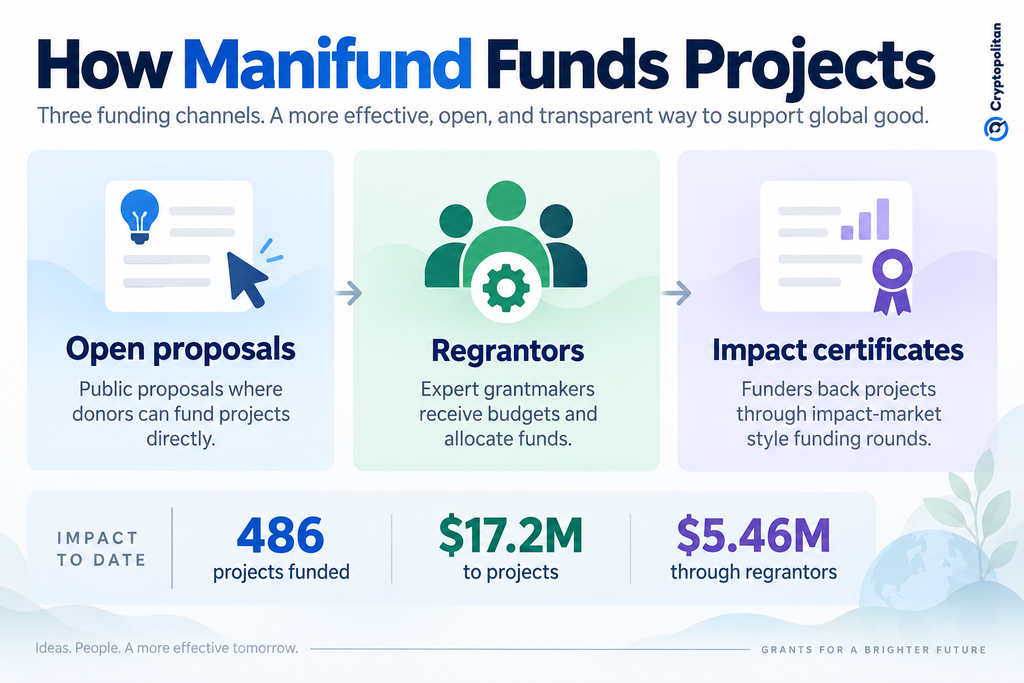
Manifund describes itself as an open platform connecting charitable donors with fundraisers. According to its website, it finances projects through three methods: publicly disclosed proposals supported by donors; regrantors that distribute grant budgets according to donors’ instructions; and markets for impact certificates, where donors provide funds for winning or otherwise deserving projects.
The organization says it has financed 486 projects, raised $17.2 million for various initiatives and transferred $5.46 million through regrantors.
Ellison is responsible for infrastructure supporting the initiative. She said she will continue working to improve Manifund’s technical systems, operations and customer-service functions. Selecting which projects receive funding will not be part of her responsibilities.
Position falls outside stated regulatory restrictions
That distinction matters because Ellison remains subject to restrictions related to the case involving FTX, the crypto exchange co-founded by Sam Bankman-Fried.
In December 2025, the U.S. Securities and Exchange Commission filed proposed final consent judgments that would bar Ellison from serving as an officer or director for 10 years and impose a conduct-based injunction for five years. The details were set out in the SEC’s litigation release.
In a separate statement issued in August, the Commodity Futures Trading Commission said Ellison was also subject to a five-year trading ban and a 10-year registration bar. The CFTC statement described those restrictions.
A technical and operational role at a private charity therefore falls outside the scope of the restrictions described by the agencies. Ellison pleaded guilty in December 2022 to fraud and conspiracy charges connected to FTX. She later cooperated with prosecutors and testified against Bankman-Fried. Ellison began serving a two-year prison sentence in November 2024 and was released in January 2026.
Manifund’s ties to the FTX Future Fund
Ellison’s appointment is particularly sensitive because of Manifund’s connections to the FTX Future Fund. Chen said he had “a keen debt” to the fund that supported the initial Manifold initiative, adding that most of Manifund’s concepts were based on it.
The SEC has alleged that Alameda used misappropriated FTX customer funds for trading and other investments. Against that background, Ellison’s appointment extends beyond an ordinary hiring decision.
The arrangement also raises a transparency question. Manifund promotes transparency in its operations, and Chen acknowledged that allowing Ellison to work under a pseudonym for several months meant the organization had “compromised on transparency.”
A test of reputational rehabilitation
Chen said his decision was based on a belief in the possibility of redemption.
“I believe in redemption.” — Austin Chen, Manifund cofounder
He argued that Ellison had admitted wrongdoing, worked to make creditors whole and served her prison sentence.
Ellison described the position in similar terms: “I’m very grateful to Austin for giving me a second chance, and judging me on my current work performance rather than my past.” — Caroline Ellison
Not everyone agreed with the decision. Responding to the announcement, Cate Hall, former CEO of Astera Institute, called it “truly terrible judgment.”
The disagreement highlights why the appointment has attracted attention. Ellison is not returning to crypto finance, but her role at Manifund tests how far reputational rehabilitation can extend after the FTX collapse.
For Manifund, the outcome will depend less on the symbolism of hiring Ellison than on whether donors believe the organization’s transparency, controls and results justify the trust Chen is asking them to place in it.

