Hoskinson Unveils Plan to Make Cardano Treasury Self-Funding
Key Takeaways
- •Hoskinson proposed a treasury index that would acquire 10% to 30% of selected dApp token supplies as strategic investments rather than grants.
- •Funded protocols would be required to use 10% of revenue to buy ADA and send it back to the treasury.
- •The plan calls for dApps to integrate Bitcoin DeFi through the Pogan protocol and adopt Midnight-based hybrid applications to qualify for support.
- •Hoskinson said Cardano’s treasury has historically favored infrastructure funding, while utility-layer projects such as DeFi have been underfunded.
- •The separate Pentad governance effort has raised questions about whether Cardano is pursuing one coordinated strategy or multiple competing funding frameworks.
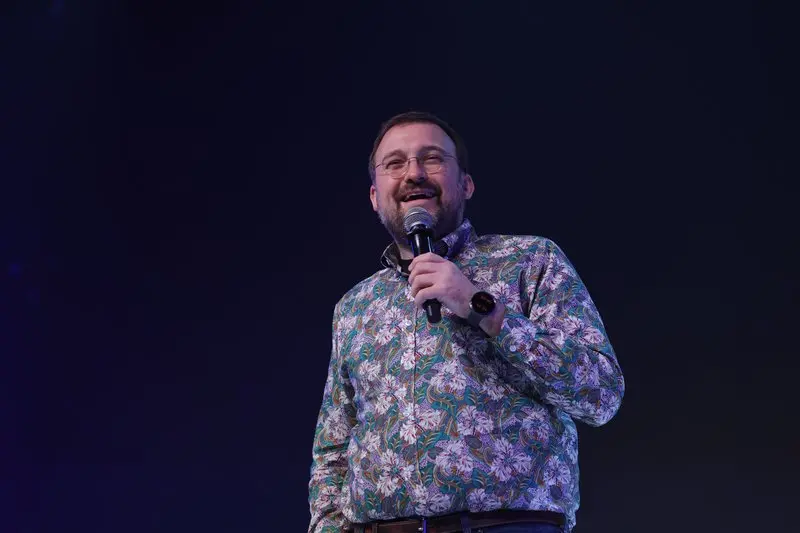
In the latest Cardano news, Charles Hoskinson outlined a sweeping 2026 funding overhaul for Cardano in an hour-long video released on March 10, built around a three-layer ecosystem model. The plan centers on a treasury index that acquires 10% to 30% token stakes in selected dApps, along with a mandatory 10% revenue-to-ADA buyback loop designed to make investments self-funding within one to three years.
The proposal explicitly acknowledges what on-chain data has made difficult to ignore: Cardano’s DeFi ecosystem is underperforming in monthly active users, TVL, and transaction volume, and the existing funding structure is tilted toward infrastructure at the expense of the layers users interact with most. That matters because Cardano’s treasury is meant to support ecosystem growth, but the funding mix Hoskinson described suggests the network has spent heavily on foundational tooling while the user-facing side has lagged.
Separate from Hoskinson’s video, the Pentad governance group has also advanced its own work. The unresolved question is whether Hoskinson’s treasury index mechanism and Pentad’s integration fund represent a unified execution strategy or two competing frameworks that could collide inside Cardano’s Voltaire governance architecture before producing results.
Cardano News: What Hoskinson’s Three-Layer Model Shows About Treasury Spending
The three-layer framework Hoskinson presented — infrastructure, utility, and experience — is less a new proposal than a diagnosis of a structural imbalance that has built up over several years.
Infrastructure includes foundational protocol components such as Ouroboros Leios, Plutus, Aiken, and the node implementations in Haskell, Rust, and Go unified under Project Bluepring, as well as Hydra.
Hoskinson said node teams cost between $1 million and $5 million per year and require 10 to 40 full-time engineers, a funding burden the treasury has historically absorbed disproportionately.
Utility, the layer that covers what users can actually do with that infrastructure — decentralized applications, DeFi protocols, and on-chain services — has been chronically underfunded by comparison.
Cardano Funding 2026 — Charles Hoskinson (@IOHK_Charles) March 10, 2026
Hoskinson’s proposed correction is a weighted treasury index of ecosystem project tokens, with the Cardano treasury purchasing between 10% and 30% of each selected project’s total token supply. He framed this not as a grant but as a strategic investment with conditions attached: funded projects must accept oversight, reduce operating expenses, cut salaries where necessary, and align with defined strategic goals.
Those strategic goals are specific. Selected dApps must integrate Bitcoin DeFi via the Pogan protocol and upgrade to hybrid applications using Midnight, Cardano’s privacy-focused sidechain, in order to qualify for treasury index inclusion.
A mandatory 10% of each funded protocol’s revenue must be used to buy ADA and return it to the treasury, creating a structural demand loop. Hoskinson said he expects the treasury to recoup its investments within one to three years as it divests from an appreciating index, a self-funding logic that is credible if TVL and protocol revenue grow, and fragile if they do not.
The Experience layer, which covers wallets, ambassador networks, user onboarding, and account abstraction, rounds out the model. Hoskinson also called for 20 to 30 high-value hackathons per year to rebuild the developer pipeline.
Execution Risk in Cardano’s DeFi Turnaround Bet
While outlining the flaws in existing models, Hoskinson said, “There’s nothing here that, with the money that we have, Cardano can’t fix.”
That framing is either the beginning of a credible DeFi turnaround or another Cardano news statement that will age badly depending entirely on execution. The bull case is structurally coherent: if the 10% ADA buyback loop activates, if Midnight adds privacy that differentiates Cardano from EVM-compatible competitors, and if the ecosystem uses treasury capital to support the right projects, the result could be a DeFi flywheel Cardano has not previously had.
The bear case is equally clear. The fragmented, competitive dynamic Hoskinson explicitly warned against — the race to the bottom in treasury proposals — could reassert itself at a larger scale.
Whether the machinery can coordinate the Pentad fund, the treasury index, and the 2026 roadmap into a unified execution track, rather than three parallel initiatives competing for the same governance bandwidth, is the condition observers should watch now. For Cardano, the practical test is not the announcement itself but whether these funding tools can translate into sustained activity across the utility layer without further diluting governance focus.
TVL will remain the metric that tells the real story.
The post Hoskinson Just Unveiled a Plan to Make the Cardano Treasury Self-Funding appeared first on icobench.com.

