Cardano Founder Charles Hoskinson Says He Never Promised ADA Price Gains
Key Takeaways
- •Charles Hoskinson denied promising ADA price appreciation or that Cardano would overtake Bitcoin, arguing that describing an outcome as possible is not the same as guaranteeing it.
- •Hoskinson stated that Cardano's five-era roadmap—Byron, Shelley, Goguen, Basho, and Voltaire—has been fully delivered, ending with the January 2025 Plomin hard fork that gave ADA holders voting power over the network's future.
- •ADA is trading near $0.17, more than 94% below its 2021 all-time high of $3.09, after losing roughly 86% of its value from its late-2024 level of $1.21.
- •Hoskinson argued that investor expectations continually shift with purchase prices, so demands for further increases imply founders must indefinitely support token valuations.
- •Under the structure Hoskinson described, decisions about Cardano's direction now rest with on-chain voters, while ADA's market price is left to the market rather than any single responsible party.
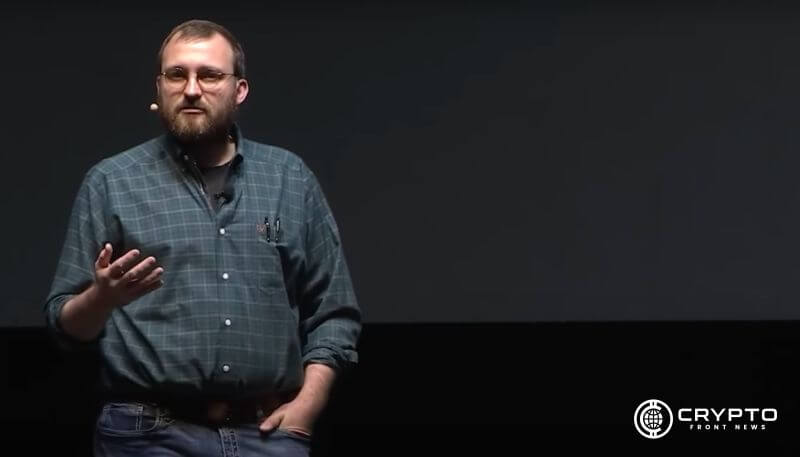
Cardano founder Charles Hoskinson has pushed back against investor demands for a higher ADA price, saying he never committed to token appreciation or to Cardano overtaking Bitcoin. Speaking during a recent YouTube AMA session, Hoskinson defended his track record and declared that Cardano's original development roadmap has been fully delivered. His remarks came with ADA trading near $0.17, more than 94% below its 2021 all-time high of $3.09. The exchange puts a specific question at the center of his argument: once a network is formally governed by its own community, how much responsibility does its founder still carry for the token's market performance?
Hoskinson Denies Making Price Promises
Hoskinson's comments responded to criticism from an investor who claimed he had promised that Cardano would overtake Bitcoin. He rejected that characterization, arguing that describing an outcome as possible was never the same as guaranteeing it.
Hoskinson acknowledged that he had at times described Cardano as a project that could potentially become the world's largest cryptocurrency. He stressed, however, that he never promised such an outcome or pledged price appreciation for ADA holders.
The founder added that some investors appeared to expect him to lift ADA's market price directly. He questioned when a founder's responsibility toward investors should end, noting that holders bought in at different prices and carry differing expectations.
Founder Says Five-Era Roadmap Is Complete
According to Hoskinson, everything he committed to building has been delivered, and Cardano now operates through self-governance that no longer depends on his involvement or approval.
Cardano's development roadmap spanned five eras: Byron, Shelley, Goguen, Basho, and Voltaire. Byron launched in September 2017, followed by Shelley in July 2020. The Goguen era introduced smart contracts through the Alonzo upgrade in September 2021, and Basho advanced scaling via the Vasil upgrade in September 2022. Voltaire brought on-chain governance through the Chang hard fork in September 2024, and the Plomin hard fork followed in January 2025, giving ADA holders voting power over the network's future.
Hoskinson said the network can now select its leaders and determine its direction independently. That governance handover is the technical backdrop to his remarks: with voting power formally in the hands of ADA holders since the Plomin hard fork, he argues the network's direction no longer runs through him, separating what a founder delivers from what a market decides.
ADA Trades Far Below Its Record
ADA reached its all-time high of $3.09 in 2021 before entering a prolonged decline. The token fell to $0.25 in 2023, then recovered 384% to $1.21 by late 2024. It subsequently lost approximately 86% of that value, settling near $0.17, which leaves it more than 94% below its 2021 record.
Hoskinson argued that investor expectations continually shift with purchase prices. In his view, demands for further price increases create an ongoing expectation that founders must keep supporting token valuations. The token's own chart shows why those expectations diverge: someone evaluating ADA at its 2023 low of $0.25 and someone evaluating it at its late-2024 level of $1.21 would start from very different reference points on the same asset.
Under the structure Hoskinson described, questions about the network's direction now go to on-chain voters, while ADA's price remains a matter for the market. In his telling, that leaves no single party responsible for the token's valuation — the position at the heart of his AMA remarks.
Source: Cryptofrontnews

