Apple’s New 'Cape Fear' Examined Through the Franchise’s Earlier Versions
Key Takeaways
- •The 1962 Cape Fear film, starring Gregory Peck and Robert Mitchum, presented a morally black-and-white narrative that worked effectively within the censorship constraints of the Hays Code.
- •Martin Scorsese's 1991 remake added moral complexity by making both the lawyer and the criminal flawed characters, with the lawyer having deliberately sabotaged his client's defense case.
- •The 2026 Apple TV+ miniseries splits the lawyer protagonist into two characters, Tom and Anna Bowden, and establishes that Cady was wrongfully convicted of the crimes that sent him to prison.
- •The 2026 version explores contemporary themes including flaws in the American criminal justice system, the impact of social media celebrity, and the sensationalism of the true crime genre.
- •Showrunner Nick Antosca and executive producer Martin Scorsese deliver a ten-episode series in which all central characters are depicted as traumatized individuals who respond to pain by inflicting further trauma on others.
It seems that every three decades, Americans are treated to another iteration of "Cape Fear." Based on John D. MacDonald’s 1957 novel "The Executioners," the thriller centers on a deranged stalker, the ex-con Max Cady, who obsessively terrorizes a lawyer’s family. MacDonald was already an established crime novelist at the time, best known later for his Travis McGee series, and "The Executioners" was one of several of his works adapted for the screen. On the surface, it is a standard psychological crime story, but each version has stood out for speaking to deeper currents in the American zeitgeist at the time of its release.
Before turning to the 2026 miniseries, it is useful to look at the two earlier screen adaptations.
Cape Fear: 1962
In the 1962 film, Cady, played by Robert Mitchum, resents attorney Sam Bowden, played by Gregory Peck, after Bowden stops him from raping a woman and later testifies as a prosecution witness. Reflecting the era in which it was made, director J. Lee Thompson’s story is morally black and white, much like the film’s monochrome visual style. Peck’s Bowden is upright, heroic and inspiring, much like his role as Atticus Finch in "To Kill a Mockingbird," which was released the same year. Mitchum’s Cady, by contrast, is a worthless degenerate and child sex offender, with none of the redeeming qualities that Bowden appears to embody.
That does not make the adaptation weak. On the contrary, it remains remarkably effective and bypasses much of the censorship imposed by the Hays Code, Hollywood’s strict system of content regulation that governed film production from the 1930s through the 1960s. The film’s ability to convey sexual violence and menace within those constraints became a case study in how filmmakers used suggestion and atmosphere to work around the Code’s prohibitions. Mitchum’s Cady is depicted as unambiguously and malevolently perverted, and that clarity makes the threat feel real. At the same time, there is little ambiguity or character development. It is, in essence, a straightforward action story about a good man protecting his family from a bad one.
Cape Fear: 1991
Twenty-nine years later, Martin Scorsese gave the material more complexity. In the 1991 film, Robert De Niro’s Cady and Nick Nolte’s Bowden are still, respectively, a sex offender and a lawyer, but neither character is as simple as he first appears. Notably, both Gregory Peck and Robert Mitchum returned for the remake in supporting roles — Peck as a police lieutenant and Mitchum as a police chief — creating a bridge between the two eras of Hollywood filmmaking.
This time, Bowden had actually represented Cady in court and deliberately sabotaged his case. In a move that could be described as surprisingly progressive for a 1991 action film, Bowden infuriated Cady by refusing to mention that Bowden’s rape victim had been promiscuous. Bowden was correct to note that a woman’s sexual history can prejudice a jury even though it has no bearing on whether she was raped. Even so, he clearly violated his professional obligation to represent his client to the best of his ability, giving Cady a potentially valid grievance.
In that sense, the 1991 film reflects the move from the black-and-white thinking of the 1960s to the more complicated ideas that shaped the 1990s. Nolte’s Bowden is not as morally upright as Peck’s version; he is also a philanderer who cheats on his wife and a blowhard overly impressed with his own abilities as a lawyer. He is still, ultimately, the good guy, while De Niro’s Cady remains a monster without nuance. But unlike the 1962 film, which feels like a fictional psychological story as you watch it, the 1991 version has a realism that makes its events seem less fabricated. If De Niro’s Cady were shown in a real crime documentary, he would not seem out of place. The film was a box-office success and earned Academy Award and Golden Globe nominations for both De Niro and Juliette Lewis, who played Bowden’s teenage daughter.
Cape Fear: 2026
That brings the story to 2026, where "Cape Fear" arrives not as a roughly two-hour film but as a 10-episode Apple TV+ miniseries. The shift to a limited-series format reflects a broader trend in prestige television, where streamers have increasingly recruited film-caliber talent for long-form projects that allow more room for character development than a theatrical feature permits.
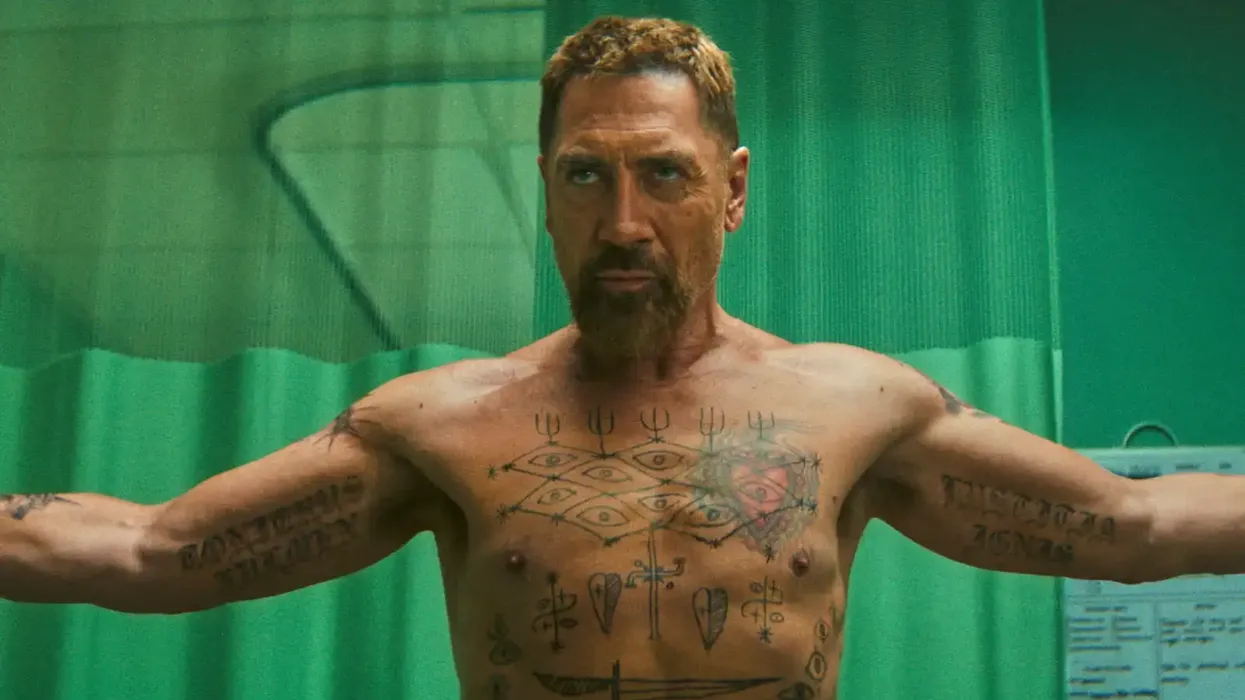
In this version, the lawyer protagonist has been split into two characters, Tom and Anna Bowden, played by Patrick Wilson and Amy Adams, while Cady is played by Javier Bardem. Reflecting the moral complexity of the modern era, these characters are the most ambiguous of the three versions. Having watched all 10 episodes in one day, I can say without spoiling anything that Tom and Anna Bowden are easily the least sympathetic lawyer characters in the series. Tom was a prosecutor who tried Cady for murdering his wife and unborn child, and he allegedly began an affair with Anna while she was serving as Cady’s defense attorney. The series makes clear early on that Cady was genuinely innocent of the crimes that sent him to prison.
From there, the 2026 "Cape Fear" offers pointed commentary on the problems of America’s criminal justice system. It depicts the horrors of prison gangs, the prevalence of racism in the justice system, and the corruption involved in private prisons housing millions of people in the United States. Bardem’s Cady also makes real efforts to do good with his freedom, including helping another wrongfully convicted prisoner secure release and caring for an abused dog he finds.
By contrast, the two Bowdens are less than forthright with their children. This version includes a son and daughter for Cady to terrorize, whereas the earlier films featured only a daughter. The Bowdens also show only minimal remorse for having helped send an innocent man to prison for murder.
Even so, Bardem and the writers avoid turning Cady into a simple antihero. He is still a creep, a pervert, a sadist and a man quick to violence. Along with his more benevolent actions, he is willing to manipulate and scheme in order to destroy the Bowdens’ lives through "a thousand cuts." Bardem fully commits when the character needs to be ominous or frightening. Unlike the earlier Cadys, though, this version is not merely a straightforward villain. He is presented as a deeply wounded man who responds to legitimate grievances, both from the Bowdens and from his abusive father, in horrific ways.
The Bowdens, too, are deeply flawed but still sympathetic, much like much of America in 2026. They overcorrect for their past sins by trying to do real good in the present, especially Anna Bowden, and their chemistry with Joe Anders, who plays Zack Bowden, and Lily Collias, who plays Natalie Bowden, helps establish them as sincerely loving and devoted parents. Viewers still root for them to prevail over Cady, but while audiences in 1962 did so through a conventional good-versus-evil framework and those in 1991 did so within a thought-provoking legal drama, the 2026 version presents a group of traumatized people coping with pain by inflicting more trauma on others.
The miniseries also highlights how social media, the 24/7 news cycle and the current fascination with true crime can create a perfect storm of psychological torment for people who become publicly interesting. In this version, Cady becomes a celebrity, drawing devoted fans and even emerging as a sex symbol. For anyone in media, the series makes it difficult not to recognize the ravenous forces in today’s journalistic landscape that can elevate and devour the wrong people simply because it seems convenient at the time. Story-wise, these pressures also force the 2026 Bowdens to deal with challenges that were foreign to their counterparts in 1962 and 1991, while giving the 2026 Cady an advantage the earlier versions never had.
The only question is who will prevail.
I will not spoil that detail, but I can say that I found the 2026 "Cape Fear" as entertaining as the 1962 and 1991 versions. Showrunner Nick Antosca, previously known for the anthology horror series "Channel Zero" and the true-crime drama "The Act," clearly knew what he was doing, and Martin Scorsese’s involvement as an executive producer helps connect this version to his 1991 adaptation. The 10 episodes move quickly enough to be watched in a day, and Bardem’s Cady is as memorably venomous as the versions played by Mitchum and De Niro. I would not call this the best version, mainly because all three are strong in different ways. If you want "Cape Fear" as a parable, watch the 1962 film. If you want a more realistic criminal facing a plausible lawyer, watch the 1991 film. If you want a version in which the central characters are defined less by protagonist-versus-antagonist roles than by the psychological baggage they carry, the 2026 miniseries is the one to see.
Each version works in its own way, and each reflects the moral climate of the era in which it was released.

