Trump’s Canada feud is costing the U.S. billions in lost tourism, report says
Key Takeaways
- •Canadian spending tied to U.S. travel and purchases has fallen by as much as $12.8 billion, according to the report.
- •Return trips from Canada to the United States declined year over year for 11 straight months in 2025, the longest such drop outside the pandemic since records began in 1972.
- •The report says Canadians are taking more trips within Canada and more trips to other countries instead of traveling to the United States.
- •University of Toronto data released in May showed tourism fell 42% during Trump’s second term, with major cities including Las Vegas affected.
- •International tourism to the United States fell 5.5%, while Americans traveling abroad increased 80% compared with a year earlier.
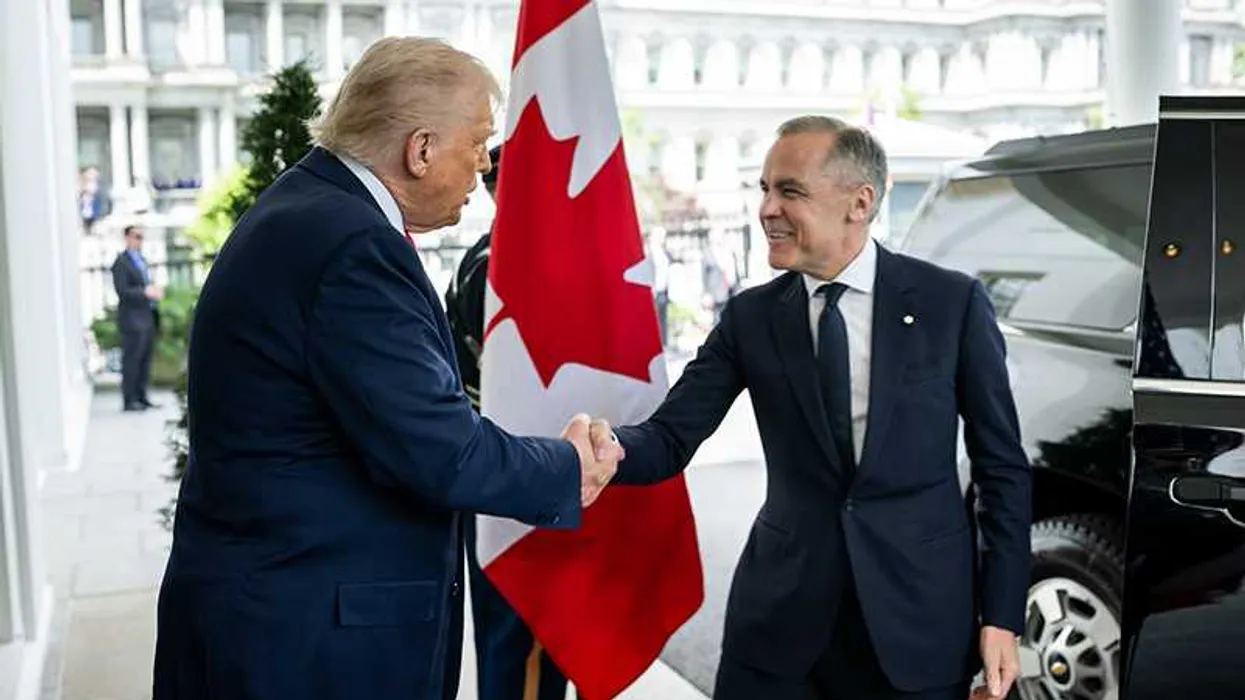
Tariffs are not the main reason Canadians are no longer buying American goods. According to the report, many are reacting to Donald Trump.
The Daily Beast highlighted new data showing a sharp drop of as much as $12.8 billion. The figure is even lower than in 2025, when Trump said he wanted to take over Canada and the total fell by about 25 percent to $15.6 billion.
"The decline in Canadian travel to the U.S. marked an unprecedented shift, with return trips falling year over year for 11 straight months in 2025 — the longest sustained drop outside the pandemic era since records began in 1972," the report said.
The decline adds to Trump’s troubles over his trade war. His tariffs have not generated the revenue he promised, and they have also raised costs for goods and groceries for Americans. The tourism hit matters because Canadian visitors make up a large share of cross-border travel, so even a sustained pullback can ripple through airlines, hotels, restaurants, and other businesses that depend on that spending.
The boycotts in Canada are also worsening the economic picture as fewer visitors travel to the United States.
"Following the change in the U.S. administration in early 2025 and the implementation of America First policies, Canadian travel sentiment shifted abruptly,” the report said. "Canadians are opting to travel domestically or to go to other countries outside of the U.S, taking roughly 5 million more domestic trips within Canada and 1.3 million additional trips overseas."
Trump imposed new tariffs on Canadian-made goods and tightened immigration enforcement at the U.S.-Canadian border.
For much of his first year in office, Trump promoted a policy that would make Canada America’s 51st state. Canada has responded by reducing travel to the U.S. and by not buying American products. Even when those products are available in stores, Canadians are said to be refusing to purchase them.
Additional data from the University of Toronto, released in May, showed tourism had fallen by 42 percent during Trump’s second term. The Canadian boycott has affected major cities including San Francisco, Houston, Grand Rapids, and Las Vegas. Canadians account for about 17 percent of international travel to Las Vegas, but that figure has fallen to 7.5 percent, Politico reported.
The crackdown on immigrants is also contributing to the downturn in tourism from overseas visitors. International tourism has fallen by 5.5 percent, and the decline in foreign visitor spending represents a loss of about $8 billion. That broader drop suggests the issue is not limited to one border market, but is also affecting inbound travel from other countries that watch U.S. policy and border enforcement closely.
It is the largest drop since the pandemic lockdown and only the second decline in 20 years.
Meanwhile, Americans are also traveling abroad more often. The number of Americans traveling outside the U.S. is up 80 percent compared with a year earlier.
“We used to be a country that others wanted to emulate. That narrative no longer exists,” Juliette Kayyem, faculty chair of the Homeland Security Project at the Harvard Kennedy School, said on CNN. “The long-term harm is that the world will not know America ... the narrative of the United States is now a country that is at best, not to be respected, and at worst, a democracy that is floundering.”

