Canada's Retaliatory Tariffs Are Turning a Pro-Trump State Against Trump, Report Finds
Key Takeaways
- •Ontario Premier Doug Ford urged targeting retaliatory tariffs at imports from Alabama, Arkansas, Florida, Iowa, Missouri, Montana, Texas and Wisconsin, described as politically significant to the administration's base.
- •An Emerson College poll of 750 likely Iowa voters found 70 percent concerned about Canada's retaliatory tariffs and 58 percent opposed to U.S. tariffs on Canadian products.
- •Canada's retaliation is explicitly timed to influence U.S. voters before November's midterm elections, when control of Congress is at stake.
- •The Globe and Mail endorsed the political case for Canada's tariffs while calling the economic case nonexistent and warning of higher prices for consumers on both sides.
- •Economists cited, including Ed Gresser and Robert J. Shapiro, argue the tariffs raise costs, reduce stability, and increase inflation for both Americans and Canadians.
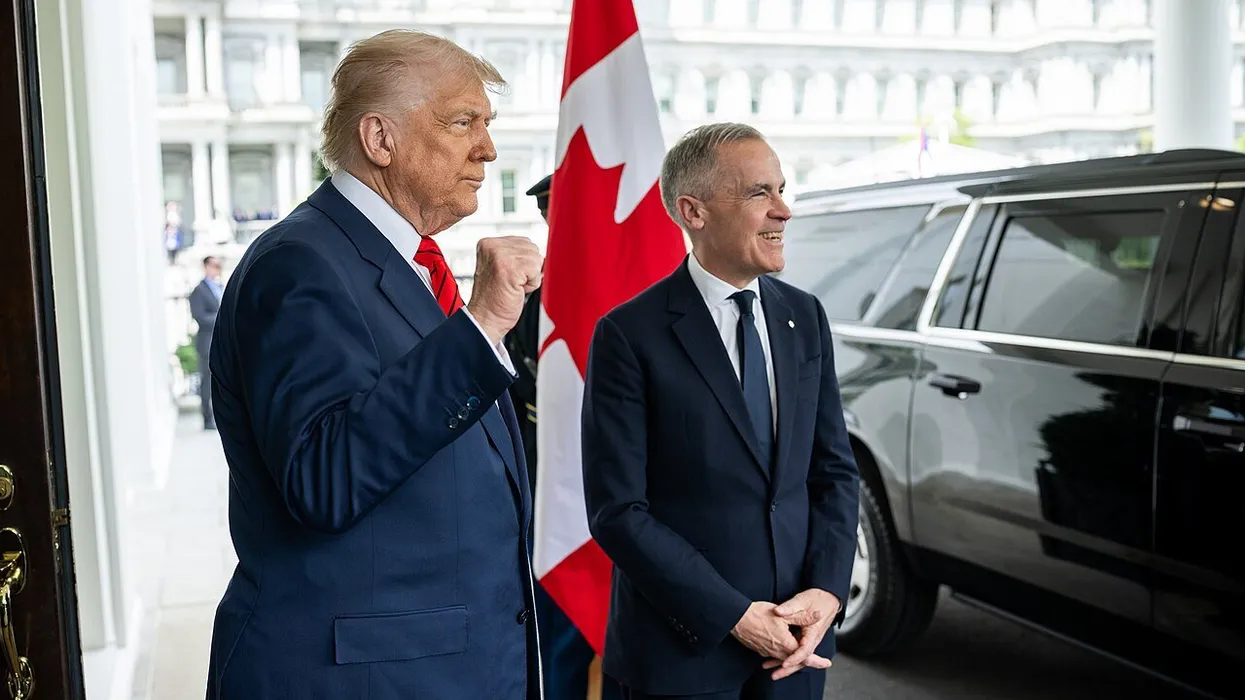
As President Donald Trump escalates his trade war against Canada, Ontario Premier Doug Ford has vowed to back retaliatory tariffs aimed specifically at states whose residents were more likely to have supported the president. A new report indicates that, in at least one case, this retaliation is having an effect.
Canada is the United States' largest trading partner, and the two countries trade goods and services worth more than a combined total surpassing U.S. trade with any other single country each year — a level of integration that makes tariffs on Canadian products unusually consequential for U.S. industries, prices, and border-state economies.
Newsweek's Emma Marsden reported on Sunday that Ford, in a letter to Canadian Prime Minister Mark Carney, said imports from Alabama, Arkansas, Florida, Iowa, Missouri, Montana, Texas and Wisconsin should be targeted because they are "politically significant states to the current administration's base of support." The aim, Marsden reported, is to make the consequences of the trade dispute an issue for American voters, potentially putting pressure on politicians who could challenge Trump's approach. The strategy is explicitly timed around American politics: Canada's retaliation is designed to register with U.S. voters before November's midterm elections, when control of Congress will be at stake.
In the traditionally red state of Iowa, Marsden reported, that approach may already be yielding electoral dividends. Iowa is an agriculture-heavy state whose farmers have long depended on cross-border trade, making it especially sensitive to tariff-driven disruption.
"There are already signs that tariffs are becoming an issue for voters in at least one closely watched state," Newsweek reported. "Seven in 10 voters in Iowa are concerned about Canada's retaliatory tariffs, a new poll by Emerson College Polling suggests. The poll also found 58 percent of those surveyed opposed the U.S. imposing tariffs on Canadian products. The survey was conducted August 31 - September 1, involved 750 likely Iowa voters, and reported a margin of error of +/- 3.6 percent."
Marsden previously explained the larger strategy behind Ford's approach. "Canada's biggest newspaper has backed Ontario Premier Doug Ford's strategy of targeting U.S. voters over Donald Trump's trade war, arguing retaliatory tariffs could put political pressure on Republicans ahead of November's midterm elections," she wrote.
She added: "The Globe and Mail said the economic case for Canada's tariffs on US goods was 'zilch, nada, zero,' warning that consumers on both sides of the border would face higher prices. But its editorial board said there was 'a limited (and time-limited) political case to be made' for the measures and called for American politicians and voters to be made aware of the consequences of Trump's trade war with Canada."
Tariffs are not the only byproduct of Trump's trade war with Canada that is turning many otherwise-Republican Americans against the administration.
"I don't think the lake's name should be changed because it's history," Dave Rupp, who operates an Ontario, NY liquidation store and supported Trump in 2024, recently told The Washington Post's Laura Beveridge. "And I don't like changing history."
Speaking to AlterNet in July, an economic expert described how Trump's tariffs are not ultimately helping either Americans or Canadians.
"They're hoping to get small, individual policy achievements at the expense of a larger-scale increase in costs and loss of stability and predictability," Progressive Policy Institute tariff expert Ed Gresser told AlterNet at the time. Gresser's point reflects a broader concern among economists: because tariffs function as taxes on imports, their costs tend to be passed through to businesses and consumers rather than absorbed by exporters.
More broadly, Trump's tariffs are increasing inflation, according to another economic expert.
"Just this week, Trump announced 50 percent tariffs on our largest trading partner, Canada, which will further increase inflation," Dr. Robert J. Shapiro, who served as Under Secretary of Commerce for Economic Affairs under President Bill Clinton, told AlterNet in August.
How the tension resolves — and whether retaliatory measures are rolled back, escalated, or negotiated away — remains to be seen as the midterm elections approach and both governments face pressure from consumers and industry.
Sources: Alternet, Newsweek

