U.S. Refiners Face New Crude Squeeze as Canada Cuts Oil Sands Output
Key Takeaways
- •Canadian oil sands maintenance is expected to reduce September crude production by about 300,000 barrels per day.
- •U.S. refiners normally receive roughly 4 million barrels per day of heavy crude from Canada, making the maintenance shutdown significant.
- •Venezuela’s crude exports have risen, but the increase has not been enough to offset the expected Canadian supply loss.
- •Global fuel markets remain tight, and the diesel crack spread reached $100 per barrel in mid-August.
- •If supply conditions stay strained, higher fuel prices could slow demand and add to inflation and weaker economic growth.
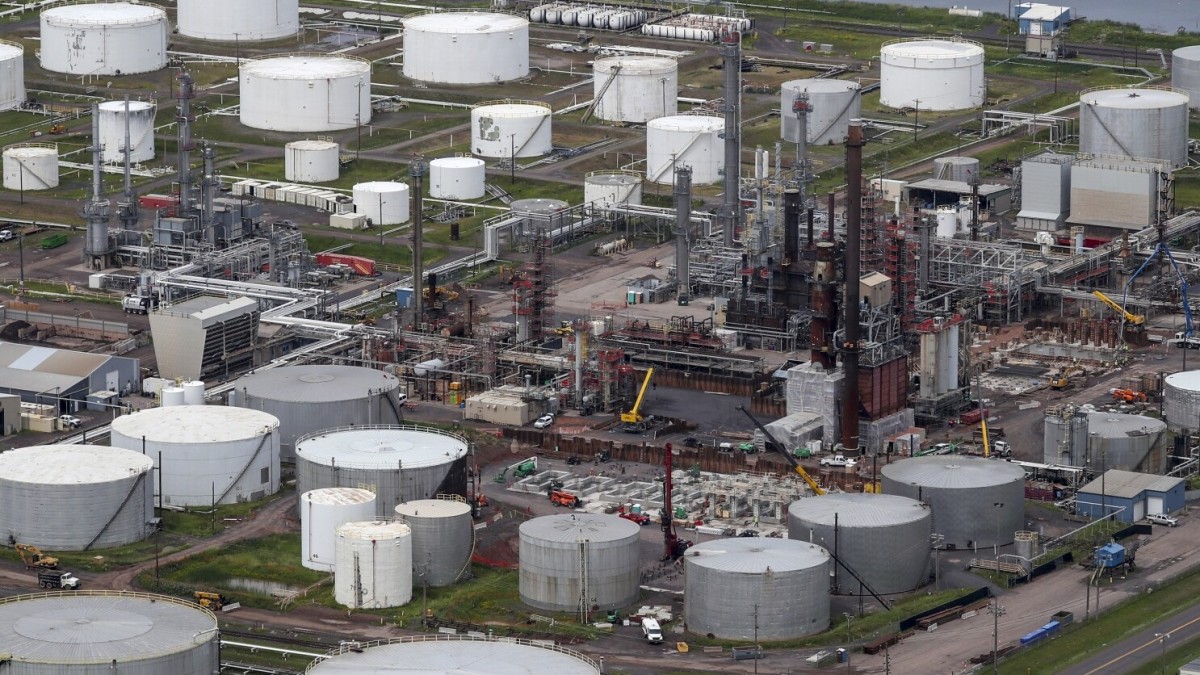
U.S. refineries have been running at full speed for months to offset lost fuel supply from the Middle East, while U.S. fuel exports have been setting records. That dynamic may be about to shift, and not because of the war. The trigger is Canada’s oil sands maintenance season.
In September, Canadian crude oil production may fall by 300,000 barrels per day because of maintenance work in the oil sands, Rystad Energy said this week, according to Bloomberg. Seasonal disruptions like this are often covered by crude withdrawals from storage, but inventories are also running lower than usual, at the lowest level in 12 months, the report said.
Canadian producers normally send about 4 million barrels per day of heavy crude to U.S. refiners. Next month, that flow will be smaller, and the impact may be felt because fuel demand remains strong even after some demand destruction caused by higher prices. Bloomberg reported that all major oil sands operators will cut production for maintenance, and pipeline operators have stopped rationing space on their systems, a sign they expect lower demand in September. For U.S. refiners, the timing matters because heavy Canadian crude is a key feedstock that helps keep complex plants running efficiently, leaving less flexibility when supply tightens.
There is no clear substitute for Canadian crude, even with shipments from Venezuela increasing, because the increase has not been fast enough. Venezuela exported 1.16 million barrels per day of crude last month, slightly below June’s 1.2 million barrels per day, because PDVSA drew less crude from storage, according to a Reuters report earlier this month.
The fact that Venezuela is drawing on inventories to meet export demand suggests production has not yet recovered meaningfully. July exports to Venezuela’s largest oil destination, the United States, averaged 786,000 barrels per day, the highest level since early 2019 and up from 284,000 barrels per day in January 2026, before the U.S. federal government sent forces to Caracas to remove President Nicolas Maduro and establish U.S. control over the South American country’s oil industry.
Overall, Venezuela’s oil production appears to be recovering more slowly than expected. The supermajors that previously operated there remain cautious and are taking time to decide whether to return. Some deals have been signed in recent months with service providers and smaller U.S. oil companies, which appear more willing to accept the risks of operating in the country, where a stable political and fiscal environment for large-scale operations has yet to emerge.
Meanwhile, conditions in the Middle East are still not improving, despite Washington’s claims that tanker traffic has normalized. Tanker-tracking companies have not been able to verify that assertion, according to a recent Wall Street Journal report. Ukrainian drone attacks on Russian refineries are also continuing, further squeezing gasoline and diesel output there.
Global fuel supply remains tight, especially for diesel. That shortage helped push refining margins to record highs earlier this month. The diesel crack spread reached $100 per barrel for the first time in history in mid-August.
With 300,000 barrels per day of Canadian crude set to go offline in September, that record could be broken again just as fuel demand rises ahead of the heating season, when seasonal demand typically peaks. If the fuel supply balance remains strained, additional demand destruction could follow, beginning in the most vulnerable markets and then spreading to more resilient ones. That would have consequences for economic growth and inflation.
The Middle East war is likely to add to global inflation as it approaches its seventh month, with no resolution in sight and further escalation as the United States has widened sanctions against Iran.
By Irina Slav for Oilprice.com
More Top Reads From Oilprice.com
Treasury Expands Iran Sanctions Without Targeting Major Chinese Banks
Europe Dodges a Rhine Crisis for the Worst Possible Reason
Oil Nears $100 as Trump’s ‘Economic D-Day’ Raises the Stakes

