Beyond Jason Arday: Paul Ormerod Argues Sociology as a Discipline Lacks Empirical Rigor
Key Takeaways
- •Paul Ormerod reviewed publications from members of Cambridge's Faculty of Education and found them written in dense jargon with little or no empirical evidence supporting their claims.
- •Cambridge economist Partha Dasgupta stated that some members of the committee that appointed Jason Arday were themselves "second rate."
- •Scholars in educational sociology receive frequent citations primarily from other academics within the same field, which Ormerod argues may reflect a self-referential pattern rather than genuine scholarly impact.
- •The controversy unfolds against broader pressures on UK universities, including declining foreign student enrollment, graduate loan repayment failures, and two decades of debate over so-called "Mickey Mouse" degrees.
- •Ormerod drew a hypothetical analogy to a university astrology department to illustrate how insular academic fields can generate citation metrics that appear impressive in the Research Excellence Framework governing billions in public funding.
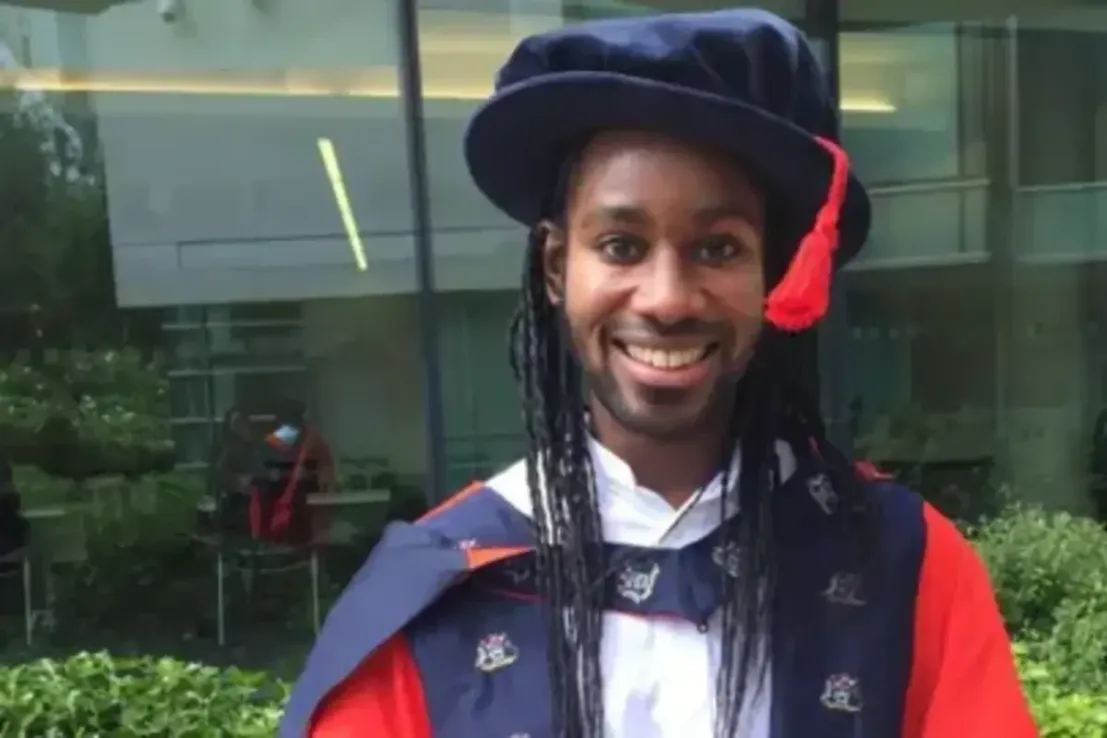
Jason Arday is far from the only second-rate academic working in sociology, writes Paul Ormerod. His Cambridge colleagues have produced papers that are virtually unreadable and devoid of evidence.
The Jason Arday story has received extensive coverage from numerous angles. Arday, a professor of sociology of education at the University of Cambridge, became a focal point of controversy over questions regarding the intellectual rigour of his published work and the appointments process that elevated him. However, comparatively little attention has been paid to the academic discipline in which he held his professorship: the sociology of education.
There is at least one clear reason for this gap. It is genuinely difficult to discern what contributions to knowledge this particular field actually makes.
Ormerod searched the members of the University of Cambridge's Faculty of Education, where Arday was a professor. He read, or attempted to read, a number of their publications available through Google Scholar.
The word "attempted" is deliberate. The papers are extraordinarily hard going. In certain academic disciplines, difficulty is expected — Andrew Wiles' celebrated proof of Fermat's Last Theorem, for instance, becomes incomprehensible to most readers after the first line. But the education papers contain no advanced mathematics. They are composed entirely of English words, yet are written in a tortuous style saturated with impenetrable jargon.
An AI-generated summary of one of the more accessible articles read: "Peace education faces crises of legitimacy, representation, and praxis. Challenges include narrow Western peace models, education inequalities, marketization, violence in schools, and cultural biases. Embracing postmodern perspectives and diverse traditions offers opportunities for more inclusive, transformative peace research and practice."
Ormerod acknowledges that he does not possess an exhaustive knowledge of the discipline's entire output. He examined only a small sample of publications from members of one of the world's leading universities.
By one key measure of academic success, however, many of these scholars perform well. Their published articles are cited frequently by other academics in the same fields.
This raises a broader point. Imagine, hypothetically, a university establishing a department of astrology. A prominent astrologer is recruited to lead it. Soon there is the Journal of Astrological Studies, followed by the International Journal of Astrology, the Review of Zodiacal Studies, and so forth. The department's academics quickly accumulate citations, which the university then reports in glowing terms to the next government research assessment exercise — the Research Excellence Framework, or REF, which governs billions in public research funding allocated to UK universities. Ormerod is careful to note that he is not asserting this scenario describes educational sociology — but the analogy invites reflection.
Beyond their sheer indigestibility, the papers convey a distinct impression: they frequently lack empirical evidence. The typical article consists of endlessly repeated assertions, with little or no effort to establish whether those claims are actually true.
Denying objective truth
A creeping tendency exists across several social science disciplines to deny the very concept of objective truth. Educational sociology is far from alone in this regard. Yet the irony is palpable: in their everyday lives, these same academics demonstrate considerable respect for empirical evidence and truth. Jump out of a fourth-floor window, and you will almost certainly fall to the ground and suffer serious injury.
Academics in other disciplines have been sharply critical of the intellectual merit of work like Arday's. The distinguished Cambridge economist Partha Dasgupta, for example, expressed the view that some members of the committee that appointed Arday are themselves "second rate."
The broader context compounds these concerns. As previously reported by City AM, the university sector faces mounting pressures. The supply of foreign students is drying up. The value of many degrees is under scrutiny, with substantial numbers of graduates unable to repay their taxpayer-funded loans. The debate over so-called "Mickey Mouse" degrees has been a recurring theme in UK higher education policy discussions for two decades, with successive governments pressuring universities to demonstrate the labour-market value of their courses.
Universities do themselves no favours by harbouring departments such as education, which many would argue fully warrant the description of "Mickey Mouse."
Paul Ormerod is an Honorary Professor at the Alliance Business School at the University of Manchester. Follow him on Instagram @profpaulormerod.
