Cambridge's Jason Arday Controversy Exposes the Broader Risks of DEI Policy
Key Takeaways
- •Cambridge appointed Jason Arday as its "youngest black professor" in 2023, but the authenticity of his academic credentials has since been called into question.
- •Policy Exchange reports that police forces in England and Wales have spent over £630 million on DEI policies over the past six years, with an estimated annual cost to UK businesses of up to £10 billion.
- •The Good Law Project characterized scrutiny of Arday as a "right-wing smear campaign," while critics argue that racial identity should not shield individuals from legitimate academic examination.
- •In June 2023, the US Supreme Court ruled that race-conscious university admissions programmes violated the Equal Protection Clause, prompting parallel reassessments of DEI in the UK.
- •The author, Ike Ijeh of Policy Exchange, contends that DEI should be entirely dismantled and replaced with merit-based recruitment to preserve social cohesion.
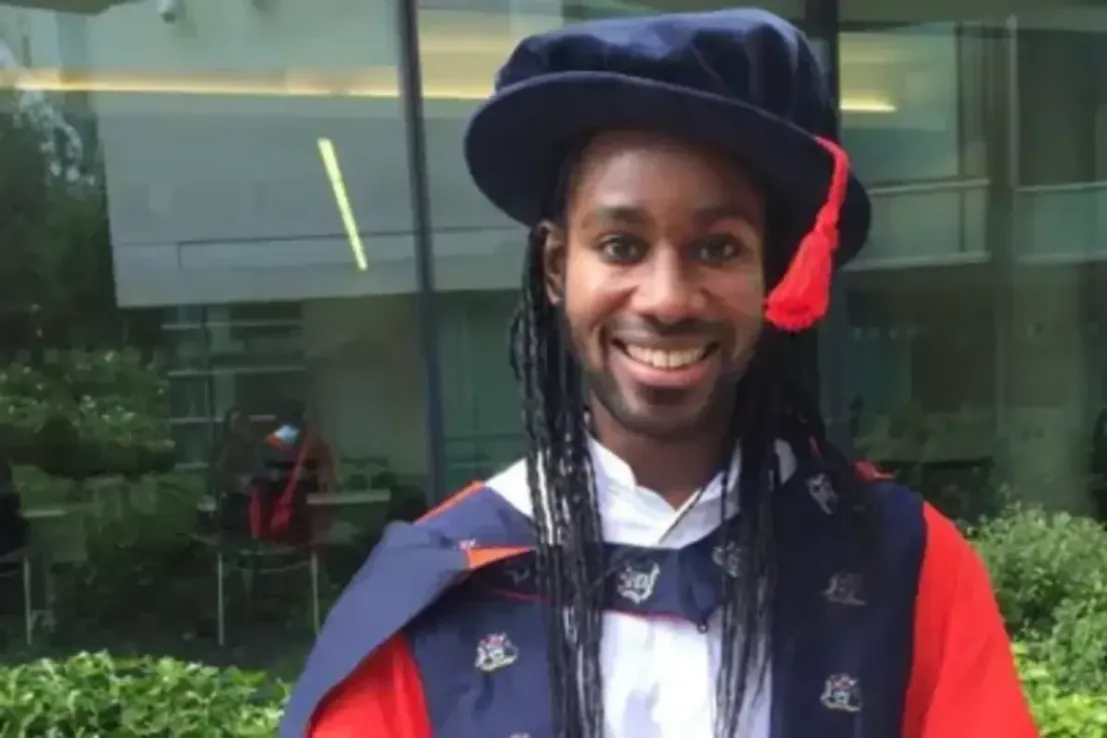
The controversy surrounding Jason Arday, hailed by Cambridge as its "youngest black professor," raises pressing questions about the role that Diversity, Equality & Inclusion (DEI) policies now play across institutions, businesses, and society more broadly, writes Ike Ijeh.
Plagiarism predates Ancient Greece, and while it may be the least sincere form of flattery, it had not—until the Jason Arday row at Cambridge—typically been treated as a function of racism. Arday's loose relationship with the truth has drawn considerable mockery in recent days, but it has also generated more serious concerns about the potentially corrosive influence of DEI throughout society.
In 2023, Cambridge celebrated Arday, then 37, as its "youngest black professor." The appointment was based on academic credentials whose authenticity has since been called into question. The fallout has produced two distinct DEI-related reactions.
The first reaction has been to label anyone who criticises Arday as racist. Among those making this argument is the Good Law Project, which has characterised the scrutiny of Arday as a "right-wing smear campaign" (Good Law Project petition).
This framing is untenable. Criticising an academic because they are black is racist; criticising their work when they happen to be black is not. Insisting that racial identity should shield anyone from legitimate scrutiny is itself irrational. Indeed, the suggestion that Arday's ethnicity should protect him from the same examination that would inevitably follow had a white colleague made similar embellishments is itself a form of discrimination. It rests on the insulting and infantilising assumption that ethnic minorities cannot be held to the same ethical standards as white people.
Delegitimising Minority Achievement
The second reaction has been the claim that Arday obtained his position solely because of DEI. No evidence supports this assertion, but the mere suspicion illustrates DEI's capacity to delegitimise even genuine minority achievement.
The think tank Policy Exchange has compiled substantial research documenting what it describes as the damaging effects of DEI on British society. Its report Without Fear Or Favour? suggested that DEI could lie at the root of alleged "two-tier policing" and revealed that over the past six years, police forces in England and Wales have spent more than £630 million on the very DEI policies that the report links to the mishandling of the Henry Nowak incident prior to his death.
This influence extends into the business community. The Policy Exchange publication Putting Business Back in the Driving Seat demonstrated how DEI policies impose a significant financial and regulatory burden on UK businesses, with an estimated annual cost of up to £10 billion.
DEI's perpetuation of the notion that ethnic minorities can only succeed if the white majority is forcibly excluded from professional pathways represents a serious threat to social cohesion. By reducing ethnic minorities to a vulnerable, homogenous bloc, DEI also risks smothering the very diversity that progressives claim to value.
Lord Sewel, author of the 2021 Commission on Race and Ethnic Disparities report, has written that an "unholy alliance between ideological administrators, activist academics and radical student unions" means that "it should be no surprise that, in both the USA and the UK, some of the worst expressions of antisemitism… should have come from our universities – institutions steeped in this warped identity politics of DEI."
DEI's Original Intent vs. Modern Reality
DEI's original core intentions—to achieve equality throughout society by improving the prospects of under-represented groups—were commendable. By that logic, DEI would have been an apt policy instrument for Apartheid South Africa or the pre-civil-rights American South, where it could have served as a deliberate, state-sanctioned programme to recalibrate a fundamentally unequal society.
Modern Britain, however, is neither Apartheid South Africa nor the pre-civil-rights American South. It ranks among the least racist countries on earth. The imposition of DEI in this context has produced a grossly distortive effect, where it has perversely become a vehicle for discrimination, exclusion, and inequality—legalised discrimination against the majority that legitimises their exclusion and thereby nationalises social inequality.
As equality of outcome is an existential impossibility, DEI's promotion of the flawed assumption that all disparity must stem from discrimination is a formula for endless civic turmoil and racial resentment. It threatens to unravel decades of progress in UK race relations and promises a corrupt new social contract in which racial membership becomes an enabler of social mobility.
The debate is not confined to Britain. In June 2023, the US Supreme Court ruled in Students for Fair Admissions v. Harvard that race-conscious admissions programmes at universities violated the Equal Protection Clause, a decision that intensified scrutiny of DEI infrastructure across American higher education and prompted parallel reassessments in the UK and elsewhere. The Arday row at one of the world's oldest and most prestigious universities now feeds directly into that transatlantic conversation about where equalities policy should begin, end, and be held accountable.
In short, DEI has become the toxic hallmark of a society that has abandoned the fight against inequality in favour of the progressive dopamine rush of finding it.
If there is to be any realistic hope for social cohesion in Britain, DEI must be entirely dismantled.
Plagiarism will always haunt academia—that is a matter of human nature. If institutions like Cambridge wish to ensure that future occurrences do not inflict fresh reputational damage, they would be well advised—as would all employers—to adopt recruitment strategies based on merit rather than melanin.
Ike Ijeh is head of housing, architecture, and urban space at Policy Exchange.
