Cama adapts to changing coffee packaging demands
Key Takeaways
- •Aluminium is gaining ground in coffee packaging as a material that better preserves product protection, quality and shelf appeal than many alternative recyclable options.
- •Cama says self-protecting capsules remain a technical challenge when they lack enough barrier properties and require extra outer packaging.
- •The company is concentrating on secondary and tertiary packaging for bags, capsules, containers, stickpacks and pods, with a strong emphasis on recycled cardboard solutions.
- •Cama has implemented Industry 4.0 systems and is advancing its Machine Enhancement Program to support data exchange, predictive maintenance and operational performance.
- •The MEP combines technologies such as augmented reality, digital twins, automatic format changeover, automatic carton loading and collaborative palletising.
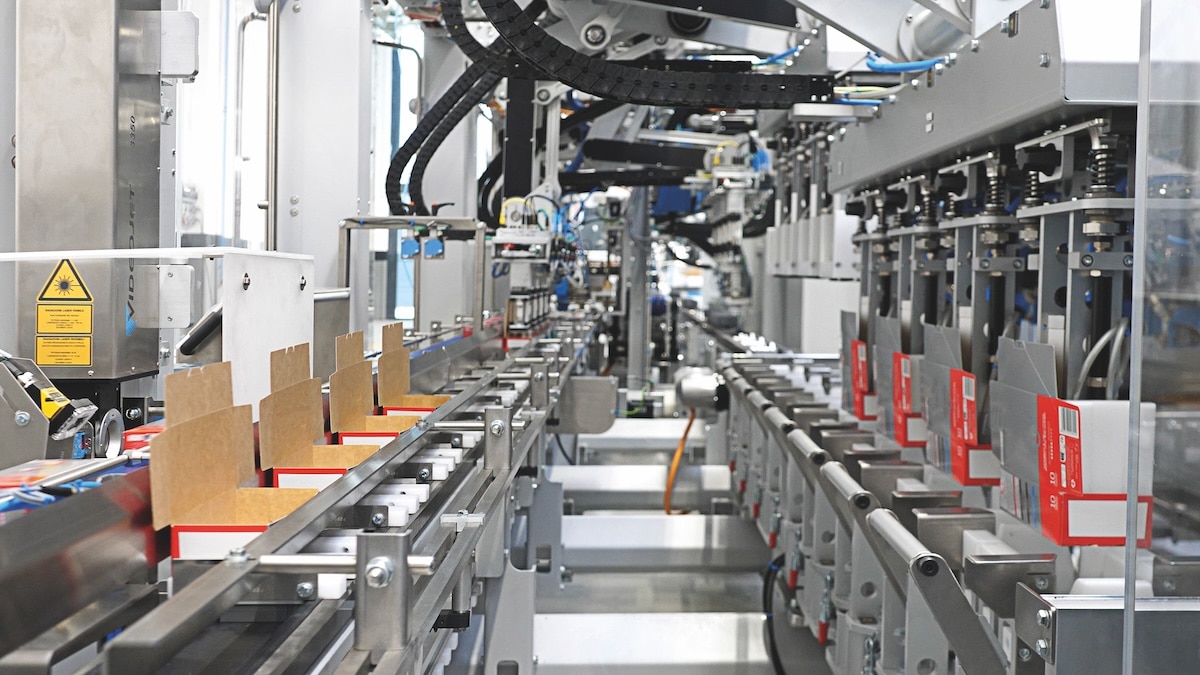
Flexibility and digitalisation are top of mind for Cama as the company works to meet changing packaging needs in the coffee sector.
The Italian packaging leader is responding to an industry that is rethinking how products are packaged, protected and presented. According to Sergio Cornago, Cama’s sales manager, the coffee sector has changed significantly over the past few years, driven by evolving material choices, higher efficiency demands and the need for greater production flexibility.
A major development has been the growing focus on waste reduction and the adoption of recyclable materials. That shift has accelerated changes in primary packaging, with aluminium increasingly replacing plastic, while alternative recyclable solutions have not yet consistently met the performance standards required by the market.
Cornago said one of the key technical challenges in this transition is the development of self-protecting capsules. Where capsules do not integrate sufficient barrier and protective properties, manufacturers often have to rely on additional outer packaging, which can affect both line efficiency and product quality.
In this context, aluminium has emerged as the most effective solution, offering product protection, quality preservation and stronger shelf appeal.
Recent industry engagement at Interpack has also provided further insight into how the market is evolving. Cornago pointed to renewed customer activity and increasing confidence across the packaging sector.
He also noted a trend among larger brands to bring more production in-house, alongside a broader diversification of secondary packaging formats. Together, these developments reflect a wider shift towards both consolidation and greater operational flexibility in coffee packaging operations.
Within this changing landscape, Cama continues to focus on secondary and tertiary packaging applications, including bags, capsules, containers, stickpacks and pods.
“Cama has always had a strong position in secondary and tertiary packaging, with a real focus on recycled cardboard solutions that offer benefits both in environmental terms and for the end too,” Cornago said.
Beyond material selection, Cornago said the company’s approach is built on collaboration. “What really sets us apart is our ability to work side by side with customers to develop packaging solutions around their specific needs,” he said.
Flexibility has become a defining requirement across the coffee industry. As product and format diversity increases, packaging systems must be able to respond quickly without disrupting operations. In response, Cama develops tailored, application-driven systems rather than standardised configurations, supporting customers with solutions designed around specific use cases.
That approach is applied across a wide range of customers, from smaller operators to major brands, with the goal of aligning packaging performance with broader business objectives.
“Every solution is developed around the customer’s specific needs, and we work closely with them to make sure the final result fits their production requirements, packaging goals and market positioning,” Cornago said.
Alongside flexibility, these systems are designed to deliver operational benefits including improved accessibility, reduced maintenance requirements, enhanced ergonomics and consistently high efficiency. They are also shaping packaging development itself. Through close collaboration with major brands, Cama has refined packaging formats to support a more premium pack presentation while maintaining the protection required during transport and handling.
Automation and digitalisation have long been central to Cama’s strategy, with the company continuing to develop solutions aimed at improving efficiency, reliability and operational performance across packaging lines.
In recent years, that strategy has been reinforced through the implementation of Industry 4.0 solutions, enabling full data exchange on consumption, output and performance while supporting preventive and predictive maintenance strategies.
As the industry moves towards Industry 5.0, where the focus extends beyond production performance to include sustainability, adaptability and improved working conditions, Cama has translated these principles into a practical, application-driven framework through its MEP, or Machine Enhancement Program.
Designed as a scalable platform for both new installations and retrofit applications, the MEP is intended to optimise the use of materials, energy, time and space. It is structured to enable rapid adoption while delivering measurable improvements in format changeover, process quality and production continuity.
The company said the programme represents a practical implementation of Industry 5.0 concepts by combining advanced technologies with a strong emphasis on operational efficiency, sustainability and operator support.
The MEP currently integrates a range of advanced solutions, including Augmented Reality guidance, Digital Twin capabilities, Automatic Format Changeover, Automatic Carton Loading and Collaborative Palletising, with additional modules under development.
Cama said the approach reflects a broader vision in which automation is not only a tool for improving system efficiency, but also a means of enhancing process intelligence and enabling more responsive and sustainable production environments.
Within this framework, automation is designed to work alongside operators, improving safety, ergonomics and overall job quality while reducing repetitive and low-value tasks and allowing personnel to focus on higher-value activities.
As the coffee sector continues to evolve, packaging is becoming a key lever for balancing efficiency, sustainability and product differentiation. In that environment, the ability to combine advanced automation with application-driven design is expected to remain important, particularly as brands weigh how to adapt packaging lines to changing formats and material requirements without sacrificing operational continuity.
For Cama, the focus remains on delivering solutions that respond to current demands while anticipating the next phase of transformation across the industry.
For more information, visit camagroup.com.
This article was first published in the July/August 2026 edition of Global Coffee Report.

