BYD Targets More Than 2.5 Million Vehicle Exports in 2027, Brokerages Say
Key Takeaways
- •BYD management guided overseas shipments to 1.9-2 million vehicles in 2026 and more than 2.5 million in 2027, nearly doubling last year's export level.
- •BYD's Hungary plant, its first within the EU, is expected to begin assembly in November or December.
- •Local production would help BYD avoid the EU's roughly 27% tariff and Brazil's 34% import tariff, saving more than 40,000 yuan per vehicle.
- •BYD plans to build 90,000 flash-charging stations by 2028, with its flash-charging technology adding about 400 km of range in roughly five minutes.
- •BYD is targeting a 25% share of China's domestic car market, with its share rising from 8% at the start of this year to 18% in July.
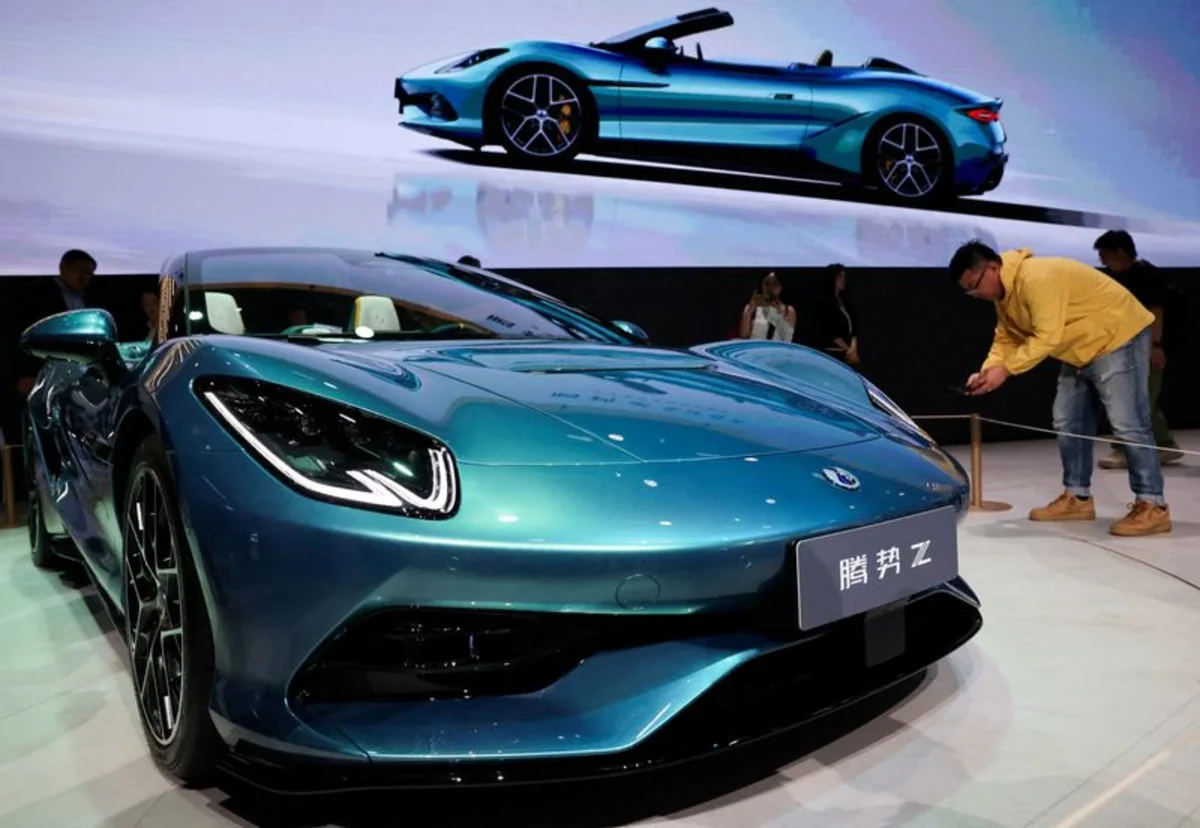
Chinese electric vehicle maker BYD expects overseas shipments to exceed 2.5 million vehicles in 2027, according to two major brokerages, citing a group meeting with company management. BYD did not immediately respond to a request for comment. The projection signals how central exports have become for the Shenzhen-based automaker, which overtook Tesla in battery electric vehicle sales in late 2023 to become the world's largest EV maker, as it contends with an intensifying price war in its home market.
Deutsche Bank said in a note that the export target is underpinned by continued market-share gains overseas, an expanding fleet of dedicated car carriers, and a growing local manufacturing footprint. BYD has been building its own fleet of roll-on/roll-off car carriers to reduce reliance on third-party shipping, which has been a bottleneck for Chinese automakers as global vessel capacity struggled to keep up with surging exports.
BYD management guided overseas shipments to reach 1.9 million to 2 million vehicles in 2026, nearly double last year's level, Deutsche Bank said. Management indicated that shipping constraints limited overseas sales this year and that export volumes could otherwise have been higher.
BYD's Hungary plant is expected to start assembly in November or December, and management is also evaluating additional overseas manufacturing locations, according to Deutsche Bank. The Hungarian facility would be BYD's first car plant inside the European Union, complementing its existing overseas operations in countries such as Thailand, Brazil, Uzbekistan and Turkey.
Local production would help BYD avoid the EU's roughly 27% tariff on battery electric vehicles and Brazil's 34% import tariff, representing savings of more than 40,000 yuan ($5,961) per vehicle, which management sees as offsetting ramp costs, Citi said. The EU tariffs, imposed in 2024 after an anti-subsidy investigation into Chinese-made EVs, apply on top of the bloc's standard 10% import duty, pushing several Chinese automakers toward localizing production in Europe.
BYD also plans to build 90,000 flash-charging stations by 2028, including 20,000 by the end of 2026, followed by another 30,000 in 2027 and 40,000 in 2028, Deutsche Bank said. The company unveiled its flash-charging technology earlier this year, which it says can add roughly 400 km of driving range in about five minutes, addressing one of the main deterrents to EV adoption: charging speed.
The company is targeting a 25% share of China's domestic car market. Its market share climbed to 18% in July from 8% at the start of this year.
($1 = 6.7104 Chinese yuan renminbi)
(Reporting by Qiaoyi Li, Zhang Yan and Ju-min Park; editing by Mark Potter. Via Reuters on Yahoo Finance. Ticker: 002594.SZ)
