Bybit Secures Austrian EMI License for EU Payments Operations
Key Takeaways
- •Austria's Financial Market Authority has granted an electronic money institution license to Bybit Payments GmbH, the entity designated for Bybit's European payment services operations.
- •The EMI authorization permits the issuance of electronic money and provision of payment services, and may be passported to other EU member states under EU law subject to local notification requirements.
- •Bybit has not disclosed specific rollout dates, product offerings, or country-by-country availability for services under the new license.
- •Major competitors including Coinbase and Kraken have also obtained EMI authorizations in various EU member states as part of their compliance strategies.
- •The licensing occurs amid an evolving EU regulatory environment driven by the Markets in Crypto-Assets regulation that began taking effect in 2024.
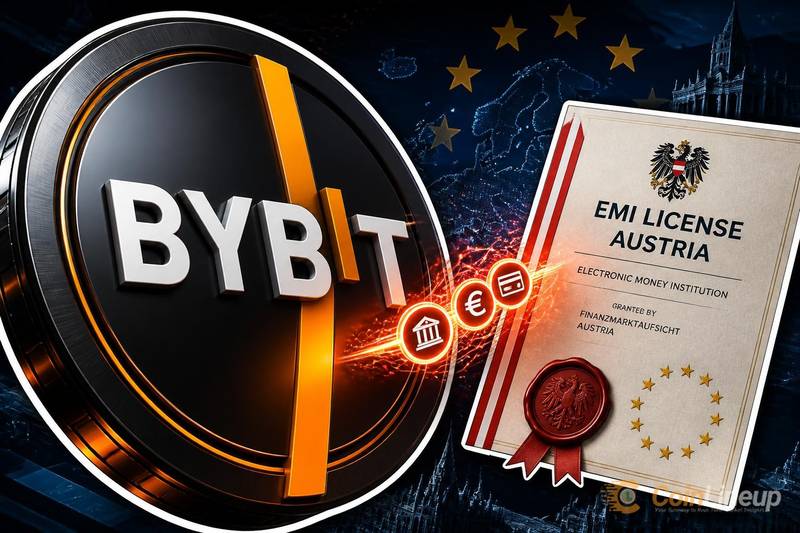
Bybit Payments GmbH has been granted an electronic money institution (EMI) license by Austria's Financial Market Authority (FMA), marking a significant regulatory milestone for the cryptocurrency exchange's European operations.
License Details
The Austrian FMA issued the EMI authorization to Bybit Payments GmbH, the entity through which Bybit intends to operate its European payment services. According to the FMA's official announcement, the regulator confirmed the granting of the license, positioning the authorization within the framework of EU payments activity.
Bybit framed the license as part of its broader European expansion strategy. The company stated that Bybit Payments GmbH secured the electronic money institution license through its official announcement, emphasizing the move as a step toward deepening its regulated presence in the region.
Scope and Implications
An EMI license authorizes institutions to issue electronic money and provide payment services. For Bybit, this could enable the development of payments-related infrastructure across EU member states, extending the exchange's capabilities beyond core cryptocurrency trading. Under EU law, EMI authorizations can be passported to other member states, meaning a license granted by one national regulator may serve as a gateway to cross-border operations subject to local notification requirements.
However, the available details do not confirm specific rollout dates, product offerings, or country-by-country availability. Any live services, launch timing, or passporting arrangements under the license remain undisclosed.
Bybit has previously expanded its European-facing product lineup, including the introduction of RWA fixed-income vaults for stablecoin users, reflecting a broader effort to diversify its regulated offerings.
Regulatory Context
The license places Bybit on a formal compliance footing within Austria's regulatory framework, with Europe serving as the wider target market. Crypto platforms operating in the region continue to navigate an evolving regulatory landscape shaped significantly by the EU's Markets in Crypto-Assets (MiCA) regulation, which began taking effect in 2024 and establishes harmonized rules for crypto-asset issuers and service providers across the bloc. Developments also include new tax withholding requirements for exchanges and shifting compliance expectations across jurisdictions.
Major global exchanges have been pursuing EU regulatory licenses in parallel, with firms such as Coinbase and Kraken securing EMI authorizations in various EU member states as part of their compliance strategies. Bybit's Austrian license positions it alongside these competitors in the race to establish regulated European footholds.
Further disclosure regarding concrete service details and implementation timelines will be needed to determine how the Austrian license translates into live EU payments functionality for Bybit's users.

