Bybit's Peter Loo: Trust Is Key to the Future of Programmable Money
Key Takeaways
- •Peter Loo, Chief Legal & Compliance Officer at Bybit, said at the Singapore FinTech Festival on November 19 that programmable money development should begin with identifying real user problems rather than being driven by technology alone.
- •A single payment transaction can involve four to six regulated entities operating under different frameworks, and their varying risk appetites, monitoring requirements, and fraud controls can cause delays, especially in cross-border payments.
- •Loo called for greater clarity and alignment on standards across the payment chain, covering technical requirements, on-chain and off-chain activities, transaction values, monitoring practices, and fraud controls.
- •Smart contracts could automate the distribution of yield generated by underlying assets through the issuance of additional token units, reducing manual processes in savings-related products.
- •Drawing on his experience as a former regulator, Loo said firms must demonstrate that actual practices match their stated policies, identifying clear customer responsibilities, sound wallet and treasury management, secure infrastructure, and operational resilience as essential requirements.
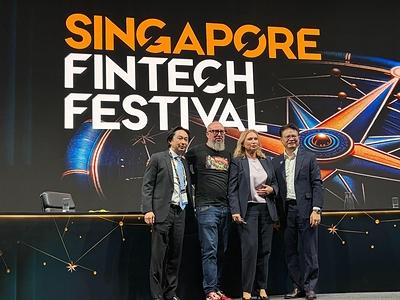
DUBAI, UAE, Nov. 24, 2026 — Programmable money must address real-world needs, backed by clear regulatory standards and strong operational safeguards, according to Peter Loo, Chief Legal & Compliance Officer at crypto exchange Bybit. Loo made the remarks during a panel discussion at the Singapore FinTech Festival on November 19.
Speaking on the SFF Future Matters Stage in a session titled “Building Trusted Hubs for Programmable Money,” Loo outlined what he described as the central challenges facing programmable finance: establishing clear user demand, improving coordination across regulatory frameworks, and building trust through sound operational practices. The annual festival convenes central bankers, regulators, financial institutions, and technology firms to debate the direction of digital finance. Programmable money generally refers to digital money that can carry embedded instructions and execute automatically when predefined conditions are met — capabilities often built through tokenisation, the representation of money or assets as digital tokens on shared ledgers.
Real-World Demand Should Drive Innovation
Loo said the development of programmable money and tokenisation should start with a clear understanding of the problems they aim to solve. Technology alone is not a reason to create a new financial product, he said. Firms should first establish whether a solution meets a genuine market need, offers practical benefits to users, and delivers something that existing financial services cannot. In practice, the framing sets a test for firms weighing tokenisation projects: identify the user problem first, then determine whether the technology genuinely solves it.
Regulatory Alignment Can Improve the Payment Experience
Loo highlighted the complexity of payment transactions, which can involve four to six regulated entities operating under different regulatory frameworks. Each institution may apply its own risk appetite, transaction monitoring requirements, and fraud prevention measures. According to Loo, these differences can create delays or interruptions, even when the payment process appears straightforward to the end user. The pattern is especially familiar in cross-border payments, where funds can pass through several intermediaries before reaching the recipient, and each checkpoint brings its own set of rules a transaction must satisfy.
He called for greater clarity on standards across the payment chain, covering technical requirements, on-chain and off-chain activities, transaction values, monitoring practices, and fraud controls. A risk-based approach remains important, but better alignment could help reduce friction while maintaining appropriate safeguards.
Loo also noted that users may find it difficult to understand why a transaction is restricted when the decision comes from a third-party service provider. Clearer responsibilities among participating institutions would help address this challenge, he said. For consumers, the upshot is a familiar one: money can be held up mid-transfer with no obvious point of contact to resolve the issue.
Smart Contracts Offer Potential for Automated Savings Products
Loo also discussed how programmability could support savings-related products. Smart contracts — self-executing programs on a blockchain that carry out agreed actions when preset conditions are met — could, for example, automate the distribution of yield generated by underlying assets through the issuance of additional token units. This could reduce manual processes and make the distribution of returns more efficient.
Trust Comes Down to Execution
Drawing on his experience as a former regulator, Loo said firms must demonstrate that their actual practices match the policies and commitments they present to regulators and customers. He identified clear responsibilities to customers, sound wallet and treasury management, secure infrastructure, and operational resilience as essential requirements — expectations that apply to both digital asset businesses and traditional financial institutions. The list mirrors long-standing prudential expectations in traditional finance, where supervisors look beyond written policies to whether firms actually deliver on them.
Loo further stressed that governments and regulators need to understand the intended use cases of programmable money and assess how regulatory frameworks can support the needs and interests of end users.
The discussion underscored the importance of balancing financial innovation with practical utility, regulatory clarity, and sound risk management as the field of programmable money continues to develop.
Disclaimer: Bybit is not licensed by the Monetary Authority of Singapore (MAS) and does not offer its products or services to users in Singapore.
About Bybit
Bybit is The New Financial Platform. The company believes every person should have access to every financial opportunity on earth, and is building the first intelligent platform that connects anyone, anywhere, to the world's finance.
Trusted by more than 90 million users worldwide, Bybit brings together investing, trading, payments, and wealth-building in a single secure and intelligent ecosystem. Through the combination of AI-powered technology, deep global liquidity, robust security, and transparent operations, Bybit makes global finance more accessible, efficient, and empowering for everyone.
Built for everyone. Powered by intelligence. Open to the world.
Learn more at Bybit.com. For media inquiries, Bybit can be reached at media@bybit.com.

