Vitalik Buterin Warns AI Could Threaten Crypto Security Before Quantum Computing
Key Takeaways
- •Vitalik Buterin warned that AI-accelerated mathematics could pose cryptographic risks extending beyond quantum computing, challenging the assumption that lattice-based schemes such as ML-DSA remain safe.
- •Ethereum's lean roadmap has shifted toward hash-only cryptography, using systems including WOTS and SPHINCS- whose security derives from hash functions rather than structured mathematics.
- •Justin Drake recommended a controlled 'bunker mode' migration of funds to fresh addresses that have never signed a transaction, since a public key is typically revealed only once an address signs.
- •Drake assessed that ECDSA could potentially break before quantum computing becomes practical, citing recent mathematical breakthroughs and OpenAI's latest work as reasons for caution.
- •Both figures advised against rushed migrations, with Drake urging institutions to harden cold storage and rotate signer keys, and Buterin recommending offchain confirmations for multisig systems to reduce public key exposure.
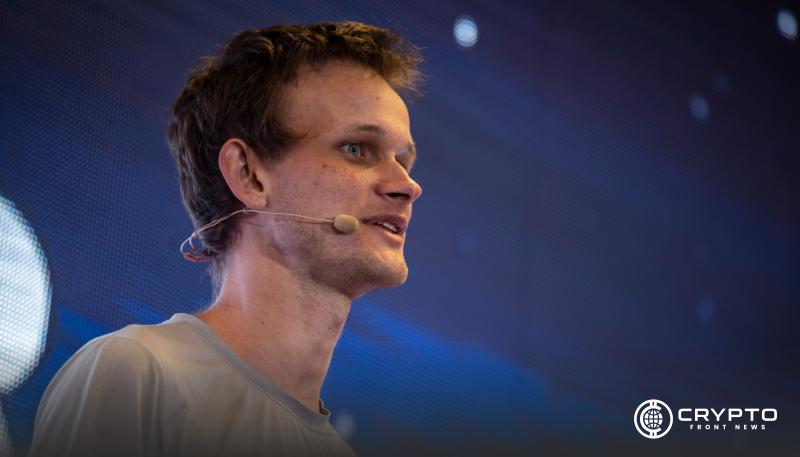
Ethereum co-founder Vitalik Buterin and Bitcoin security researcher Justin Drake have urged crypto users to prepare for possible AI-driven attacks on cryptography. Buterin advised against rushed wallet moves, while Drake called for controlled migration to fresh addresses as AI advances threaten the assumptions behind ECDSA — the elliptic curve signature scheme that secures Bitcoin and Ethereum wallets — along with lattices and other cryptographic systems. Their remarks were shared in part via X.
Buterin Flags New Risks From AI Mathematics
Buterin said AI-accelerated mathematics could create risks that extend beyond quantum computing. He identified ML-DSA, fully homomorphic encryption, and lattice systems as areas requiring greater caution. That list is notable: lattice-based schemes such as ML-DSA and Falcon are among the algorithms the U.S. National Institute of Standards and Technology has selected for its post-quantum signature standards, making them common reference points in post-quantum planning. In his view, many users assume elliptic curves could fail while hashes and lattices remain safe — an assumption he challenged by warning that lattice security could also face major advances from AI mathematics.
Buterin drew a comparison with the history of factoring: decades of research reduced the cost of factoring through increasingly advanced number field sieves. Similar hidden weaknesses, he suggested, could exist in elliptic curves and lattices, and bots could potentially discover mathematical shortcuts that humans have not found.
Ethereum Pushes Toward Hash-Based Cryptography
According to Buterin, Ethereum's lean roadmap has moved toward hash-only cryptography during the past year. The approach avoids lattices, ML-DSA, Falcon, and lattice-based commitments in zero-knowledge proofs. He noted that Ethereum signatures use hash-based systems, including WOTS and SPHINCS-. These schemes draw their security from hash functions themselves rather than from the structured mathematics Buterin views as more exposed to breakthroughs.
Public-key encryption, however, remains harder, because hashes alone cannot provide the required trapdoor structure. That structure can involve group theory, isogenies, lattices, or code-based systems. Buterin added that long-term security may require much larger key sizes for structured cryptography, while hash-based systems could become more efficient than lattice systems at larger security parameters. He considers major breakthroughs against hashes less likely.
Drake Calls for Controlled Wallet Migration
Drake urged the blockchain industry to begin planning for “bunker mode” through controlled asset migration. He recommended fresh addresses whose public keys remain hidden behind hashes, saying holders should consider moving funds to addresses that have never signed a transaction — on most chains, a public key is only revealed once an address signs, which is the exposure this kind of migration is designed to avoid. After signing, he advised moving remaining funds to another address.
At the same time, Drake stressed that users should not rush. He said rushed migrations could cause more damage, echoing Buterin's warning about migration mistakes. In his assessment, ECDSA could potentially break before quantum computing becomes practical, and he cited recent mathematical breakthroughs and OpenAI's latest work as reasons for greater caution.
Drake also urged institutions to harden cold storage and suggested rotating signer keys. For multisig systems, Buterin recommended offchain confirmations to reduce public key exposure. Drake further highlighted SPHINCS for hash-based multisigning and called for faster development of post-AI cryptography. The signals to watch from here are the pace of post-AI cryptography development and the next steps in Ethereum's shift toward hash-only signatures.

