Burnham's Devolution Plans Criticised as 'Top-Down' After PM Unveils Income Tax Revenue-Sharing Proposal
Key Takeaways
- •The Prime Minister announced plans to share income tax revenue with English regional leaders, with implementation expected to begin next spring.
- •The Conservative Party has strongly criticized the devolution agenda, with shadow local government secretary Sir James Cleverly describing it as a top-down approach that sidelines local councils.
- •A white paper providing full details of the reforms and an implementation timetable is scheduled for publication alongside the Budget this year.
- •Economists at Oxford Economics have indicated that fiscal devolution allowing mayors to retain tax receipts could deliver more meaningful long-term growth than redistributing spending.
- •There is speculation that Sir James Cleverly may pursue the Conservative candidacy for the London mayoralty in the 2028 election.
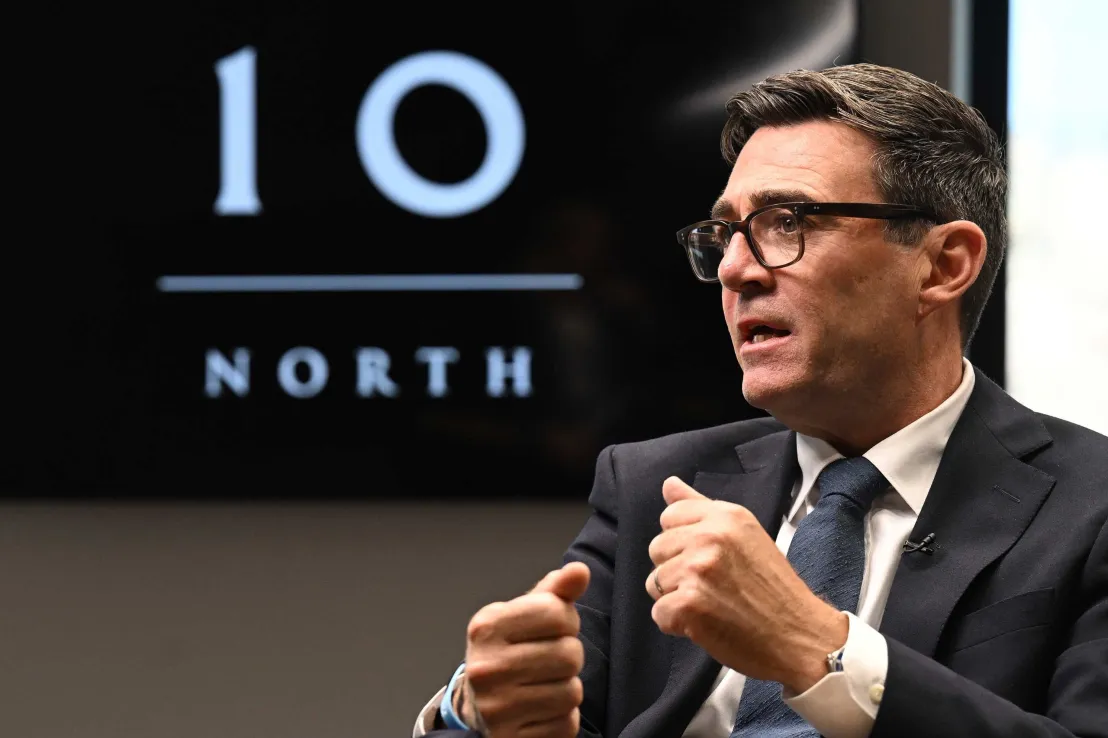
Andy Burnham's devolution agenda has come under fire for its "top-down" approach following the Prime Minister's announcement of new plans to share income tax revenue with local leaders.
The proposals represent a significant shift for England, which remains one of the most fiscally centralised nations in the OECD. Unlike Scotland and Wales, which already exercise substantial tax-raising powers under their own devolution settlements, English local authorities and combined authorities currently depend heavily on grants allocated by Whitehall.
Burnham, who served as mayor of Greater Manchester, said regional leaders in England will begin receiving a "greater share of locally generated revenues" next spring as part of his broader effort to devolve power away from London and decentralise the British state.
Announcing the plans, the Prime Minister said he understood what it was like "to be ignored by politicians in Westminster" and pledged not to "make that same mistake now I'm PM."
"Under our plans, more of the taxes raised in a community will stay in that community. Soon, every local leader will have the power and resources to improve public transport, build homes and create jobs," he said.
The government has not yet confirmed the precise proportion of income tax and business rates revenue that mayors would receive. A white paper is scheduled to be published alongside the Budget this year, outlining the reforms in full and providing a timetable for implementation. According to Number 10, the new economic framework would enable communities to "directly benefit when their economy grows."
Conservative Backlash
The proposals have drawn sharp criticism from the Conservative Party. Sir James Cleverly, the shadow local government secretary, argued that Burnham had placed too much emphasis on his own experience as mayor of Greater Manchester, claiming the new approach to transferring power from Whitehall was "sidelining local councils and ignoring local identities."
"Andy Burnham is right to want to encourage growth in all communities. But his top-down Manchesterism will lead to higher taxes, with no guarantee of better outcomes for local people," Cleverly said.
"Devolution cannot be imposed from above – it can only work if it's done in cooperation with local people. But Labour's regionalist approach takes power away from local communities," he added.
The Conservatives' criticism centres on whether power should rest with council leaders or with leaders of combined authorities. Although the party established the combined authority model in England during its time in government — with Greater Manchester among the first to adopt the structure under a 2014 devolution agreement, leading to Burnham being elected as the region's first mayor in 2019 — party sources said local residents had not consented to the devolution plans.
Tories also oppose power being transferred to regional bodies rather than more locally focused authorities, citing Cornwall as an example of an area that has previously resisted being merged with Devon under a larger local authority.
Mayoral Ambitions
Cleverly's remarks carry additional significance given speculation about a potential bid to stand as a Conservative candidate for the London mayoralty. One Tory source linked to City Hall told City AM that Cleverly was among the strongest potential candidates for the election expected in 2028. A party spokesman declined to comment on the matter.
Sir Mel Stride, the shadow chancellor, also criticised Burnham for making "big claims while being very short on detail."
"Unless Burnham is going to launch another tax raid elsewhere, borrow even more, or make cuts to central government grants, there is no new money being announced here," Stride said.
"If local areas which see stronger growth are to end up with more funding, that could mean those who lose out are precisely those areas which have seen weaker local economies over recent years – the opposite of what Andy Burnham claims he wants to achieve," he added.
Economists Point to Growth Potential
Economists have previously suggested the plans could deliver a regional growth boost. Researchers at Oxford Economics predicted that devolution — by giving mayors the ability to retain tax receipts — would be more effective than redistributing spending, an approach they said "may even reduce" growth by depriving more productive cities of investment.
"Extensive fiscal devolution, granting significant revenue-raising powers through taxation or debt issuance, potentially offers the most meaningful option for raising long-term growth," they said. "It gives local policymakers both the ability and incentive to pursue growth-enhancing reforms."

