Burnham Has Inherited Labour's EU Delusion, Writes Eliot Wilson
Key Takeaways
- •Andy Burnham became Prime Minister on 20 July 2025 after succeeding Sir Keir Starmer as Labour leader, and is maintaining the policy of not returning to the EU single market, customs union, or freedom of movement.
- •Emmanuel Macron was the first foreign leader formally welcomed to Downing Street by Burnham, with talks covering Channel migration cooperation and technology transfer for Ukraine to produce Storm Shadow cruise missiles domestically.
- •Burnham's priority in the EU reset negotiations is protecting UK steel and agriculture, amid concerns the EU's 'Made in Europe' procurement plan could significantly harm British steel exports.
- •France led opposition that limited UK involvement in the EU's SAFE defence loan scheme, at one point proposing a €6.5bn membership fee, and sought strict conditions on UK access to a €5bn EU tech startup fund.
- •The EU accounts for roughly four in ten of UK goods exports, making the post-Brexit trading relationship central to the economic questions Burnham's new economic model must address.
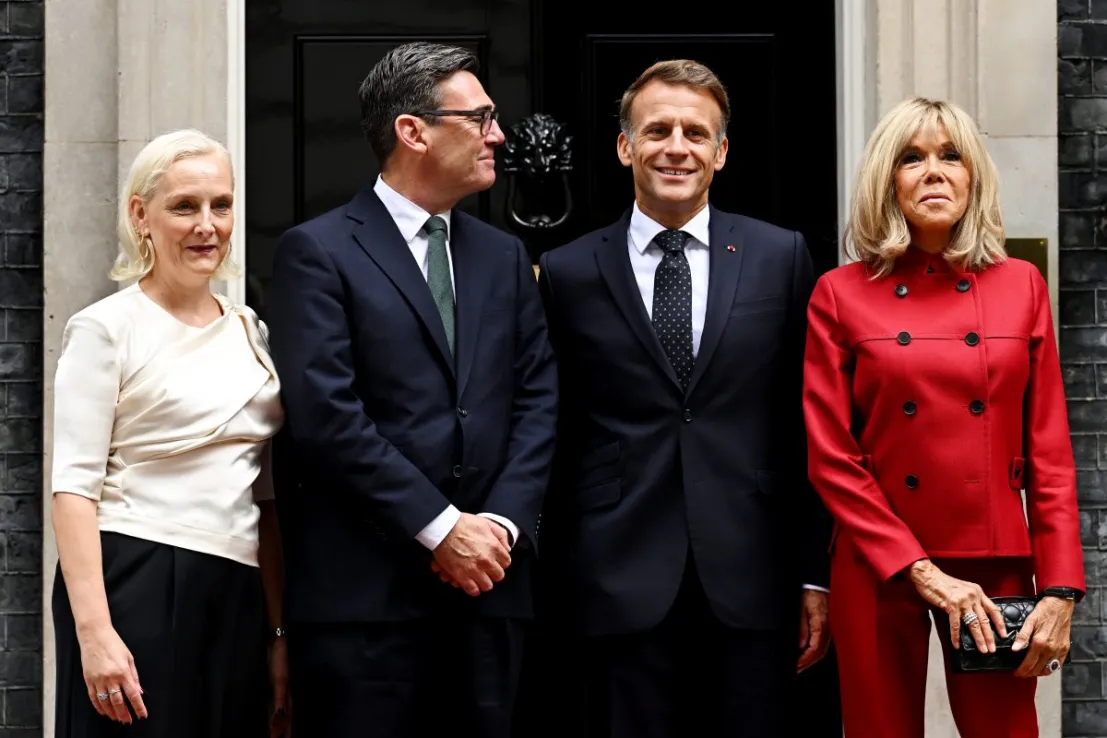
Andy Burnham must accept what Sir Keir Starmer would not: the EU is just not that into the UK, writes Eliot Wilson.
Since succeeding Sir Keir Starmer as Prime Minister on 20 July, Andy Burnham has done his best to represent change. It is no easy task: he comes from the same party, was elected leader unopposed, and no general election has separated his tenure from Starmer's. He has pledged to "build a new politics", to "make a break" from the old ways, to change his party's "political direction" and to "bring back hope". His arrival in Downing Street, he said, would be "a circuit breaker for Britain, bringing forward the biggest changes in the last 40 years. A new political model and a new economic model."
Well, perhaps. As he wrestles with a prison population at breaking point, contemplates tax increases in defiance of explicit manifesto promises and struggles with defence expenditure, the flat, stilted tones of his predecessor can still be heard in the ether. They are loudest when Burnham discusses his approach to a "reset" of the UK's relationship with the European Union.
The stakes are considerable: the EU remains the UK's largest trading partner, accounting for roughly four in ten of its goods exports, so the texture of post-Brexit trading arrangements feeds directly into the economic questions – growth, investment, the tax base – that Burnham says his new economic model must answer.
"We will reset the relationship and seek to deepen ties with our European friends, neighbours and allies." That was not Andy Burnham speaking, but Labour's 2024 election manifesto, the source of so many of Starmer's tin-eared mantras. The party's policy was clear: no return to the European single market, the EU Customs Union or freedom of movement. These positions were non-negotiable. At a G7 summit in Évian-les-Bains in June, Starmer said there would be a "reset" summit with the EU on 22 July. In the event, that date fell two days after he returned his seals of office and left Downing Street.
The faces have changed – Burnham has replaced Starmer, and the Minister for European Relations is now Hamish Falconer, a former diplomat and son of Tony Blair's flatmate-cum-Lord Chancellor – but the script has stayed broadly the same. There will be no return to EU membership, nor any halfway house through the single market or a customs union. The Brexit vote of 2016 will be respected.
Burnham plays happy families with Macron
Last week the Prime Minister met Emmanuel Macron, who became the first foreign leader Burnham had formally welcomed to Downing Street. The President of the French Republic is now counting down his remaining months in office. The visit was primarily to mark the start of the loan of the Bayeux Tapestry to the British Museum, but in bilateral talks Burnham and Macron discussed increasing cooperation on illegal migration across the Channel and the technology transfer that would allow Ukraine to produce Storm Shadow cruise missiles (SCALP-EP in French service) in domestic facilities.
Afterwards, Burnham exuded the matey bonhomie at which he excels, telling the media that Macron's visit "shows what collaboration can achieve, just as we are also showing… on strengthening the UK-EU relationship". It was later emphasised that the two leaders had "discussed the UK's drive to get closer to Europe".
The Prime Minister is trying to fool the public, or perhaps fooling himself. He appears to believe that warm handshakes and toothy smiles for the press cameras represent diplomatic progress. Consider the reality: Burnham's current priority in the "reset" negotiations is the protection of steel and agriculture. He is worried that a "Made in Europe" EU procurement plan "could pose significant problems for British steel", and will demand that the UK be included in the EU's manufacturing scheme, designed to guard against Chinese competition.
The concern is grounded in real exposure: the UK steel industry has been contracting for years, with plant closures and thousands of job losses announced at major producers, leaving the sector with little slack to absorb new barriers to its export markets.
Why would European leaders assent to this? The EU talks a great deal about free trade and tariff barriers, but it is both Jekyll and Hyde on the issue: the European single market allows goods and services to move freely within it, while the bloc maintains savagely protectionist ramparts against the outside world. That outside world includes the UK, and even a decade on from the initial referendum, the EU will do nothing that suggests Britain has in any way gained from leaving the union.
It cannot afford to do so. The Eurosceptic Giorgia Meloni has governed Italy for nearly four years; Marine le Pen, who is hostile to federalism and closer European integration, is currently the runaway favourite to replace Macron as President of the French Republic; and the nationalist Alternative für Deutschland enjoys a healthy poll lead in Germany.
Burnham also seems to ignore the fact that France is perhaps the past master of bending the European Union to suit its national interests. It was principally French opposition that limited Britain's involvement in the Security Action for Europe (SAFE) defence loan scheme, with a €6.5bn membership fee proposed at one point. France also called for stringent qualifications on any UK involvement in a €5bn EU equity investment fund for tech startups.
The EU is just not that into us
Before the general election, I warned that Sir Keir Starmer faced disappointment with his planned reset because the UK's EU neighbours were just not that into it. The delusion persists. The UK matters to Europe because it is a significant economy and one of the world's leading centres for financial services. Its reputation for military capability is fast falling away, but it retains its nuclear status.
European leaders, however, are hard-headed and unembarrassable. No favours can be expected from the EU, yet time and again the UK makes enormous demands and affects an attitude of high dudgeon when refused.
If Burnham wants to rejoin the EU and believes he can rally support for it – a contested but hardly outrageous policy – then let him say so. He would please many of his colleagues. But while the UK remains not only an outsider, yet one prickly about its status and determined not to be a "rule taker", the government must accept the consequences. Its diplomats may be plied with champagne (sparkling wine, more realistically) and given warm handshakes, but the EU will give as little and take as much as it can. We would do the same in their position – or at least we should. Labour's continuing Brussels delusion makes it difficult to tell.
Eliot Wilson is a writer and historian. He is a senior fellow for national security at the Coalition for Global Prosperity and a contributing editor at Defence on the Brink.
