Bulwark Writer Says Attacking Trump in His 'Diminished State' Is Starting to Feel 'Mean'
Key Takeaways
- •The Bulwark, a commentary outlet launched in 2019 by conservative critics of President Donald Trump, published a Monday column in which its White House correspondent said attacking the president in his 'new diminished state' is starting to feel 'mean.'
- •Correspondent Andrew Egger argued that Trump appeared broken after a blue wave in this month's midterm elections, making the outlet's mission of holding the president accountable feel emotionally strange.
- •Egger pointed to Trump's recent trip to China, where meetings with Xi Jinping and Vladimir Putin produced almost nothing of substance, as a sign of the shift, while Trump described the two leaders as his 'friends.'
- •Egger maintained that grounds for criticizing Trump persist, citing the president's claims that unknown forces kept oil prices high before the midterms, his refusal to confront widespread public opposition to AI data centers, and his reverence for Putin.
- •Egger concluded that Trump is behaving like an old man retreating into nostalgia and distraction rather than working to recover, a posture he described as damaging for the presidency and the country.
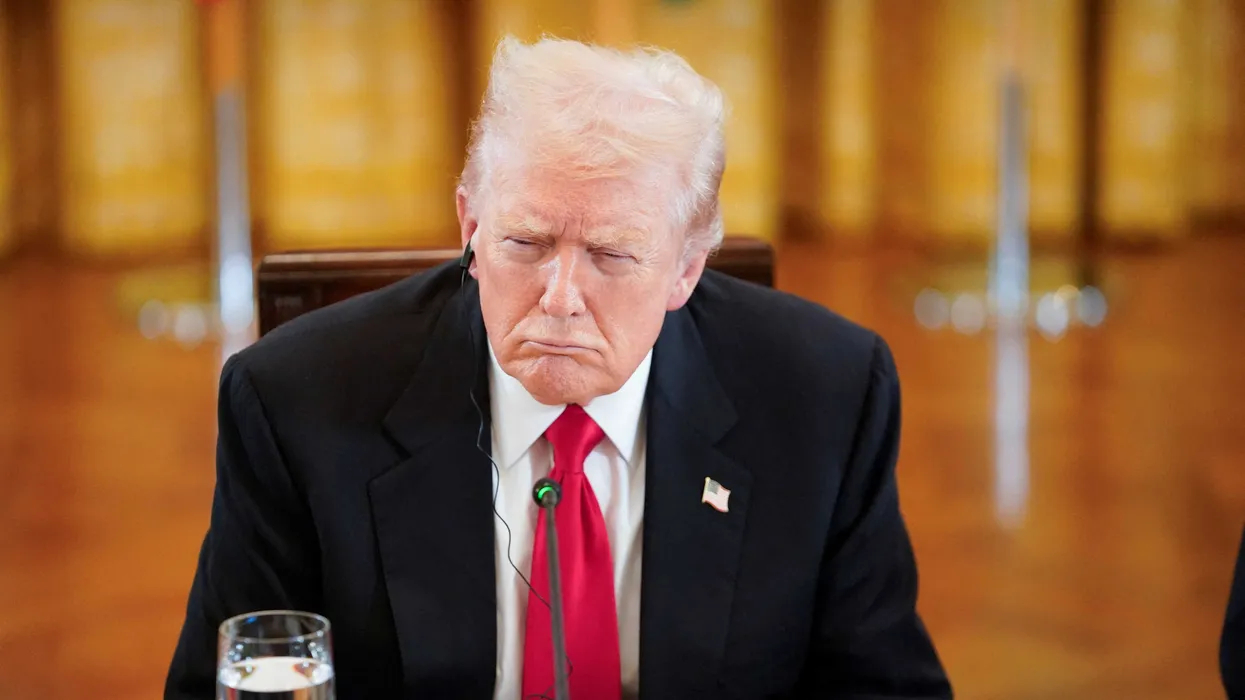
Criticism of President Donald Trump may be losing some of its sting for his most consistent critics. The "professional Trump haters" at The Bulwark, a commentary outlet launched in 2019 by conservative critics of the president, admitted this week that attacking the president in his "new diminished state" is starting to feel "mean."
Writing for the outlet on Monday morning, White House correspondent Andrew Egger said The Bulwark's mission of taking Trump to task for his misdeeds and shortcomings has "gotten weird" in recent weeks, following a blue wave in this month's midterm elections that he argued has seemingly left the president broken. Midterm elections fall at the halfway point of a president's term, and the party in power has historically tended to lose ground in them.
"Not for lack of opportunity: The president still brings his usual avalanche of bonehead moves, lies, distortions and cruelties to explain and deplore," Egger wrote. "I mean that it's emotionally weird. Something in Trump broke after the midterms this month, and he's barely even trying to put the pieces back together. Commenting on the president of the United States's words and actions in November 2026 almost feels... mean."
Egger pointed to Trump's recent trip to China as a sign of the shift, arguing that his controversial meetings with Chinese President Xi Jinping and Russian President Vladimir Putin produced almost nothing of real substance. Trump nonetheless enthusiastically touted the event, claiming the two leaders were his "friends."
"Things did not improve" in the wake of that visit, Egger argued, citing Trump's latest White House press conference as filled with moments of the president "mumbling through the most insane claims you ever heard in your life with the least enthusiasm you've ever seen him display."
Egger went on to outline what he viewed as ample grounds for continued criticism of Trump's leadership despite the president's decline, including his claim that unknown forces conspired to keep oil prices high ahead of the midterms, his refusal to confront widespread public opposition to AI data centers—pushback that has centered on the heavy electricity and land demands of such facilities—and his continued reverence for violent authoritarians like Putin. Taken together, Egger argued, it all adds up to a situation that is difficult to see Trump finding a way out of.
"I keep saying that Trump could, in theory, pull himself out of this rut that he's in," Egger concluded. "I suppose that remains true. But the president is not acting like a guy who's struggling to right the ship and get back on course. He's acting like what he is: an old man who, faced with an increasingly unpleasant reality, is determined to bury himself deeper and deeper in nostalgia and distraction until the bad feelings go away. That's a terrible posture for a president to strike, and a terrible, rudderless situation for the country. Mean or not, I guess we've got to keep talking about it."

