Brooklyn DA and FBI Shut Down 241 Cryptocurrency Scam Websites in Coordinated Takedown
Key Takeaways
- •The Brooklyn District Attorney's office and the FBI collaborated to take down 241 websites tied to cryptocurrency fraud, eliminating the infrastructure scammers used to reach potential victims.
- •The fraudulent sites generally posed as legitimate cryptocurrency exchanges, wallets, or investment platforms to deceive people into transferring money or sharing account credentials.
- •The joint local-federal operation reflects an increasing pattern of cross-jurisdiction coordination as cryptocurrency fraud crosses state and national borders.
- •Website seizures disrupt active schemes but rarely end investigations, as authorities typically trace funds, identify operators, and build criminal cases on parallel tracks.
- •People who interacted with the shut-down sites are advised to preserve evidence such as screenshots, emails, and transaction IDs, and report incidents to the FBI's IC3 or local authorities.
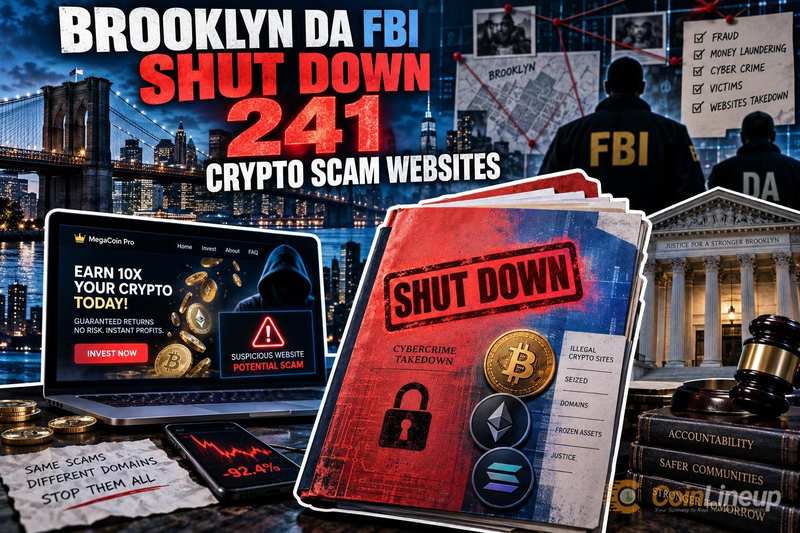
The Brooklyn District Attorney's office and the Federal Bureau of Investigation (FBI) have shut down 241 cryptocurrency scam websites in a coordinated enforcement action targeting online fraud. The takedown removes the web infrastructure these operations relied on to reach and deceive potential victims.
Why the 241-Site Shutdown Matters
Shutting down scam websites cuts off the front door fraudsters use to find victims. These sites typically impersonate legitimate cryptocurrency exchanges, wallets, or investment platforms to trick people into sending funds or handing over account credentials.
Removing 241 sites at once disrupts active scam operations at scale. While the action does not guarantee that the operators will be arrested or that victims will recover lost funds, it prevents new victims from being drawn in through those addresses. Federal enforcement actions involving digital fraud operations like this one are tracked on the FBI's press releases page.
Cross-Jurisdiction Coordination
The involvement of both the Brooklyn District Attorney, a local prosecutorial office, and the FBI, a federal law enforcement agency, signals coordinated action across jurisdictions. Combined takedowns of this kind are increasingly common as cryptocurrency fraud crosses state and national borders. A similar pattern emerged when South Korea ordered blocks on 27 crypto sites, including major exchanges, to curb unlicensed activity targeting its residents.
Website seizures disrupt an active scheme but are rarely the end of an investigation. Authorities typically pursue parallel tracks, including funds, identifying operators, and building criminal cases. The U.S. Department of Justice's arrests in a $3 million North Korean IT-worker cryptocurrency fraud scheme illustrate how website-level enforcement can accompany broader criminal prosecutions.
What Crypto Users Should Watch
A takedown of this size is a reminder that scam sites are actively operating at any given moment. Users should treat any unsolicited message about cryptocurrency investments, wallet verification, or prize winnings with immediate suspicion.
Before using any crypto platform, verify its web address character by character. Scammers register domains that differ from legitimate sites by a single letter or swap a number for a similar-looking character. Bookmarking exchanges and wallets you already trust is a simple way to avoid landing on a copycat site.
If you receive an unexpected request to connect your wallet, send funds, or enter a seed phrase—the private recovery code for a crypto wallet—stop. No legitimate service ever needs your seed phrase, and anyone asking for it is attempting theft. Reporting around this enforcement action underscores how broadly such operations can spread before authorities intervene.
Reporting and Evidence Preservation
Anyone who believes they interacted with one of the shut-down sites should preserve records, including screenshots, emails, and transaction IDs, and report the incident to the FBI's Internet Crime Complaint Center (IC3) or local authorities. Preserving evidence early improves the chances that investigators can trace funds or build a case. Broader financial crime enforcement, including the Department of Justice's arrests in the North Korean IT-worker fraud case, shows that detailed victim records often become key evidence.
Disclaimer: This article is for informational purposes only and does not constitute financial or investment advice. Cryptocurrency and digital asset markets carry significant risk. Always consult a qualified professional before making financial decisions.

