Brian Kemp Refuses to Call Special Session for GOP Redistricting Push in Georgia
Key Takeaways
- •Georgia Governor Brian Kemp refused to call a special legislative session that would have enabled Republicans to redraw the state's congressional maps in their favor.
- •Kemp's announcement came just hours after Democrat Keisha Lance Bottoms won the gubernatorial election, ending 24 years of Republican control of the governor's office.
- •Kemp left open the possibility of convening lawmakers for budgetary issues only, before the regular session begins in January.
- •Kemp made a similar refusal in 2020, when he declined to call a special session to help Donald Trump overturn Georgia's election results.
- •Bottoms, who will be sworn in on January 11, 2027, warned that redrawing district lines after losing an election would brand the GOP as the "party of losers."
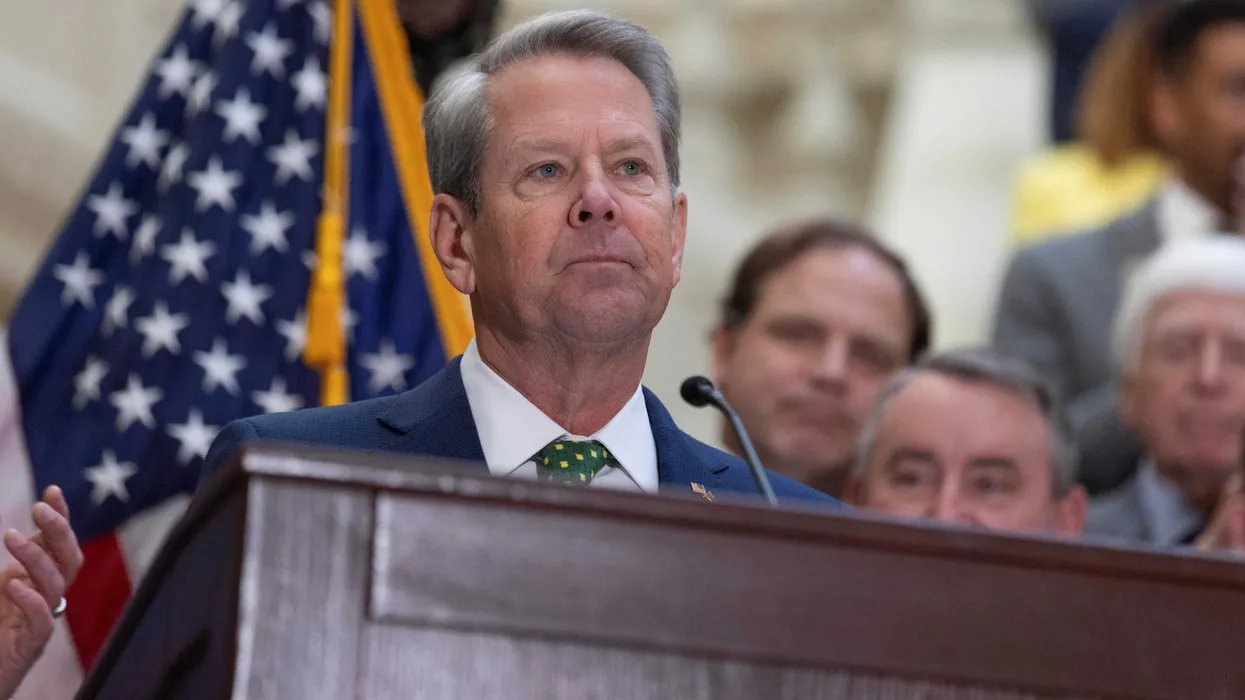
Georgia's outgoing Republican governor, Brian Kemp, is refusing to give his party what it wanted: a specially convened legislative session to redraw the state's congressional maps in the GOP's favor.
Georgia was once a reliably Republican state, with the party enjoying a clear advantage in statewide races. That has changed. It is now an unpredictable swing state known for nail-biting elections. The Peach State has a conservative, two-term Republican governor, but it also has two Democratic U.S. senators. Donald Trump carried Georgia in 2024 after losing it to Joe Biden in 2020 — and even then, he won by only about 2 percentage points.
The Atlanta Journal-Constitution reported Wednesday that Kemp will not call a new legislative session to give lawmakers the ability to gerrymander the congressional districts. The decision came just hours after victory was called for Democratic gubernatorial candidate Keisha Lance Bottoms. Her win ended 24 years of GOP control of the office — the office whose occupant has the power to call lawmakers back to the Capitol between regular sessions.
"The voters of our state have spoken. As long as I'm governor, we will always respect the results of secure, accessible and fair elections, and also abide by the laws and constitution of our state," Kemp said in a statement to the AJC. "I will not be calling a special session of the Georgia General Assembly in order to curtail executive branch powers or debate redistricting changes."
The remarks echo Kemp's position in 2020, when he refused to call a special session to help President Donald Trump overturn the results of Georgia's election — one episode in what the AJC described as a tortured Kemp-Trump relationship.
Still, Kemp left open the option of calling officials back to Atlanta for "budgetary issues that may need to be addressed before the convening of the regular session in January." By his framing, any such session would stick to fiscal business, leaving the maps untouched.
According to the report, Democrats were fearful and bracing for another political battle after the election. Their only option would ultimately have been to fight to reduce the governor's powers — a step that would have stripped authority from the nation's first Black female governor before she was even sworn in. The alarm reflected the stakes: congressional district lines help determine which party's candidates begin each U.S. House race with a built-in advantage, which is why both parties treat map-drawing as a foundational political fight.
Bottoms cautioned against it, telling the GOP that trying to redraw district lines as Texas and Florida have done — but only after losing an election — would forever brand the party as the "party of losers."
"We are a state that has gotten things done in moderation," she said on the "Politically Georgia" podcast in early 2026. "And it would be really unfortunate for them to do that on their way out of the door."
Bottoms will be officially sworn in on Monday, Jan. 11, 2027. Once she takes office, the power to call lawmakers back to Atlanta will rest with a governor who has publicly warned against the very move Democrats had been bracing for — and the legislature's next scheduled opportunity to meet comes not in a Kemp-called special session, but at the regular session convening in January.

