Coinbase CEO Brian Armstrong Urges Congress to Pass the Clarity Act
Key Takeaways
- •Coinbase CEO Brian Armstrong has called on Congress to advance the Clarity Act, arguing that legislative compromise is a necessary and expected part of the policymaking process.
- •The Clarity Act would divide regulatory oversight of digital assets between the SEC and CFTC based in part on whether a blockchain network is sufficiently decentralized.
- •Persistent regulatory uncertainty has complicated business planning, product development, and institutional investment across the U.S. cryptocurrency sector for several years.
- •Industry leaders believe comprehensive legislation would promote responsible innovation, improve consumer protections, and accelerate institutional adoption of digital assets.
- •The bill must still navigate ongoing congressional debates and potential amendments before reaching a final vote, with lawmakers continuing to negotiate specific provisions.
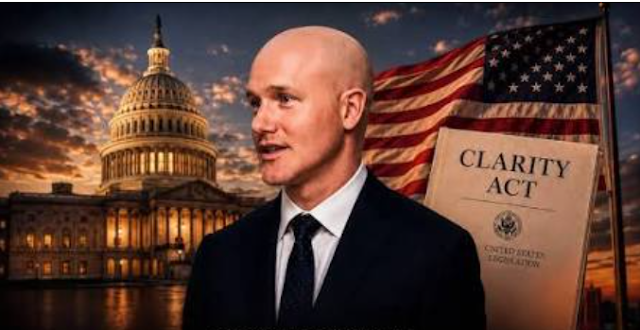
Coinbase CEO Brian Armstrong Urges Congress to Pass the Clarity Act
Coinbase Chief Executive Officer Brian Armstrong has renewed his call for Congress to advance the Clarity Act. He argues that while no single piece of legislation can fully satisfy every stakeholder, the proposed bill provides enough common ground to significantly benefit the broader cryptocurrency industry.
As lawmakers continue to debate digital asset regulation, Armstrong emphasized that compromise is an unavoidable and essential part of the legislative process. Although no individual or industry participant will receive everything they desire in major legislation, successful bills generally provide most stakeholders with what they need to move forward.
His comments arrive while Congress considers one of the most significant cryptocurrency market structure proposals introduced in recent years. The Clarity Act seeks to establish clearer regulatory frameworks for digital assets by delineating oversight responsibilities between the Securities and Exchange Commission and the Commodity Futures Trading Commission, a division that has long been contested. The bill's framework hinges in part on whether a blockchain network is sufficiently decentralized, which would determine whether its associated digital assets fall under CFTC jurisdiction as commodities or under SEC jurisdiction as securities. The legislation aims to reduce the legal uncertainty currently facing blockchain companies operating in the United States. Armstrong's remarks gained wider traction after being highlighted by Cointelegraph's X account, underscoring the increasing importance of regulatory developments for cryptocurrency markets and institutional investors.
Brian Armstrong Calls for Legislative Action
Urging lawmakers to prioritize progress over perfection, Armstrong argued that delaying legislation in pursuit of complete consensus leaves the cryptocurrency industry trapped in ongoing regulatory uncertainty.
According to his statements, legislative compromise is a fundamental reality in Washington.
"No one gets everything in legislation, but everyone gets most of what they need," Armstrong stated, encouraging lawmakers to bring the Clarity Act to a vote.
His message echoes a sentiment widely shared among digital asset industry participants, who have long maintained that a clearer regulatory framework is far more valuable than prolonged ambiguity. Industry leaders broadly agree that comprehensive legislation would foster responsible innovation, strengthen consumer protections, and bolster overall investor confidence.
Why the Clarity Act Matters
The Clarity Act has emerged as one of the most closely monitored cryptocurrency bills currently under congressional review. Supporters assert that the legislation would deliver long-awaited legal certainty by establishing precise definitions for digital assets and determining which federal agencies hold jurisdiction over specific segments of the crypto market. The bill is part of a broader set of digital asset proposals under consideration, including stablecoin legislation, reflecting congressional momentum on crypto policy that has accelerated in recent sessions.
Regulatory uncertainty has persisted as one of the industry's most significant challenges for several years. Numerous blockchain companies have pointed out that inconsistent regulatory interpretations have severely complicated business planning, product development, and institutional investment. The proposed legislation aims to resolve these issues by implementing a more comprehensive statutory framework.
Regulatory Uncertainty Has Slowed Innovation
Executives across the cryptocurrency sector have consistently warned that vague regulations actively deter both investment and innovation. Companies frequently grapple with uncertainties regarding licensing requirements, token classifications, disclosure obligations, and enforcement expectations.
This persistent ambiguity has directly influenced where many blockchain businesses choose to incorporate and expand internationally. Several industry leaders have cautioned that prolonged regulatory murkiness could drive entrepreneurs, developers, and investment capital to relocate to foreign jurisdictions that offer more transparent legal frameworks. The SEC's enforcement-heavy approach under former Chair Gary Gensler drew sustained criticism from the industry, reinforcing calls for Congress rather than regulators to define the rules of the road. Armstrong has consistently championed comprehensive federal legislation rather than a reliance on retroactive regulatory enforcement actions.
Compromise Remains Central to the Legislative Process
Armstrong's remarks also highlight a broader legislative principle that extends beyond cryptocurrency regulation. Large legislative packages almost never fully satisfy every stakeholder. Instead, lawmakers typically negotiate compromises designed to balance competing priorities while still achieving practical policy outcomes.
His perspective suggests that the cryptocurrency industry should evaluate the Clarity Act based on its aggregate benefits, rather than expecting every individual provision to perfectly align with every participant's specific preferences. This pragmatic approach mirrors how major financial legislation has historically been crafted within Congress.
Industry Support Continues Growing
A wide array of cryptocurrency companies, blockchain developers, institutional investors, and industry organizations have publicly endorsed efforts to establish clearer regulatory frameworks. These supporters argue that comprehensive legislation would stimulate innovation while simultaneously enhancing market transparency and investor protection.
Well-defined rules could also strengthen institutional participation by alleviating the legal uncertainty currently surrounding digital asset products and services. Multiple financial institutions have already indicated that regulatory clarity remains a crucial factor influencing their long-term investment decisions within the cryptocurrency sector.
Consumer Protection Remains an Important Objective
Advocates of the Clarity Act emphasize that clearer regulation is designed not just to foster innovation, but equally to fortify consumer protections. Comprehensive legislation could establish uniform disclosure standards, operational requirements, compliance obligations, and supervisory responsibilities across the digital asset industry.
Enhanced regulatory certainty may also significantly improve confidence among retail investors entering the cryptocurrency markets. Striking the right balance between encouraging innovation and ensuring robust investor protection remains a primary objective for Congress throughout these ongoing legislative discussions.
Market Participants Continue Monitoring Congress
Cryptocurrency markets remain highly sensitive to developments concerning the Clarity Act. Investors largely view comprehensive market structure legislation as a vital milestone for the industry's long-term maturation.
Although legislative negotiations are still underway, many analysts suggest that ultimate regulatory clarity could catalyze broader institutional adoption of blockchain technology and digital assets. Market participants are closely tracking committee discussions, proposed amendments, and congressional voting schedules for signals regarding the bill's trajectory.
Institutional Adoption Could Benefit
Clear regulatory frameworks could significantly accelerate institutional engagement across cryptocurrency markets. Banks, asset managers, investment advisers, payment firms, and other financial institutions typically require well-defined compliance standards before expanding their digital asset offerings.
The Clarity Act could deliver the greater legal certainty regarding market operations needed to encourage additional institutional investment. Many analysts consider regulatory clarity to be one of the final remaining prerequisites for the broader mainstream integration of digital assets into traditional financial markets.
Challenges Remain Before Final Approval
Despite growing support for cryptocurrency legislation, the Clarity Act must still successfully navigate the standard legislative process before it can be enacted into law. Lawmakers continue to debate specific provisions involving regulatory authority, market oversight parameters, consumer protection mechanisms, and implementation timelines.
Further amendments may be introduced before any final version is brought to a vote. As is typical with major legislation, negotiations are expected to persist until lawmakers secure sufficient bipartisan agreement.
Looking Ahead
Brian Armstrong's recent statements reinforce the cryptocurrency industry's intensifying demand for regulatory certainty over continued legislative stagnation. By highlighting that successful legislation inherently requires compromise, the Coinbase CEO encouraged lawmakers to concentrate on delivering practical progress rather than chasing an unattainable perfect consensus.
The Clarity Act stands as one of the most consequential cryptocurrency bills under consideration in the United States, carrying significant implications for exchanges, blockchain developers, institutional investors, financial markets, and the millions of Americans who utilize digital assets.
While Congress continues its evaluation of the proposal, industry leaders maintain that a comprehensive regulatory framework would promote innovation, increase investor confidence, and support the sustained growth of the U.S. digital asset ecosystem. Whether lawmakers ultimately pass the legislation in its current form or following further negotiations, the ongoing debate surrounding the Clarity Act highlights the growing necessity of transparent cryptocurrency regulation within the continuously evolving global financial system.

