Conservative Columnist Bret Stephens: Trump Administration Needs Crash Course in 'Humility, Decency, and Honesty'
Key Takeaways
- •Pulitzer Prize-winning conservative columnist Bret Stephens published a New York Times opinion piece on Tuesday disputing the Trump administration's claim to be championing Western civilization.
- •Stephens took aim at Secretary of State Marco Rubio's recent speech near the Acropolis in Athens, in which Rubio vowed to defend Western civilization with the passion of America's forefathers.
- •Among the administration actions he cited were the Pentagon's announced livestreaming of the Fort Hood killer's execution, direct U.S. diesel purchases from Russia, and an ongoing State Department inspector general investigation into Ambassador to Greece Kimberly Guilfoyle over alleged improper gifts.
- •Stephens framed Western civilization as resting on three pillars—a quest for truth, the worth and dignity of every human being, and the rule of law—and argued the administration embodies these principles less and less.
- •Because Stephens writes from the political right, the column underscores a dispute over first principles within conservatism rather than a purely partisan attack.
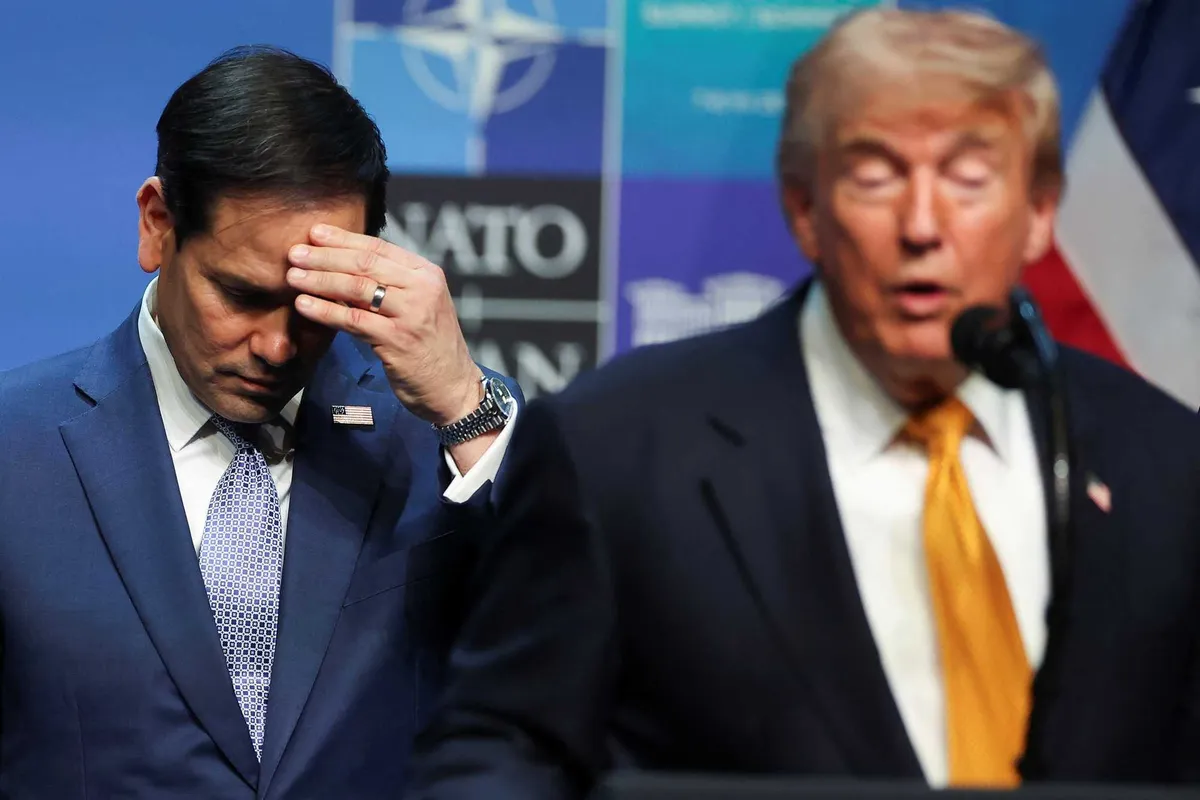
A prominent conservative voice is pushing back against the Trump administration's claims that it is fighting to preserve Western civilization, arguing that President Donald Trump and his officials first need a lesson in "humility, decency, and honesty."
Writing in a New York Times opinion column published Tuesday morning, conservative commentator Bret Stephens — a Pulitzer Prize-winning columnist who joined the Times in 2017 after more than a decade at The Wall Street Journal — took aim at Secretary of State Marco Rubio's recent speech near the Acropolis in Athens, Greece, in which Rubio spoke of "championing the virtues of Western civilization" and pledged to defend it "with the same passion as our forefathers did."
Stephens suggested the address sits uncomfortably alongside other developments out of the administration that same week.
"The same week, Pete Hegseth, the defense secretary, announced that the Pentagon would livestream the execution of the Fort Hood killer," Stephens wrote. He also cited President Trump's decision to buy diesel fuel directly from Russia, a step that could potentially amount to billions in funding for Vladimir Putin's war machine, as well as a Wall Street Journal report that Kimberly Guilfoyle, the U.S. ambassador to Greece, is under investigation by the State Department's inspector general for receiving improper gifts in exchange for political and business favors. That review remains open, making its findings one thread to watch as the dispute unfolds.
"Is this what the secretary of state meant by Western civilization?" he asked.
In Stephens's view, most people ought to "celebrate, defend and perpetuate Western civilization." Doing so, however, "requires a basic understanding of what Western civilization is" — and Trump and his followers, he argued, could use a refresher course. The critique draws force from its source: Stephens writes from the political right, making this less a partisan broadside than a dispute over first principles within conservatism itself.
Western civilization, as an intellectual framework, rests on "three pillars," Stephens wrote: a "quest for truth," a belief in "the worth and dignity of every human being," and "the rule of law." The Trump administration, he suggested, embodies these principles less and less, and instead has more in common with "Mexico City in the 1970s and '80s," where he grew up.
"Whatever else that was, and is, it does not meet the basic tests of Western civilization," he wrote.
Stephens went on to catalog a series of actions and behaviors he argued fail that test, citing "cage matches on the White House lawn"; "big cans of whoop ass unloaded on longstanding allies"; "tornadoes of mendacity from the president's mouth"; "political purges among uniformed military officers"; "casual conspiracy theories from the vice president about Jews, municipal elections and space aliens"; "assaults on elementary science from the head of the public health bureaucracy"; "performative toadyism by nearly every appointed or elected Republican official"; "unceasing efforts to cast doubt on the integrity of past elections and corrupt future ones"; "the Trump family's contempt for public ethics"; "the indecent and inhuman tactics of Immigration and Customs Enforcement"; and "the dizzying kaleidoscope of incompetence, inattention, bullying and sheer weirdness that typifies nearly every waking moment in this presidency."
He closed the column with a historical allusion: "Asked what he thought of Western civilization, Mohandas Gandhi is said to have quipped, 'I think it would be a good idea.' It would be a good idea, too, if the Trump administration knew what it was talking about when it talked about that same civilization."

