Breet Builds Crypto Payment Infrastructure for Africa's Growing Digital Economy
Key Takeaways
- •Breet's crypto payment API allows fintech platforms, online marketplaces and software providers to accept digital asset payments through a single integration instead of developing payment infrastructure in-house.
- •According to GSMA, mobile technologies and services contributed $240 billion to Africa's economy in 2025, about 7.8% of the continent's GDP, with a projection of $290 billion by 2030.
- •Chainalysis data shows sub-Saharan Africa received more than $205 billion in on-chain cryptocurrency value between July 2024 and June 2025, a 52% year-on-year increase, with Nigeria accounting for over $92 billion.
- •Cardtonic, which integrated Breet's API to let customers fund virtual dollar cards with stablecoins, processed over $100,000 on launch day and has since exceeded $5 million in cumulative transactions.
- •Regulatory requirements, cybersecurity, liquidity and dependable settlement channels remain key considerations for businesses adopting digital currency payments.
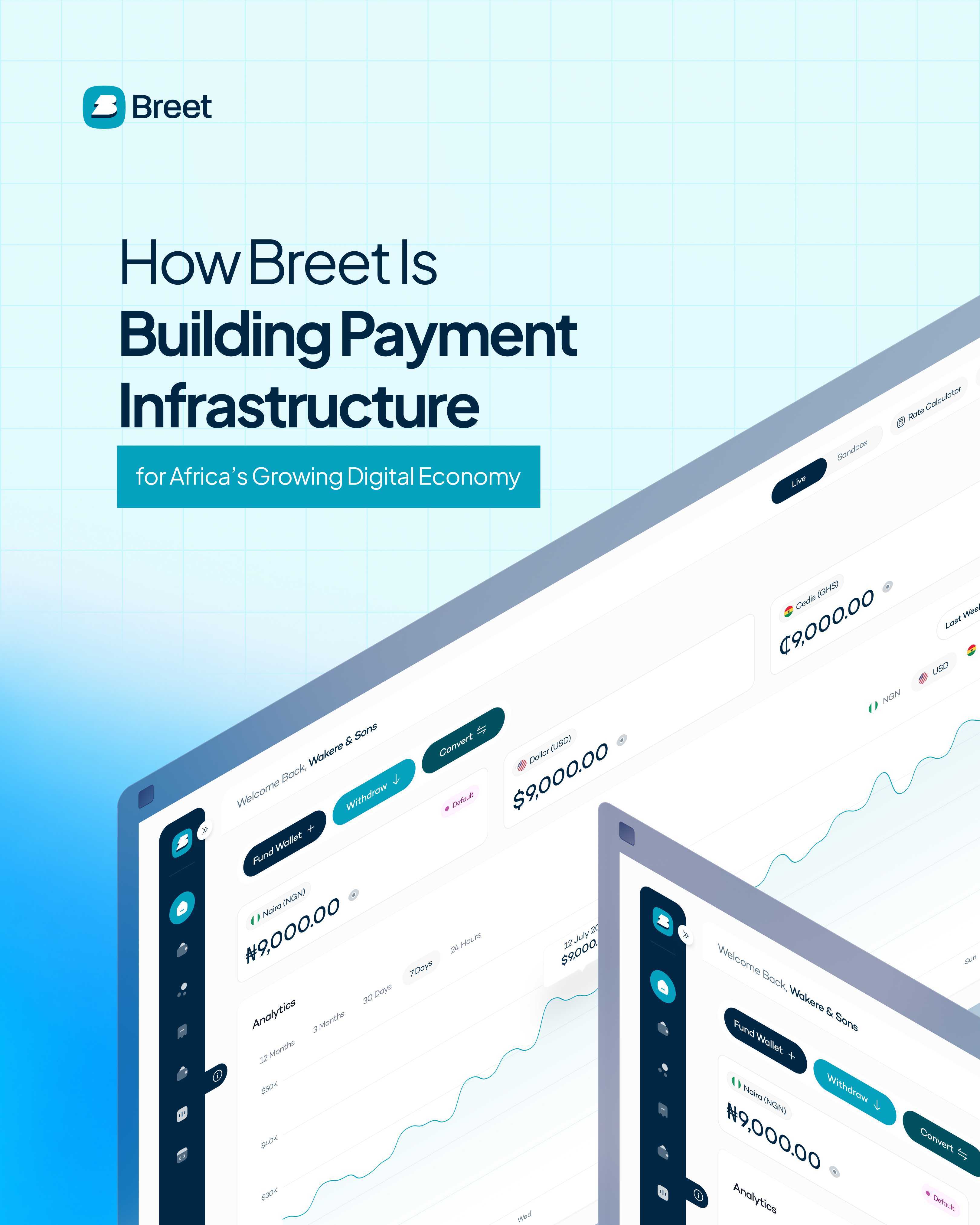
Africa's digital economy is expanding rapidly, creating fresh opportunities for businesses to reach customers, deliver services and process transactions well beyond their home markets. Yet the payment infrastructure needed to support that growth has not always kept pace. Financial technology company Breet is addressing this gap through its crypto payment API, which enables fintech platforms, online marketplaces, software providers and other businesses to accept cryptocurrency and stablecoin payments without building the underlying payment infrastructure themselves.
The opportunity is substantial. According to the GSMA's Mobile Economy Africa 2026 report, mobile technologies and services contributed $240 billion to Africa's economy in 2025, representing 7.8% of the continent's GDP. That contribution is projected to reach $290 billion by 2030, reflecting the growing role of digital technologies in economic activity across the continent.
For fintech companies, online marketplaces, software providers and other digital businesses, this growth is opening ways to serve international customers. Receiving payments, converting currencies and accessing funds across different markets, however, remain significant challenges. Foreign exchange costs, settlement delays and multiple financial intermediaries can make cross-border transactions expensive and complicated.
The World Bank's Remittance Prices Worldwide database illustrates the scale of the problem: the global average cost of sending remittances stood at 6.36%, with transfers to sub-Saharan Africa generally costing more. Although these figures relate to personal remittances rather than commercial payments, they point to the wider difficulties associated with moving money across borders.
These frictions have contributed to growing interest in alternative payment systems, including cryptocurrencies and stablecoins. Unlike cryptocurrencies such as Bitcoin, whose prices can fluctuate significantly, stablecoins are designed to maintain a relatively stable value, often by being linked to currencies such as the US dollar. Adoption is already considerable: according to Chainalysis, sub-Saharan Africa received more than $205 billion in on-chain cryptocurrency value between July 2024 and June 2025, a 52% increase from the previous year. Nigeria accounted for more than $92 billion of that activity, underscoring the growing adoption of digital assets across the region.
Accepting digital currencies, however, is not straightforward. Businesses that do so must manage digital wallets, monitor transactions, convert currencies and settle funds. Building these systems independently can demand significant technical expertise and financial resources.
Bridging Africa's Digital Payment Infrastructure Gap
Breet's crypto payment API is designed to lift that burden. Through a single API integration, businesses can receive supported cryptocurrencies, including Bitcoin, Ethereum, USDT and USDC, and convert payments into fiat currencies such as the Nigerian naira, Ghanaian cedi and US dollar, subject to available settlement options. The infrastructure also supports wallet generation, payment detection and transaction monitoring.
Speaking on the challenges facing businesses operating across different markets, Kayode Faturoti, Chief Executive Officer of Breet, said:
“African businesses are increasingly building products for customers beyond their immediate markets, but the payment infrastructure available to them does not always reflect how they operate. A business may have international customers willing to pay, yet receiving those payments and accessing the funds can still be complicated. We believe businesses should be able to focus on serving their customers without having to solve every aspect of payment processing themselves.”
Faturoti said the company's approach is designed to reduce the technical demands associated with introducing digital currency payments.
“Building cryptocurrency payment infrastructure involves several moving parts, from wallet management and transaction monitoring to currency conversion and settlement. For many businesses, developing these capabilities independently would require significant investment. Our focus at Breet is to make this infrastructure accessible through an API, allowing businesses to introduce new payment options while concentrating on their core products.”
One example of the model in practice is Breet's partnership with Cardtonic, a digital financial services platform that integrated the Breet Business API to enable customers to fund virtual dollar cards using stablecoins. According to figures provided by Breet, Cardtonic processed more than $100,000 in stablecoin card-funding transactions on its launch day and has since surpassed $5 million in cumulative transactions through the integration. For observers of the payments landscape, the figures offer a concrete usage benchmark for stablecoin-funded card services built on third-party payment infrastructure.
Beyond fintech platforms, similar opportunities exist for software companies receiving international subscription payments, digital marketplaces serving customers across different countries, and businesses seeking to accommodate customers who prefer paying with digital assets.
Accepting cryptocurrency, however, is only one part of the payment process. Businesses still need access to local currencies to pay employees, suppliers and other operating expenses, making currency conversion and settlement important considerations.
“The real value of a cryptocurrency payment solution is not just that a customer can send money, but that the business receiving it can actually use those funds,” the CEO added. “A company accepting stablecoins may still need naira or cedis for its daily operations. That is why conversion and settlement are just as important as accepting the payment itself. At Breet, we are addressing this need by providing businesses with the infrastructure to receive digital currency payments, convert them into local currencies and access their funds without having to build these systems themselves.”
Challenges remain. Regulatory requirements, cybersecurity, liquidity and reliable settlement channels are important considerations for businesses exploring digital currency payments, and adoption will depend on customer demand, operational requirements and compliance with applicable financial regulations. For businesses and observers tracking the space, developments worth monitoring include how regulators apply existing financial rules to stablecoin-based business payments, which local currency settlement options become available, and how customer demand for digital-asset payment options develops.
As Africa's digital economy continues to grow, payment infrastructure capable of supporting different currencies and markets will become increasingly important. For Breet, the opportunity lies in making cryptocurrency and stablecoin payment capabilities more accessible, allowing businesses to participate in emerging digital payment opportunities without the cost and complexity of building their own systems.
More information is available through the Breet Business website, while businesses interested in integrating the technology can book an API consultation.

