Brazil's Supreme Court Upholds Interim Rules Allowing Cinta Larga to Legally Mine Their Territories
Key Takeaways
- •The Supreme Court confirmed a temporary framework that lets the Cinta Larga seek legal mineral exploration in four territories in Rondônia and Mato Grosso.
- •Justice Flávio Dino’s March 2025 ruling gave Congress 24 months to regulate mining on Indigenous lands.
- •Approved projects must undergo consultation and receive environmental, congressional and National Mining Agency authorizations, and they may occupy no more than 1% of the territory.
- •Indigenous communities have preference to conduct exploration, and if they do not, they are entitled to 50% of the value owed to state and federal governments.
- •The ruling applies only to the four Cinta Larga territories for now, while Congress has still not passed the legislation required by the Constitution.
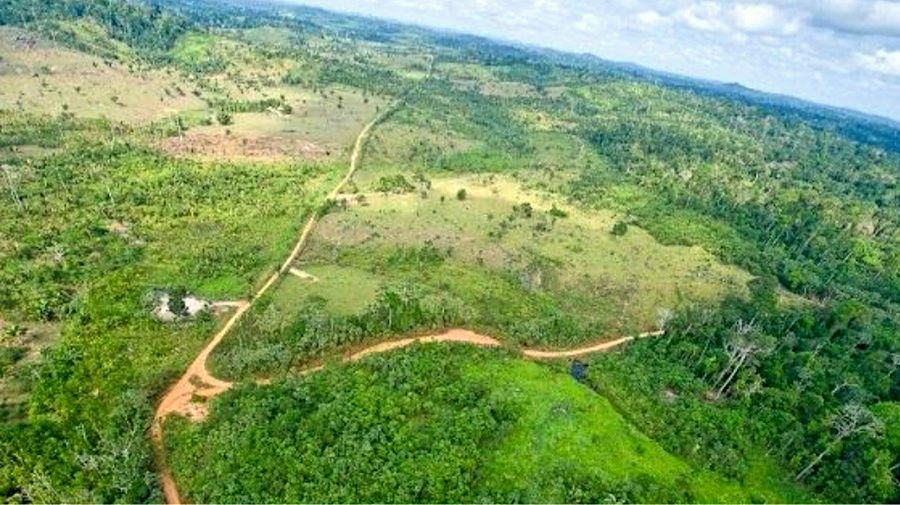
Brazil's Supreme Court has upheld a ruling that allows Cinta Larga Indigenous communities to legally conduct mineral exploration in four territories under temporary safeguards while lawmakers develop long-delayed legislation governing mining on Indigenous lands.
The decision confirms a March 2025 ruling by Supreme Court Justice Flávio Dino that gave Congress 24 months to regulate mining on Indigenous territories. Until lawmakers act, the interim framework gives the Cinta Larga a legal route to conduct mineral exploration, subject to environmental approvals, community consultation and limits on mining activity.
“A lot of people have already died because of this debate. We have been discussing and judging mining in Indigenous lands while we see hundreds dying in multiple conflicts for decades,” Dino said during the recent session, according to g1. “The debate is not about if mining exists in Cinta Larga. It has been there for decades. The debate is about the role, defense and use of their territory.”
The ruling highlights a broader gap in Brazil’s legal framework: mining already occurs illegally in some Indigenous areas, but Congress has yet to establish the legislation envisioned by the Constitution to regulate legal extraction and ensure that communities share in its benefits.
Interim rules
The case was brought by an organization representing the Cinta Larga people in the states of Rondônia and Mato Grosso, Valor International reported. The group sought authorization to extract minerals in an area where illegal mining has fueled conflict and increased vulnerabilities for communities. It argued that Congress had failed to regulate the activity and that this failure prevented the Cinta Larga from engaging in mining and benefiting from its proceeds.
Justice Dino's ruling establishes temporary regulations so that at least the Cinta Larga people can begin using their land for legal exploration. The framework requires prior consultation with Indigenous communities about exploration projects, as well as environmental, congressional and National Mining Agency authorizations, Valor International reported.
If mining projects are approved, they will be limited to occupying 1% of the Indigenous territory.
Indigenous people will have preference in exploration activities on their land. If they are not interested in exploring but have approved a project, they must receive 50% of the total value owed to the state and federal governments. Their financial participation must be directed to developments that advance safety, sustainable production, environmental recovery, health, education and sustainability.
The ruling asks Indigenous people to organize into cooperatives, and it calls for studies to examine environmental impact and recovery during and after exploration.
The temporary rules apply only to the four Cinta Larga territories in the states of Mato Grosso and Rondônia. When a bill is approved, it is expected to include other communities and regions.
Long time coming
The lack of ownership and control that Indigenous people face on their own land in Brazil is nothing new.
Since 2009, Indigenous communities have been dealing with the “Marco Temporal”, a legal thesis holding that Indigenous peoples only have the right to land they occupied on Oct. 5, 1988 — the day the Brazilian Constitution was published.
Under Marco Temporal, if a community no longer occupied its original land as of that day, its members have no right over it and it cannot be designated as Indigenous land. The territories in question then became private or state-owned, even if they originally belonged to Indigenous people.
The thesis is defended by people who want to conduct mineral exploration, but it has been criticized by Indigenous communities, environmental organizations and various experts. Indigenous communities argue that the doctrine leaves them more vulnerable to illegal mining and violent conflicts over mineral extraction.
Article 231 of Brazil's Constitution says mineral exploration and mining on Indigenous lands may proceed only with congressional authorization after consultation with affected communities, which must also receive a share of the proceeds as provided by law. Congress, however, has yet to enact the legislation needed to fully implement that provision, despite numerous proposals over several decades.
