Brazil's Stablecoin Rules Target Cross-Border Settlement Shortcut, Not Domestic Payments
Key Takeaways
- •Brazil's new policy restricts only one cross-border settlement channel, so stablecoin ownership and domestic payment use, including retail and peer-to-peer transactions, remain permitted.
- •The central bank recorded $6.9 billion in stablecoin crypto purchases in Q1, framing the restriction as an intervention in a high-volume institutional channel rather than a consumer-level prohibition.
- •Stablecoin cross-border shortcuts reduce the transaction visibility regulators rely on to monitor capital flows, which is the core concern the measure addresses.
- •Institutions cut off from the restricted rail can still use regulated payment providers or traditional pathways such as SWIFT, though with higher cost and friction.
- •The policy's real-world impact depends on unresolved details, including which entities and stablecoins are covered, the effective date, and how enforcement guidance is written.
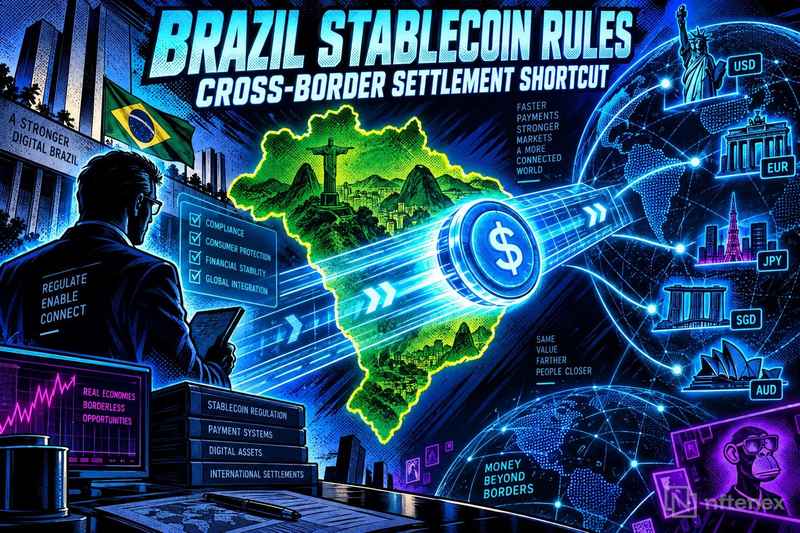
Brazil's latest stablecoin policy targets a single settlement channel used in cross-border transactions, leaving stablecoin ownership and domestic payment use untouched. The measure is narrow in scope: a business paying a local vendor with stablecoins is unaffected, while a treasury operation routing international settlements through the restricted rail now faces a compliance gap. The move reflects a growing tendency among jurisdictions to separate payment-use stablecoins from settlement-layer infrastructure, a distinction also visible in the North Carolina Digital Asset and Stablecoin Bill.
Brazil's central bank had already flagged stablecoins as the dominant instruments in crypto-linked foreign exchange activity. The bank recorded $6.9 billion in stablecoin-linked crypto purchases in Q1 alone, a figure that frames the settlement restriction as a structural intervention in a high-volume channel rather than a consumer-level prohibition.
Why the Distinction Matters for Businesses and Market Participants
Cross-border settlement shortcuts allow institutions to move value between jurisdictions faster and with fewer intermediary checks than traditional correspondent banking. Closing that channel does not remove access to the asset; it removes a routing efficiency. Compliant alternatives, including regulated payment providers and traditional rails, remain available, though at higher cost and friction.
Consumer-facing stablecoin payments—retail purchases, peer-to-peer transfers, and NFT transactions settled in USDT or USDC—operate on a separate layer from the institutional settlement rails Brazil appears to be targeting. Readers, creators, and collectors using stablecoins for digital asset purchases should not interpret the policy as a freeze on their activity.
How the Cross-Border Settlement Shortcut Works
A stablecoin-based cross-border shortcut substitutes a pegged digital asset for a correspondent bank leg in an international transfer. Rather than routing through multiple banks across jurisdictions, a sender converts to a stablecoin, transmits on-chain, and the recipient converts on the other side. The speed and cost advantages are real, but the approach reduces the transaction visibility regulators rely on to monitor capital flows—precisely what Brazil appears to be addressing, according to CryptoSlate reporting on the policy.
That same reporting places the affected segment within a $1.1 trillion stablecoin market now facing new limits, underscoring how targeted the measure is relative to overall stablecoin activity. Restricting one rail does not eliminate demand; it redirects activity toward compliant licensed corridors or slower SWIFT pathways. Broader stablecoin regulatory momentum, including U.S. state-level digital asset legislation, suggests this kind of channel-specific restriction is becoming a standard regulatory tool rather than an outlier.
What to Watch as Implementation Details Emerge
The policy's practical effect hinges on specifics not yet fully public: which entities are covered (exchanges, payment processors, corporate treasuries), which stablecoins are in scope, the effective date, and whether transitional provisions exist. Until those details are confirmed, extrapolating market consequences is premature.
Three points stand out. Stablecoin payments are not banned outright in Brazil. The blocked shortcut affects a specific cross-border settlement rail, touching institutional routing rather than domestic use. And real-world impact will depend on which entities are covered, the effective date, and how enforcement guidance is written.
For the creator economy and digital asset markets, the more relevant question is whether Brazil's approach spreads to other Latin American markets, where stablecoins have filled gaps left by volatile local currencies and limited banking access. A targeted settlement restriction in one jurisdiction is manageable; regional coordination of similar rules would reshape how cross-border NFT royalty flows and marketplace capital allocation are structured across the continent, with implications for how platforms settle cross-border inflows through regulated corridors.
Additional source reference: source document 1.
Disclaimer: This article is for informational purposes only and does not constitute financial or investment advice. Cryptocurrency and digital asset markets carry significant risk. Always do your own research before making decisions.

