Brazil's First Large-Scale Rare Earths Mine Becomes Cornerstone of US Supply Chain Strategy
Key Takeaways
- •Serra Verde is Brazil’s first operational large-scale rare earths mine and produces neodymium, praseodymium, dysprosium, and terbium.
- •The U.S. International Development Finance Corporation provided a $565 million loan to support the project’s supply to the United States and allied countries.
- •USA Rare Earth announced an acquisition deal for the mine in April 2026 at a value of about $2.8 billion, backed by U.S. government financing.
- •The mine began commercial production in early 2024 and is targeting 6,400 to 6,500 metric tons of rare earth oxides annually by 2027.
- •Serra Verde’s heavy rare earth output is important because it fills a difficult-to-source niche outside China and could help buffer supply chain risks.
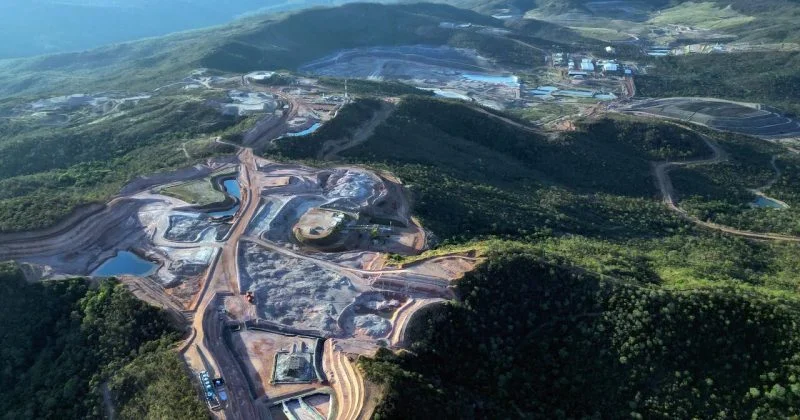
Brazil has activated its first operational large-scale rare earths mine, the Serra Verde Pela Ema project, which now sits at the center of Washington's effort to loosen China's grip on minerals essential to products ranging from electric vehicles to fighter jets.
The facility produces all four critical magnet rare earth elements: neodymium, praseodymium, dysprosium, and terbium. No other non-Asian operation currently does so, which sets Serra Verde apart in the global supply landscape.
US financing underpins the project
The US government's interest is explicit. The US International Development Finance Corporation (DFC) extended a $565 million loan to help ensure that Serra Verde's output flows to the US and allied nations rather than to the highest bidder on the open market.
That loan proved to be only the beginning. In April 2026, USA Rare Earth announced an acquisition deal for the project valued at approximately $2.8 billion, backed by US government financing. In addition, the Department of War's Economic Defense Unit has offered up to $750 million in offtake support specifically for Serra Verde.
The mine, located in Goiás, began commercial production in early 2024. It is targeting annual output of 6,400 to 6,500 metric tons of rare earth oxides by 2027, and the project carries a projected mine lifespan of 25 years.
China's dominance and Brazil's reserves
China produces roughly 270,000 tons of rare earths annually. Brazil, despite holding approximately 21 million metric tons of reserves, currently produces about 2,000 tons.
Serra Verde's ionic clay deposits are particularly valuable because they contain heavy rare earths such as dysprosium and terbium, which are harder to source outside China and are essential for the high-performance permanent magnets used in electric vehicle motors and wind turbines. That makes the project relevant not only to mining markets but also to manufacturers trying to secure inputs for defense systems and clean-energy hardware.
Brazil's broader rare earth ambitions
Serra Verde is not the only project in development. Viridis Mining & Minerals inaugurated a research and processing plant in May 2026, targeting commercial output of mixed rare earth carbonate by 2028.
Large-scale domestic separation and refining capacity in Brazil is not expected to come online before 2030. As a result, early production from Brazilian mines will likely be exported in partially processed forms, with final refining taking place elsewhere. For buyers and policymakers, that means the near-term bottleneck is not only mining ore, but also building the downstream processing chain that turns it into usable materials.
Implications for supply chains
At full capacity, the mine's 6,500 metric tons of annual output would still represent a fraction of global demand, but it would be enough to provide a buffer against Chinese export restrictions or price manipulation.
Australia's Lynas Rare Earths has been the primary non-Chinese producer for years, but its deposits are light rare earth-dominant. Serra Verde's heavy rare earth production fills a different, more difficult-to-source niche in the supply chain. The project's significance therefore lies less in replacing China outright than in adding a rare non-Chinese source of key magnet materials at a time when governments and manufacturers are trying to diversify supply without waiting for new refining capacity to catch up.

