BounceBit to Retire Layer 1 After Authorization Flaw Enabled Movement of 286.5M BB Tokens
Key Takeaways
- •An authorization flaw on BounceBit's Layer 1 allowed about 286.5 million BB tokens to move outside normal permissions.
- •The Block estimated the exploit's value at roughly $3 million and reported that BounceBit plans to migrate to BNB Chain.
- •BounceBit has decided to sunset its own blockchain because the flaw affected the base layer, making a simple patch insufficient.
- •The project has not yet publicly detailed the full migration process, including snapshot, swap, or shutdown timing.
- •BB holders may face uncertainty about supply, access, and service support until BounceBit releases official migration instructions.
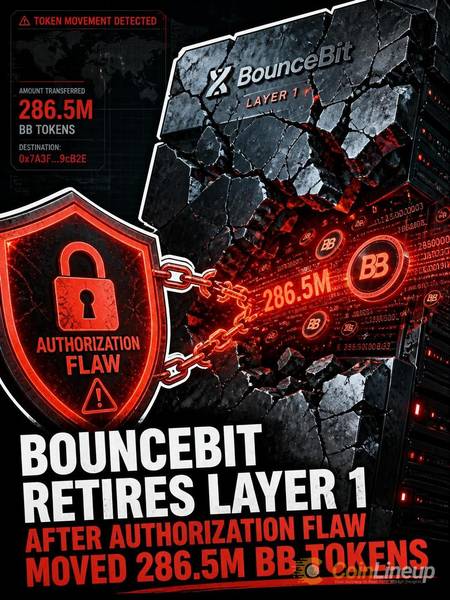
BounceBit is shutting down its own blockchain after an authorization flaw allowed approximately 286.5 million BB tokens to be moved without permission. The BounceBit Layer 1 authorization flaw pushed the team to retire the chain and migrate elsewhere, leaving token holders waiting for clarity on what comes next.
An authorization flaw is a gap in a system's permission checks. It lets someone perform an action they should not be allowed to do. In this case, the flaw was tied to BounceBit's Layer 1, the base blockchain that the project built and ran itself.
What happened in the BounceBit authorization flaw
The flaw enabled the movement of roughly 286.5 million BB tokens, according to CryptoSlate's report on the incident — a large slice of the token's supply moved outside normal rules.
The Block reported the underlying exploit at about $3 million and said BounceBit plans to sunset its blockchain and migrate to BNB Chain. In plain terms, the project is abandoning its own network in favor of an established one. BNB Chain sits within the broader Binance ecosystem and ranks among the most heavily used smart-contract networks, so the move places BounceBit on infrastructure whose security and operations are maintained at a far larger scale than its own chain.
Unauthorized token movements have hit other projects too. Zilliqa recently disclosed that a signing bug enabled a large ZIL theft, showing how permission failures can drain assets quickly. Both cases fall into the same category of failure — permission or signing logic that misfires at the protocol level rather than in a single app.
Why BounceBit retired its Layer 1
Retiring the chain is BounceBit's main response to the flaw. When the base layer itself is compromised, patching a single app is not enough; shutting it down removes the vulnerable foundation entirely.
The team framed the decision as a move off its own Layer 1 and onto BNB Chain in its official announcement on X. Migrating to a larger, battle-tested network is presented as a containment and remediation step rather than a quick fix. Full sunsets of a Layer 1 remain far rarer than in-place patches, the usual response to exploits, because a base-layer flaw leaves few alternatives — every application built on top inherits the same weakness.
For users, this means the old network is winding down. Activity, balances, and access all depend on how the migration is handled, and BounceBit has not detailed every step publicly.
What this means for BB holders
A movement of roughly 286.5 million tokens is material enough to raise real questions about supply and trust. Holders will want to know whether those tokens re-enter circulation and what that would mean for the value of their holdings.
Retiring a Layer 1 also affects continuity. Wallets, apps, and services built on the old chain must adapt or shut down, and uncertainty during a migration can weigh on confidence across the ecosystem. Chain migrations typically hinge on a few concrete details — a snapshot block that records who holds what, a swap or redemption mechanism for the new token, and deadlines tied to the shutdown, since assets left on a chain that stops producing blocks can become inaccessible. BounceBit has not yet spelled out those specifics, and exchanges, wallets, and other services will also need to decide how they treat the transition, since their support often determines what holders can practically do.
Security incidents keep pressuring crypto trust broadly. Firms like TRM Labs have tracked sharp rises in scam-related losses, and events like this one add to the caution many newcomers already feel.
For BB holders, the practical takeaway is simple: watch BounceBit's official channels for migration instructions and any snapshot or swap details before acting. Do not rush transactions on a chain the team is retiring, and confirm every step against the project's verified announcements.
Disclaimer: This article is for informational purposes only and does not constitute financial or investment advice. Cryptocurrency and digital asset markets carry significant risk. Always do your own research before making decisions.

