Boring Company Reportedly Seeks Funding at $20 Billion Valuation
Key Takeaways
- •The Boring Company's reported $20 billion funding target would represent an approximately 108% increase over its September 2025 valuation of about $9.6 billion.
- •Secondary-market estimates in 2025 valued the company as low as $5.7 billion, creating an unusually wide gap between the reported primary funding target and private market trading prices.
- •No new funding round at a $20 billion valuation has been confirmed as of July 2026, and the figure appears to originate from market chatter rather than a signed term sheet.
- •The Boring Company has raised approximately $908 million to date from investors including Vy Capital, Sequoia Capital, and Valor Capital Group.
- •The Las Vegas Convention Center Loop remains the company's primary operating project, with additional tunneling initiatives underway in Nashville.
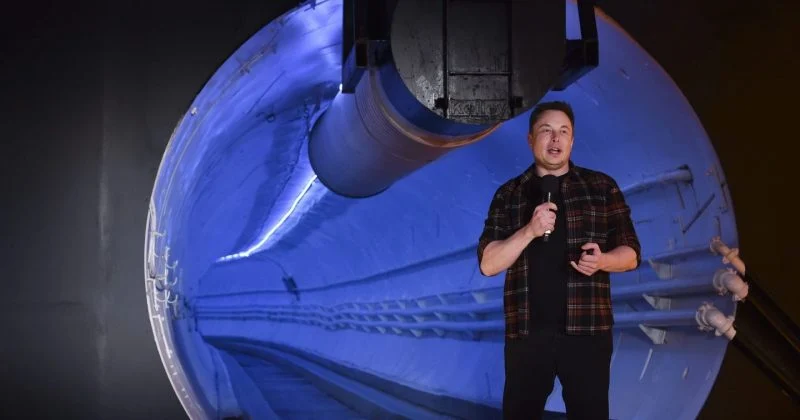
Elon Musk’s Boring Company is reportedly seeking new funding at a $20 billion valuation, a level that would more than double the tunneling company’s last confirmed valuation of about $9.6 billion in September 2025.
If accurate, the proposed valuation would represent an increase of roughly 108% from where the company was priced less than a year earlier. It would also be nearly 3.5 times higher than some secondary-market estimates in 2025, which valued the firm at as low as $5.7 billion. The reported target also comes amid a period in which some later-stage private companies have faced pressure to justify premium valuations amid tighter capital conditions, even as several Musk-affiliated ventures — including SpaceX and xAI — have continued to attract capital at elevated levels.
Valuation gap between private funding and secondary markets
The Boring Company’s valuation history has fluctuated over the past several years. In July 2023, the company was valued at approximately $8.6 billion. By September 2025, that figure had risen to around $9.6 billion. However, secondary-market trading during 2025 reflected lower estimates, with some valuations falling to about $5.7 billion.
As of mid-2026, share price estimates for the company have hovered near $24.63 per share, with reported fluctuations. Raising capital at a $20 billion valuation would require investors to accept a price materially above where parts of the private market have recently valued the company. That kind of premium is not uncommon in primary fundraising, where lead investors negotiate preferred terms and governance rights that secondary-market buyers typically do not receive, but the size of the gap in this case would be unusually wide for an infrastructure-focused company whose revenue-generating operations remain limited in scale.
The Boring Company has raised about $908 million to date from investors including Vy Capital, Sequoia Capital, and Valor Capital Group. As of July 2026, no new funding round at a $20 billion valuation has been confirmed. Based on publicly available information, the reported figure appears to come from market chatter rather than a signed term sheet.
The Boring Company’s current projects
The Las Vegas Convention Center Loop remains the company’s flagship operating project and continues to serve as a proof of concept for Musk’s vision of underground transit systems. The Loop uses modified Tesla vehicles traveling through narrow-diameter tunnels — a design the company has argued is faster and cheaper to construct than traditional subway infrastructure. The Las Vegas system has been expanding beyond its initial Convention Center footprint to include stops at resorts along the Strip, though the scope and timeline of that expansion have shifted over time. The company is also involved in tunneling initiatives in Nashville, extending its work beyond Nevada.
For the tunneling and urban-infrastructure sector, the Boring Company’s pitch has centered on reducing boring costs through iterative improvements in tunnel diameter and machine utilization, an area where legacy engineering and construction firms have made comparatively modest innovation strides. Whether that cost-reduction thesis has been validated at scale remains an open question.
The Boring Company has previously accepted Dogecoin for rides on the Las Vegas Loop. However, there is no indication that any current fundraising effort, if one is underway, involves tokens, crypto-assets, or blockchain-based instruments.
Connection to crypto markets
Dogecoin remains the crypto asset most directly associated with Musk’s public influence. A completed $20 billion raise would indicate that institutional investors are still willing to assign elevated valuations to Musk-linked companies. A failed effort to raise at that level, or a down round, would point to a different outcome.
The difference between the reported $20 billion target and the $5.7 billion secondary-market low highlights a valuation gap that also appears in crypto markets, where a token’s fully diluted valuation can differ sharply from its circulating market capitalization.
There is also a significant distinction between a company seeking funding at a $20 billion valuation and actually completing a round at that level. The former is an objective; the latter would be a confirmed data point. Until a transaction is completed and disclosed, the reported valuation remains unconfirmed.

