BOK signals continued monetary tightening amid rising inflation, solid economic growth
Key Takeaways
- •The Bank of Korea said it plans to maintain a tightening bias as inflation pressure remains high.
- •The central bank raised its benchmark rate to 2.75 percent, marking its first increase in 3 1/2 years.
- •South Korea’s economy grew 0.6 percent in the second quarter, beating the BOK’s May forecast of 0.2 percent.
- •The BOK said strong exports and investment should support continued solid growth, with annual growth of around 3 percent within reach.
- •The bank warned that inflation could rise further as chip-related activity boosts income and investment and global oil-price uncertainty affects costs.
Economy
BOK signals continued monetary tightening amid rising inflation, solid economic growth
Published Jul 29, 2026 11:31 am KST
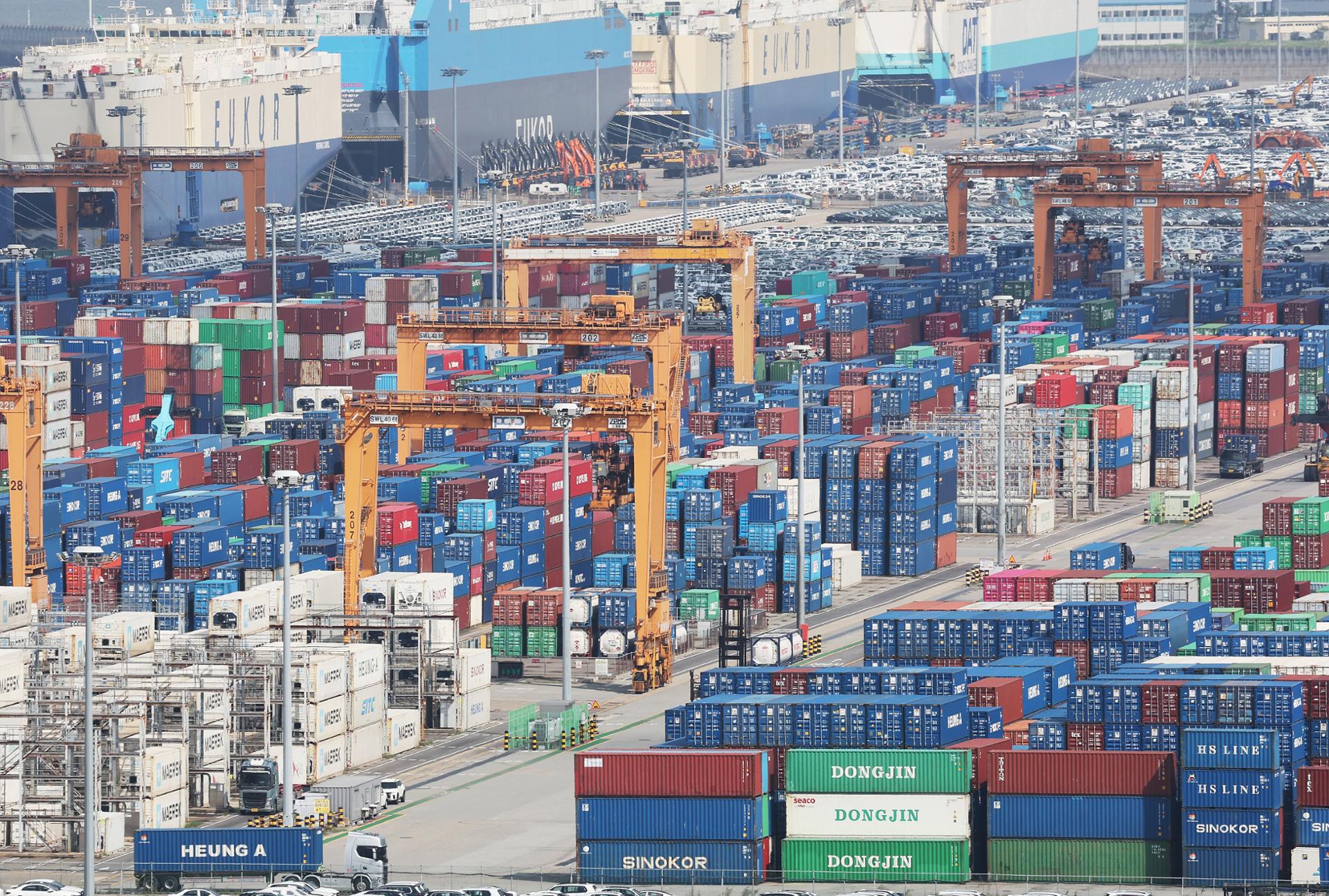
Containers are stacked at a port in the western coastal city of Pyeongtaek, some 60 kilometers south of Seoul, in this file photo from July 1. Yonhap
Korea's central bank said Wednesday that it is necessary to maintain a monetary tightening stance as inflation pressure remains high and the country's economy is expected to keep growing.
Earlier this month, the Bank of Korea (BOK) raised its benchmark rate by a quarter percentage point to 2.75 percent, the first rate hike in 3 1/2 years. The move was intended to curb rising prices amid a volatile local currency and came as strong exports were expected to support solid economic growth.
"Going forward, we judge that there is a need to maintain a rate hike trend and will decide on the rate level and the timing, taking into consideration the degree of inflation pressure, economic trend and financial stability," the BOK said.
The central bank said the rate increase earlier this month was made because inflation is expected to stay above its target for a prolonged period amid an economic pickup, while risks to financial stability still remain.
The BOK said the country's economy will continue to show solid growth, supported by strong exports and investment. That assessment places the latest rate decision in the broader policy tradeoff now facing the central bank: containing persistent price pressure while avoiding a sharper drag on activity, after the first hike in more than three years.
The Korean economy grew 0.6 percent in the second quarter from the previous quarter, beating the BOK's May forecast of 0.2 percent growth on robust exports, with 3 percent annual growth within reach.
The central bank also said inflation pressure is likely to rise as a chip boom boosts the income effect and investment.
"Prices of services and industrial goods will accelerate amid uncertainty over global oil prices, and inflation will continue to top the target level," it said.
Regarding the local stock market, the BOK said downside risks would be limited given the strong performance of major chipmakers such as Samsung Electronics.
The local stock market has been volatile amid concerns over whether chip demand will remain as strong as expected, with the country's benchmark index falling nearly 30 percent this month alone.

