BofA Sees Hyperscaler AI Capex Rising Toward $1.2 Trillion in 2027
Key Takeaways
- •Bank of America projects hyperscaler capital expenditure will exceed $860 billion in 2026 and potentially reach $1.2 trillion in 2027, representing a sixfold increase from 2023 spending levels.
- •The combined customer cloud commitment backlog across top providers reached $2.3 trillion in the latest quarter, rising 16% from $2.0 trillion in early July.
- •Aggregate free cash flow margins for these companies are expected to deteriorate to approximately -1% in 2026 and bottom near -5% to -6% in 2027-28, compared with a historical range of +15% to +20%.
- •The top five infrastructure companies have collectively raised about $270 billion since the start of 2026, primarily through long-dated debt with maturities extending 30 to 40 years.
- •Bank of America identifies compute, memory, semiconductors, power semiconductors, and optics as the primary beneficiaries of the spending cycle in that order.
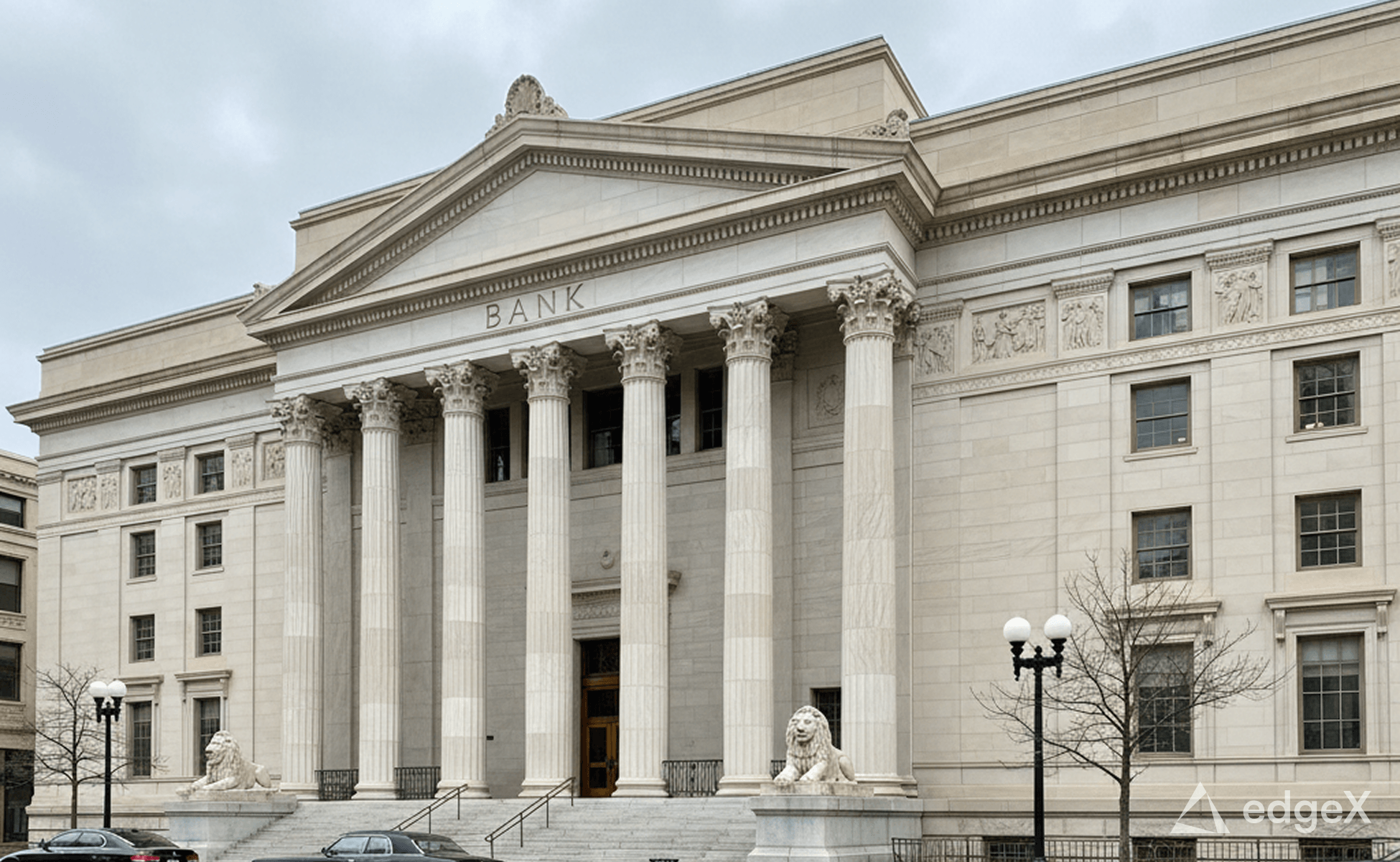
Bank of America has raised its estimates for spending by the largest U.S. cloud and AI infrastructure providers after second-quarter earnings from Alphabet, Microsoft, Amazon and Meta, saying the trajectory is steeper rather than flatter.
The bank now expects calendar year 2026 hyperscaler capital expenditure to exceed $860 billion, which would be up roughly 80% year over year. It also sees a path toward $1.2 trillion in 2027, another increase of about 38% from that level. BofA described the figures as almost unfathomable and said compute remains supply constrained, with management teams pointing to stronger multiyear spending intentions. To put the scale in perspective, the combined annual capex of these companies was roughly $200 billion as recently as 2023, meaning BofA's projection implies a sixfold increase in just four years.
"We see increased hyperscaler appetete to continue investing in capacity," BofA wrote.
BofA said the most important figure is $2.3 trillion, the backlog of customer cloud commitments across the top four cloud providers. That total is up 16% quarter over quarter from $2.0 trillion in early July. Microsoft disclosed $678 billion in commercial backlogs, while Oracle reported $638 billion and about $75 billion in prepaid hardware contracts, which BofA said is reducing uncertainty around its funding needs. The inclusion of Oracle alongside the top four reflects its emergence as a significant AI infrastructure player, having secured large-scale compute deals with OpenAI and other model developers. The bank framed that as an answer to the question of who will pay for the buildout, saying customers are increasingly paying in advance.
The bank also addressed concerns about free cash flow. It said aggregate free cash flow margins are expected to turn negative at around -1% in calendar year 2026 and bottom near -5% to -6% in calendar years 2027-28, compared with a historical range of +15% to +20%. BofA described that as a meaningful decline. Those projected negative margins would mark a striking departure for companies that have ranked among the most cash-generative in corporate history, signaling a willingness to subordinate near-term profitability to AI infrastructure dominance. At the same time, it said AI revenue is growing at triple-digit rates, noting that AWS said AI and chip revenues each surpassed $25 billion annually, while cloud and AI margins are expanding ahead of plan.
On funding, BofA said the top five companies have raised about $270 billion since the start of 2026, mostly through long-dated debt with maturities extending 30 to 40 years. The extended maturities suggest investors and management teams alike are betting on multi-decade returns from AI infrastructure rather than a cyclical spending peak. The bank said capital market access remains favorable and argued that free cash flow could be substantial once the buildout is complete.
BofA said compute, memory, semiconductors, power semiconductors and optics remain the main beneficiaries of the spending cycle, in that order. In premarket trading, DRAM ETF was up 4.4%, Micron rose 5.2% and Nvidia gained 1.7%.

