BMEX Falls Nearly 90% After BitMEX Announces Wind-Down
Key Takeaways
- •BMEX dropped from roughly $0.06 to near $0.002 after BitMEX announced it would wind down operations.
- •CoinGecko timestamps cited in reporting indicate the BMEX selloff began about one hour before BitMEX’s public shutdown post on X.
- •CryptoQuant CEO Ki Young Ju said BitMEX’s Bitcoin futures market share had fallen to about 0.08%, with around $84 million in daily volume.
- •10x Research said BitMEX’s owners explored a potential $1 billion sale in 2025 before choosing an orderly wind-down.
- •Reporting did not provide a full shutdown timeline or details on the treatment of BMEX holders and remaining token-related programs.
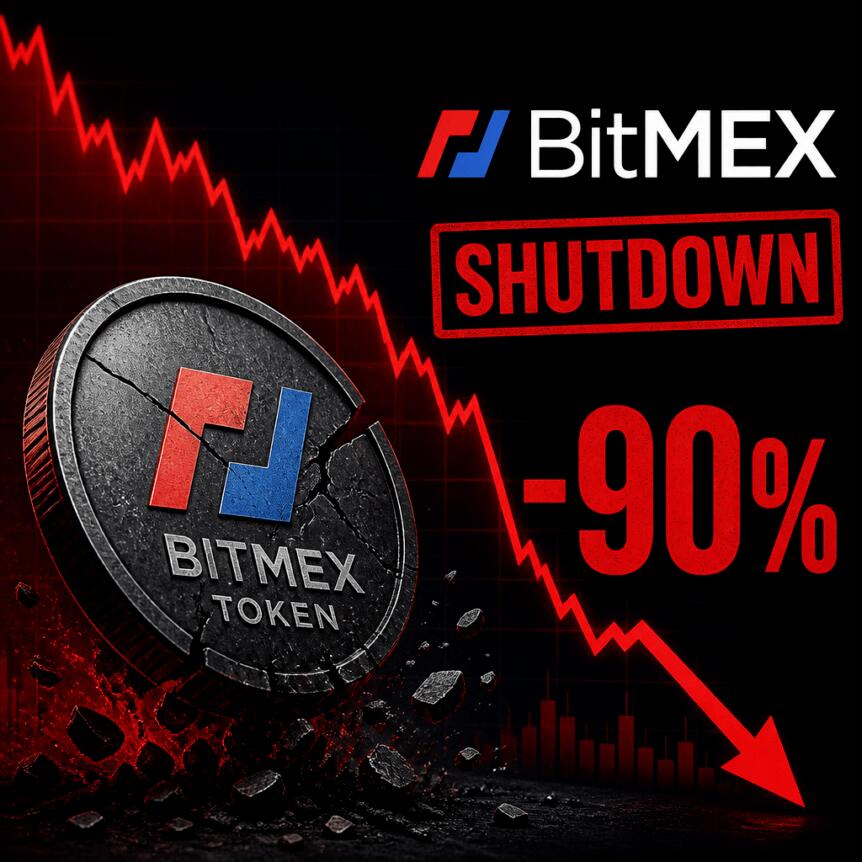
BitMEX’s utility token, BMEX, fell sharply after the exchange announced that it would wind down operations. CoinGecko data showed the token dropping nearly 90%, from about $0.06 to as low as $0.002. At the time of writing, BMEX was trading at around $0.0063.
The decline began before the shutdown notice was made public. According to CoinGecko pricing cited in earlier Cointelegraph coverage, BMEX started sliding at around 7:00 am UTC, roughly one hour before BitMEX posted its shutdown announcement on X.
BMEX reprices after BitMEX wind-down notice
The immediate trigger for BMEX’s steep decline was BitMEX’s decision to cease operations through an orderly wind-down. The token had recently traded closer to $0.06 before entering a rapid and sustained selloff as market participants assessed the implications of the exchange’s closure.
CoinGecko’s timestamps indicate that the selloff started at approximately 7:00 am UTC, about an hour before the public shutdown message appeared on X. The timing means BMEX had already begun repricing before the exchange’s announcement became broadly visible, according to the reported pricing data.
BMEX lost almost all of its value in the move, with CoinGecko data showing a drop from roughly $0.06 to near $0.002. The token later traded around $0.0063 at the time of writing, still far below its previous level.
Declining Bitcoin futures share cited as context
CryptoQuant CEO Ki Young Ju linked BitMEX’s decision to the exchange’s reduced position in Bitcoin derivatives. He said BitMEX’s share of the Bitcoin futures market had fallen to about 0.08%, with approximately $84 million in daily Bitcoin futures trading volume.
Ju also referred to BitMEX’s role in the development of the crypto trading sector. In a post on X, he said the exchange had helped shape the industry and was now “passing the torch” to newer platforms that grew from the model BitMEX helped pioneer.
BitMEX cofounder Arthur Hayes later expressed a similar view in a separate X post. Hayes wrote that it had been “an amazing ride” and that the team had “done something special together.”
Sale talks preceded orderly wind-down
Blockchain research firm 10x Research told Cointelegraph that BitMEX’s owners had explored a possible $1 billion sale in 2025 before deciding on an orderly wind-down process.
That account indicates that the shutdown was not simply a sudden break in operations, but followed a longer decision-making process. A potential acquirer was considered, according to the report, but the discussions did not result in a transaction before the wind-down path was chosen.
The decision has direct implications for a utility token tied to an exchange’s activity. When the underlying trading venue stops operating, the practical value of platform-linked token utility can be materially reduced. Any token mechanisms connected to trading activity, incentives, liquidity programs or platform demand may be affected as the exchange moves through a wind-down process.
For holders and market observers, that link between token utility and platform operations is central to the BMEX repricing. Exchange-linked tokens typically depend on the continued availability of the venue, its user base and any benefits the issuer provides through the platform. A wind-down can therefore change the token’s practical use case even before all operational details are finalized.
BitMEX legacy contrasts with BMEX price action
BitMEX had previously emphasized its role in crypto market structure when it marked its 11th anniversary in November 2025. The exchange credited its influence in creating the perpetual swap, a futures contract structure with no expiration date that became central to modern crypto derivatives trading.
The exchange’s historical role contrasts with BMEX’s price movement following the wind-down announcement. BitMEX’s past contribution to derivatives trading did not prevent a sharp repricing of its utility token once the exchange said it would cease operations.
Cointelegraph also reported that Roshan Dharia, a restructuring advisor and CEO of investment firm Echo Base, described the closure as part of wider “structural corrections” across digital asset markets. Dharia linked the pressures to a more competitive environment, rising regulatory and compliance costs, and lower tolerance for operational inefficiency.
Those factors place BitMEX’s closure within broader industry conditions affecting digital asset exchanges, particularly venues facing reduced scale, tighter margins or higher operating burdens. In derivatives markets, where liquidity and trading depth are important to user retention, declining market share can compound pressure on older venues competing with newer platforms.
As the wind-down proceeds, unresolved issues include the treatment of BMEX holders, the status of any remaining token incentives or liquidity arrangements, and the final operational steps for the exchange. The available reporting did not detail the full timeline for BitMEX’s shutdown or specify all remaining procedures.

