Blumenthal to lead Senate investigations panel as Democrats weigh Trump accountability strategy
Key Takeaways
- •Blumenthal will lead the Senate's chief investigative panel starting January 3, with inquiries already underway into crypto corruption, Elon Musk's Starlink, vanity projects, and pay-for-play donations linked to the East Wing ballroom.
- •Blumenthal stated that Senate votes may be sufficient to impeach Defense Secretary Pete Hegseth, though not yet President Trump, whose removal would require House charges and a two-thirds Senate conviction.
- •Estimated inflation figures showed consumer prices rising 4 percent year over year in October, up from 3.7 percent in September, and an AP survey of midterm voters found roughly two-thirds blamed Trump's policies for higher costs.
- •Representative-elect Don Leonard of Ohio claimed Democratic House leaders threatened reprisals unless he backed Hakeem Jeffries for speaker, allegations the Alternet columnist deemed implausible given Jeffries' commanding vote margin.
- •Senators Bernie Sanders and Chris Van Hollen are pushing for an open process to choose the next Senate majority leader, but Schumer likely retains a majority of the caucus votes that decide the post.
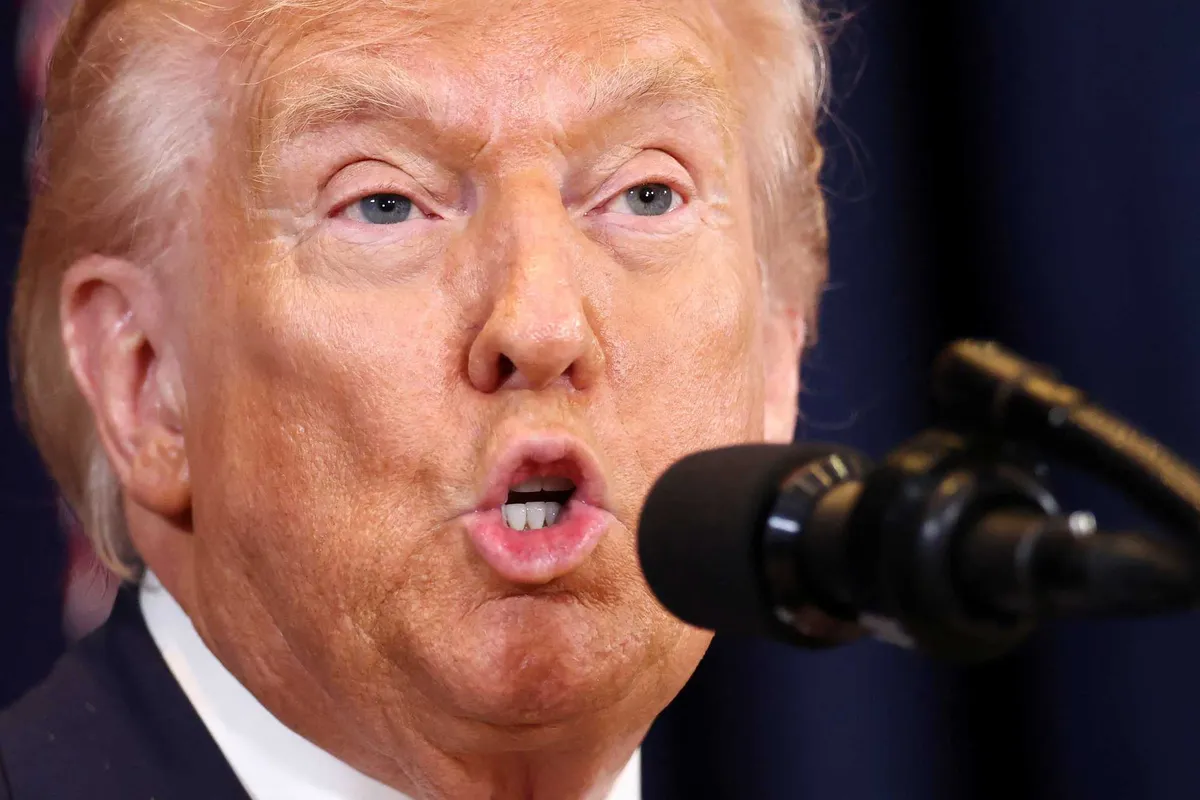
Sen. Richard Blumenthal made news twice this week, and the second item may prove far more consequential for President Donald Trump.
Connecticut's senior US senator first drew attention when he suggested that the Democratic Party needs "new energy and ideas" — a remark that sounded like openness to someone new becoming the next Senate majority leader. In reality, something was lost in translation. Blumenthal, not known as a boat-rocker within his party, soon clarified that he does support Chuck Schumer remaining in the role.
The more significant development concerns his next assignment. When the new Congress is seated on January 3, Blumenthal will head the Senate Permanent Subcommittee on Investigations — the panel that has long functioned as the chamber's chief investigative unit, with the power to compel documents and testimony — making him the hub of Senate Democrats' accountability agenda. Speaking in Hartford, he said the investigations will begin "with urgency" and will focus not only on corruption by the president but also on the corruption around him — with the implication, as the Alternet column put it, that the billionaires and corporations that bribed Trump are in trouble.
Blumenthal listed inquiries already underway: "crypto scams and corruption," "[Elon] Musk and Starlink," "vanities projects" and "the pay-for-play schemes of big corporations that have donated to the East Wing ballroom boondoggle."
More consequential still, the senator laid out what the column described as a theory of accountability. Blumenthal said, "I think the votes may be there to impeach Pete Hegseth" — the defense secretary — in the Senate, but added that the votes are not yet there to impeach Trump. Under the Constitution, impeachment charges originate in the House, and conviction and removal require a two-thirds Senate vote.
"Americans voted for affordability and accountability," he said. "They want to end corruption, because corruption increases costs. Taking money from foreign governments, and the president is beholden to them, increases the costs for average everyday Americans."
The columnist argued that this framing sidestepped a sharper implication: if Blumenthal and Democratic investigators establish that the president took bribes — a conclusion the columnist called "almost certainly" supported by information already available to the public — that would constitute grounds for impeachment. At the same time, the columnist agreed with Blumenthal's suggestion that "impeachment might be a blind alley." In that reading, Democrats can inflict far more damage on Republicans — and on anyone who might run to replace Trump — by leaving the president alone for now, making him "the last man standing after the others fall."
The columnist cautioned against reading this as "a thoroughly considered plan of attack," writing that Democrats are "figuring things out as they go" and making calculations along the way. Even so, he would not be surprised, he wrote, if congressional Democrats drag out their pursuit of Trump for as long as possible and let investigations spill into the next election, "Benghazi-style" — a reference to the years-long Republican investigations of the 2012 Benghazi attack that trailed Hillary Clinton into her 2016 presidential campaign. Trump cannot run again under the Constitution's two-term limit, the column noted; investigators can only affect Republicans who have a political future.
Inflation data strengthen the affordability argument
New economic data gave that message added force. Inflation rose higher than expected last month, and a former Federal Reserve economist told the Associated Press that the central bank should be worried.
"Using rough estimates for last October's data, Riccardo Trezzi calculates that consumer prices rose 4 percent in October from a year ago, up from 3.7 percent in September," the AP reported. "Core prices rose 2.8 percent, he estimates, up from 2.6 percent."
Simon Rosenberg, a veteran Democratic strategist who writes the Hopium Chronicles, said that "inflation has more than doubled since Trump took office. The scale of the policy failure that America is experiencing right now is hard to put into words." He published a graph to underscore the point.
For the Alternet column, the data made the case that "Bidenomics was working". As stubborn as inflation was during Joe Biden's tenure, it was nonetheless falling under his policies, and it began rising again almost immediately after Donald Trump returned to office — what the columnist called the end of Bidenomics. He attributed continued upward pressure on prices to an illegal war, illegal taxes in the form of tariffs, and illegal deportations.
The column also pointed to polling: an AP survey of 100,000 midterm voters found that about two-thirds blamed Trump's policies for higher costs, while 90 percent said affordability was a "crucial" or "major" factor in their voting.
Leonard's allegations against House Democratic leadership
In the House, representative-elect Don Leonard of Ohio alleged in a video that "senior members of the Democratic House" told him "in no uncertain terms" that if he does not support the speakership of Hakeem Jeffries, they will make his life "a living hell." Leonard said his support is conditional on a constitutional amendment to end Citizens United, the 2010 Supreme Court decision that opened the door to unlimited independent political spending, and an end to support for Israel and the Iran war — the implication being that Democratic leadership opposes both and has therefore resorted to intimidation.
The allegations have drawn considerable attention among progressives, but the column argued they are "almost certainly fantasy." Jeffries, it noted, already has the votes he needs. There are currently 214 Democrats in the House, and he needs just four more to reach the threshold of 218 — no problem at all, given that the caucus is set to balloon to nearly 260. Leonard may believe Jeffries is thinking hard about his vote, but in fact Jeffries is "probably not thinking much about it at all," the columnist wrote. Intimidation might make sense if the margins were narrow; "as it is, however, there's no point."
Is Leonard lying? The columnist allowed the possibility but offered a more charitable read: that Leonard was lobbied by Jeffries' leadership team — "standard operating procedure in Washington" — and either took normal politicking as a threat or decided there was an opportunity to portray it as one for his own purposes. Leonard, the column said, "seems to be appealing to 'progressives' who trade in the conspiracy that Jeffries is a shill for Israel."
Leonard's video was picked up by Drop Site News, Ryan Grim's outlet; the column described Grim as one of the loudest anti-Democratic voices pushing the candidacy of Graham Platner. The Tennessee Holler helped the video go viral, asking, "is this Trumpian politics the change people voted for?" Sarah Kendzoir, a writer with a large following who believes the Democrats are as "Trumpian" as the GOP, expanded its reach further.
The columnist concluded that there are "agents of chaos" in the country who operate alongside Democrats but are uninterested in organizing power for the purpose of "bringing greater freedom, equality and justice to all." Their interest, he argued, lies in advancing their own cynical agendas, often by sowing division within the party — in particular the idea that Jeffries in the House and Chuck Schumer in the Senate are somehow illegitimate leaders. He expressed hope that Leonard "figures out that that's a fool's game," adding, "Otherwise, he's going to be podcasting in two years."
Schumer's future
Any suggestion of progressive resistance to Jeffries appeared thin. When Rep. Alexandria Ocasio-Cortez said that "there's only one candidate in the race" to be the next speaker, the columnist took it as confirmation that the notion of "progressives oppose Jeffries" had little substance: "If AOC is on board, it's a done deal."
The Senate, however, has competition — or at least the appearance of it. Sen. Bernie Sanders said he does not support Chuck Schumer as leader. Sen. Chris Van Hollen said Schumer's leadership should not be assumed, observing that two new senators would not be coming in "if Schumer and the DSCC [Democratic Senatorial Campaign Committee] had had their way." Like Sanders, Van Hollen is calling for an open process to determine the next leader.
They might get what they want, the column observed, but the outcome will probably be the same. In the House, the entire body votes for speaker; in the Senate, only the majority votes for majority leader. Schumer almost certainly has a majority of those votes already, despite the objections of a few. The House will formally elect its speaker when the new Congress convenes on January 3 — the same day Blumenthal takes over the investigations panel.
Does that make the dissent meaningless? Perhaps not. Some suggest that what is unfolding is the beginning of the end for Schumer — that he is being nudged out of the leadership before the next session of Congress, on the presumption that there will be a Democratic president by then, at which point truly transformational legislation can take place.

