Block Urges Senate to Advance CLARITY Act, Calling for Crypto Regulatory Clarity and Developer Protections
Key Takeaways
- •Block has formally urged Senate leadership to advance the CLARITY Act to establish a clearer regulatory framework for digital assets in the United States.
- •The CLARITY Act aims to resolve the long-standing question of how oversight responsibilities should be allocated between the Securities and Exchange Commission and the Commodity Futures Trading Commission.
- •Block has emphasized that legal protections must extend to blockchain developers and users who rely on self-custody solutions to manage their own digital assets.
- •A wave of SEC enforcement actions against cryptocurrency firms has intensified industry demands for congressional action to define the boundaries of agency authority.
- •The legislation's passage could influence U.S. competitiveness in the global digital economy, as other jurisdictions including the EU, Singapore, and the UK have already advanced their own crypto regulatory frameworks.
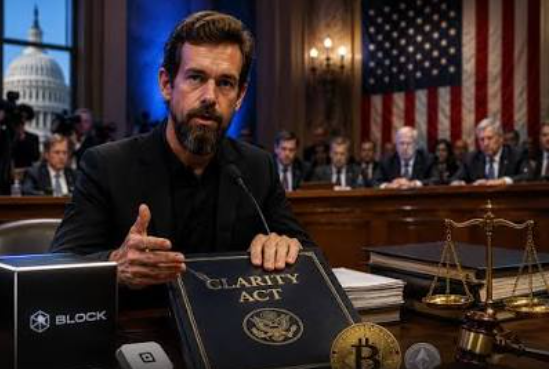
Block Urges Senate to Advance CLARITY Act, Calling for Crypto Regulatory Clarity and Developer Protections
Jack Dorsey's Block has sent a letter to Senate leadership urging lawmakers to advance the CLARITY Act after months of discussions over the future of cryptocurrency regulation in the United States. The company argued that clearer rules would support innovation while safeguarding key principles, including user ownership of digital assets and the freedom to develop open blockchain technology.
The development was highlighted by Cointelegraph on X (source post), drawing further attention to the growing industry push behind the CLARITY Act as crypto companies continue to seek regulatory certainty from Washington. Block's move places the company among a rising number of technology and cryptocurrency firms calling on Congress to establish a more defined regulatory framework for digital assets.
Block's Case for Clear Cryptocurrency Rules
Block has long been involved in the digital asset ecosystem through its payment services, Bitcoin-focused initiatives, and financial technology products. The company has argued that unclear regulations create challenges for businesses, developers, and consumers attempting to participate in the growing blockchain economy.
According to Block, a clear regulatory framework would provide greater confidence for developers building blockchain applications, companies creating digital financial products, users managing their own digital assets, and businesses integrating cryptocurrency technology. The company believes that well-defined rules can encourage innovation while allowing regulators to maintain appropriate oversight.
CLARITY Act at the Center of the Crypto Regulation Debate
The CLARITY Act has become one of the most closely watched cryptocurrency bills in the United States. The legislation is designed to address a core structural question in digital asset regulation: how to divide oversight responsibilities between the Securities and Exchange Commission and the Commodity Futures Trading Commission. Supporters say the bill could help resolve long-standing questions about how digital assets should be regulated and which government agencies should oversee different segments of the industry.
For years, cryptocurrency companies have faced uncertainty over whether specific digital assets should be classified as securities, commodities, or another type of financial instrument. This ambiguity has created challenges for businesses attempting to build products while complying with existing regulations. The proposed legislation aims to establish clearer guidelines that could reduce confusion and create more predictable market rules.
The demand for legislative clarity has been intensified by a wave of SEC enforcement actions against cryptocurrency firms in recent years, including lawsuits targeting exchanges, token issuers, and decentralized finance platforms. Many in the industry have argued that regulation-by-enforcement has created an unpredictable environment and that congressional action is needed to define the boundaries of agency authority.
Legal Protections for Developers and Self-Custody
A central concern for Block involves legal protections for blockchain developers and users who choose self-custody solutions. Self-custody allows individuals to control their own digital assets without relying on centralized entities such as exchanges or financial intermediaries. Supporters argue that self-custody is a fundamental feature of blockchain technology, enabling users to maintain direct ownership and control over their assets.
Block believes regulations should protect innovation without imposing unnecessary restrictions on developers creating open-source technology. The company has emphasized that developers should not face excessive legal uncertainty simply for building software that enables blockchain functionality.
Self-custody remains one of the most debated topics in cryptocurrency policy discussions. Supporters view it as an essential component of digital ownership, while critics have raised concerns about risks involving fraud, money laundering, and consumer protection. Block and other industry participants argue that self-custody should remain available and that regulators should focus on addressing bad actors rather than restricting the underlying technology.
Jack Dorsey's Bitcoin Advocacy
Jack Dorsey, co-founder and former CEO of Twitter, has been one of the most prominent technology executives supporting Bitcoin and decentralized financial systems. Through Block, Dorsey has invested heavily in Bitcoin-related initiatives and has promoted the concept of open financial networks. Block's involvement in cryptocurrency spans Bitcoin payment solutions, blockchain development efforts, financial technology products, and digital asset research.
Dorsey has repeatedly argued that decentralized technologies can improve financial access and create new opportunities for individuals worldwide. The company's latest letter reflects that broader vision by calling for policies that support innovation while maintaining consumer protections.
Growing Industry Pressure on Congress
Block's request comes as cryptocurrency companies intensify pressure on lawmakers for clearer regulations. Many industry leaders argue that uncertainty has slowed innovation and encouraged some blockchain businesses to consider operating outside the United States. Companies supporting regulatory clarity believe a strong legal framework could help the U.S. remain competitive in the global digital economy.
The industry has focused particularly on issues involving market structure, exchange oversight, developer protections, digital asset classification, and consumer rights. The CLARITY Act has become central to these discussions, which have gained momentum alongside separate legislative efforts such as stablecoin regulation.
The cryptocurrency industry has grown significantly over the past decade, yet regulatory questions remain unresolved. Companies frequently face uncertainty about how existing financial laws apply to blockchain-based products, creating challenges in product development, compliance costs, business expansion, investment decisions, and long-term planning. Supporters argue that clear rules would allow companies to allocate more resources toward innovation rather than navigating ambiguous regulatory expectations.
Balancing Innovation and Consumer Protection
A major challenge for lawmakers is creating regulations that protect consumers without stifling technological development. Supporters of the CLARITY Act contend that regulation and innovation can work together. They believe effective legislation should protect investors, prevent fraud, encourage responsible businesses, support technological progress, and maintain America's competitiveness.
Block's position reflects the view that blockchain technology should be regulated in a manner that recognizes its unique characteristics.
Impact on Blockchain Developers
Developers represent another critical focus of the CLARITY Act discussion. Blockchain developers build the infrastructure behind decentralized applications, payment systems, and digital asset platforms. Industry advocates argue that developers need clear legal boundaries to continue building innovative technology. Without explicit protections, some developers may hesitate to launch new blockchain projects due to concerns about potential regulatory consequences. Block considers protecting developers essential for maintaining a healthy technology ecosystem.
Global Competition in Digital Assets
The push for crypto legislation comes as other countries continue developing their own digital asset frameworks. The European Union's Markets in Crypto-Assets regulation, known as MiCA, began taking effect in 2024, establishing licensing requirements and consumer protection rules across EU member states. Other jurisdictions, including Singapore and the United Kingdom, have advanced tailored frameworks designed to attract blockchain companies and financial innovation. Industry leaders warn that regulatory uncertainty could put the United States at a disadvantage. By creating clearer rules, supporters believe the country can encourage investment, retain technology talent, and strengthen its position in the global digital economy.
What the CLARITY Act Could Mean
If approved, the CLARITY Act could become a major milestone in U.S. cryptocurrency regulation. Potential outcomes include greater legal certainty for crypto companies, increased investor confidence, stronger user protections, clearer responsibilities for regulators, and expanded blockchain innovation. For companies like Block, the legislation could provide a foundation for continued development of cryptocurrency-related products.
Although support for the CLARITY Act has grown, the legislation still faces significant steps before becoming law. Senators must continue reviewing the proposal, considering potential amendments, and addressing concerns from different stakeholders. The outcome will likely influence the direction of the U.S. cryptocurrency industry for years to come.
Industry participants are watching closely to see whether Congress will move forward with a comprehensive regulatory framework. For Block and other blockchain-focused companies, the message remains consistent: responsible regulation should provide protection while allowing innovation to continue.
Source: Hokanews