BlackRock Brings Tokenized European Money Market Funds On-Chain Through JPMorgan's Kinexys Platform
Key Takeaways
- •BlackRock is tokenizing European money market funds through JPMorgan's Kinexys blockchain platform to broaden the use of tokenized investment products within regulated financial markets.
- •The initiative extends BlackRock's tokenization strategy following its March 2024 launch of BUIDL, a USD Institutional Digital Liquidity Fund issued on Ethereum in partnership with Securitize.
- •JPMorgan's Kinexys platform, rebranded from Onyx in late 2024, processes billions of dollars in daily transaction volume across cross-border payments, intraday repo, and tokenized collateral management.
- •The European Union's Markets in Crypto-Assets regulation, which began taking effect in 2024, has provided regulatory clarity that encourages financial institutions to explore blockchain applications with greater confidence.
- •Boston Consulting Group has projected that tokenized assets could reach approximately $16 trillion in value by 2030, spanning government bonds, corporate debt, equities, investment funds, real estate, and alternative assets.
BlackRock Brings Tokenized European Money Market Funds On-Chain Through JPMorgan's Kinexys Platform
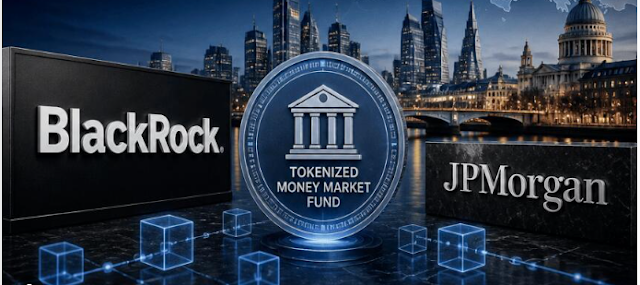
BlackRock has announced a significant expansion into blockchain-based finance by bringing tokenized European money market funds on-chain through JPMorgan's Kinexys platform. The move underscores the accelerating adoption of tokenized financial assets among the world's largest financial institutions.
The initiative is one of the latest examples of a traditional asset manager embracing blockchain infrastructure to enhance the efficiency, accessibility, and settlement of conventional financial products. By utilizing Kinexys—JPMorgan's blockchain platform for institutional financial services, formerly known as Onyx—BlackRock aims to broaden the use of tokenized investment products within regulated financial markets.
The development drew rapid attention across both traditional finance and the cryptocurrency industry after being highlighted by the crypto news account Cointelegraph on X (https://x.com/Cointelegraph/status/2084983000689786905), with broader reporting following across financial media.
Although tokenization remains in its early stages, many industry experts believe it could fundamentally reshape how securities, funds, and other financial assets are issued, traded, settled, and managed over the coming decade.
BlackRock Deepens Its Blockchain Commitment
BlackRock has steadily expanded its involvement in digital assets and blockchain technology over recent years. Initially recognized for launching institutional cryptocurrency investment products, the asset management giant has increasingly shifted toward broader blockchain infrastructure initiatives, including tokenization, digital settlement systems, and blockchain-enabled capital markets.
The move into European money market funds builds on BlackRock's March 2024 launch of the USD Institutional Digital Liquidity Fund (BUIDL), a tokenized fund issued on the Ethereum blockchain in partnership with digital assets firm Securitize. BUIDL quickly attracted hundreds of millions in assets and established BlackRock as one of the most active traditional asset managers in tokenized treasury products. Extending that approach to European MMFs signals the firm's intent to scale tokenization across multiple jurisdictions and product lines.
The latest initiative demonstrates that BlackRock's blockchain strategy extends well beyond cryptocurrencies themselves. Instead, the company appears focused on modernizing traditional financial infrastructure through distributed ledger technology. Many analysts view this strategy as evidence that blockchain is evolving into an institutional financial technology rather than remaining solely associated with speculative digital assets.
What Are Tokenized Money Market Funds?
Money market funds are investment vehicles that generally hold highly liquid, short-term financial instruments such as government securities, commercial paper, certificates of deposit, and other low-risk assets. Traditionally, ownership records for these funds exist within conventional financial systems.
Tokenization transforms ownership interests into digital tokens recorded on blockchain infrastructure. Each token represents an ownership interest in the underlying financial asset while maintaining compliance with applicable legal and regulatory requirements. Blockchain technology may improve transaction efficiency, operational transparency, settlement speed, and programmability. For institutional investors, tokenization also creates opportunities for automation and more flexible financial infrastructure.
Understanding JPMorgan's Kinexys Platform
Kinexys is JPMorgan's blockchain platform designed to support institutional financial services through distributed ledger technology. The platform facilitates tokenization, digital settlements, programmable financial transactions, and blockchain-based infrastructure for institutional clients. It was rebranded from Onyx in late 2024 as JPMorgan consolidated its digital assets and blockchain initiatives under a unified brand.
Kinexys has processed billions of dollars in daily transaction volume across use cases including cross-border payments, intraday repo, and tokenized collateral management. The platform represents the evolution of JPMorgan's long-term blockchain initiatives aimed at improving efficiency across wholesale financial markets. By integrating tokenized assets into enterprise-grade blockchain infrastructure, Kinexys enables financial institutions to explore next-generation settlement systems while operating within regulated environments. BlackRock's decision to utilize Kinexys demonstrates increasing confidence in institutional blockchain platforms developed by major global banks.
Why Tokenization Matters
Tokenization has emerged as one of the most significant developments within modern financial markets. Rather than replacing traditional financial assets, blockchain technology enables existing assets to operate through programmable digital infrastructure. Supporters argue tokenization offers several potential advantages:
- Faster settlement
- Greater operational efficiency
- Improved transparency
- Reduced administrative costs
- Enhanced liquidity opportunities
- Programmable compliance
- Fractional ownership capabilities
These potential improvements have attracted attention from banks, asset managers, exchanges, payment companies, and financial regulators worldwide.
Institutional Adoption Accelerates
BlackRock's latest announcement reflects a broader industry trend. Large financial institutions are increasingly moving beyond blockchain experimentation toward operational deployment:
- Banks now issue tokenized deposits
- Asset managers tokenize investment funds
- Payment companies integrate stablecoin settlements
- Central banks explore digital currencies
- Financial market infrastructure providers evaluate blockchain-based settlement systems
Collectively, these initiatives demonstrate growing institutional confidence in distributed ledger technology.
European Markets Enter the Tokenization Era
Europe has become one of the leading regions supporting regulated blockchain innovation. The European Union's Markets in Crypto-Assets (MiCA) regulation, which began taking effect in 2024, established one of the world's most comprehensive legal frameworks for digital assets and tokenized financial services. The clarity provided by MiCA has encouraged financial institutions to explore blockchain applications with greater confidence.
Tokenized investment funds represent another important milestone in this evolution. European money market funds serve institutional investors, corporations, asset managers, and treasury operations seeking relatively low-risk liquidity management solutions. Bringing these products on-chain may improve accessibility while supporting more efficient financial infrastructure.
Blockchain Meets Traditional Finance
One of blockchain's most important recent developments involves its growing integration with conventional financial markets. Rather than functioning independently from traditional banking systems, blockchain increasingly complements existing financial infrastructure.
Financial institutions now explore blockchain for securities settlement, collateral management, cross-border payments, trade finance, fund administration, identity verification, and asset tokenization. BlackRock's collaboration with JPMorgan illustrates this convergence—instead of competing against traditional finance, blockchain increasingly serves as an enabling technology supporting institutional modernization.
Tokenization Could Transform Capital Markets
Industry analysts increasingly describe tokenization as one of blockchain's largest long-term opportunities. Boston Consulting Group has projected that tokenized assets could reach approximately $16 trillion in value by 2030, encompassing both on-chain representations of traditional securities and natively digital assets. Potential applications extend across government bonds, corporate debt, equities, investment funds, commodities, private credit, real estate, infrastructure investments, and alternative assets.
Programmable ownership may reduce settlement delays while enabling new forms of financial innovation. Although widespread adoption will require continued regulatory development, momentum continues building across global markets.
Regulatory Clarity Supports Innovation
The expansion of institutional blockchain initiatives coincides with growing regulatory clarity. Governments increasingly establish legal frameworks governing tokenized securities, stablecoins, digital asset custody, and blockchain-based financial services. Financial institutions generally prefer operating within clearly defined regulatory environments before deploying new technologies at scale.
BlackRock's latest initiative suggests confidence that tokenization can develop within existing regulatory structures. As legislation evolves, additional institutional participation may follow.
Competition Intensifies Among Financial Institutions
The race to build blockchain-based financial infrastructure continues accelerating. Banks, exchanges, fintech companies, asset managers, and technology providers increasingly compete to develop tokenization platforms capable of serving institutional markets. Infrastructure quality, regulatory compliance, cybersecurity, interoperability, scalability, and settlement efficiency have become key competitive factors.
Competing initiatives include Goldman Sachs's GS DAP platform, Citi's token services, and Franklin Templeton's tokenized fund offerings on public blockchains. Kinexys positions JPMorgan among the leading institutional blockchain providers competing for this emerging market, and collaborations with organizations such as BlackRock further strengthen its strategic position.
What Comes Next?
Industry observers expect additional tokenized investment products to emerge in the coming years. Asset managers continue evaluating opportunities involving tokenized funds, bonds, money market instruments, private credit, and other traditional financial products. Likewise, institutional investors increasingly explore blockchain infrastructure capable of improving operational efficiency.
The success of initiatives such as BlackRock's European money market fund tokenization may influence future adoption across global capital markets. Continued collaboration between financial institutions, regulators, technology providers, and blockchain developers will likely determine the pace of expansion.
Looking Ahead
BlackRock's decision to bring tokenized European money market funds on-chain through JPMorgan's Kinexys represents another major milestone in the evolution of institutional blockchain finance. The initiative demonstrates that blockchain technology is increasingly becoming integrated into mainstream financial infrastructure rather than remaining confined to cryptocurrency markets.
As asset managers, banks, payment providers, and institutional investors continue embracing tokenization, blockchain appears positioned to play an increasingly important role in the modernization of global capital markets. Although widespread adoption will take time, collaborations between industry leaders such as BlackRock and JPMorgan illustrate how traditional finance continues moving toward a future where digital infrastructure supports the issuance, management, settlement, and transfer of regulated financial assets.
For investors, financial institutions, and policymakers alike, the latest development provides further evidence that tokenization is rapidly transitioning from experimental technology into a practical component of next-generation global finance.
Source: hokanews.com

