BlackRock Launches New Tokenized Money Market Fund on Solana, Ethereum, and Tempo
Key Takeaways
- •BlackRock's new tokenized money market fund operates across Ethereum, Solana, and Tempo, requiring a minimum investment of $3 million from qualified institutional participants.
- •The fund is structured to comply with the GENIUS Act, a U.S. federal law passed in 2025 that establishes regulatory standards for payment stablecoins and reserve asset management.
- •BlackRock's earlier tokenized fund, BUIDL, has accumulated more than $2.6 billion in assets under management since its launch in March 2024 and has expanded to multiple blockchains including Avalanche, Optimism, Polygon, and Arbitrum.
- •The tokenized real-world asset market exceeded $20 billion in total value during 2024, with tokenized U.S. Treasuries representing one of the fastest-growing segments.
- •The new fund invests primarily in cash and short-term U.S. Treasury securities to provide stablecoin issuers with a regulated, blockchain-native reserve management solution.
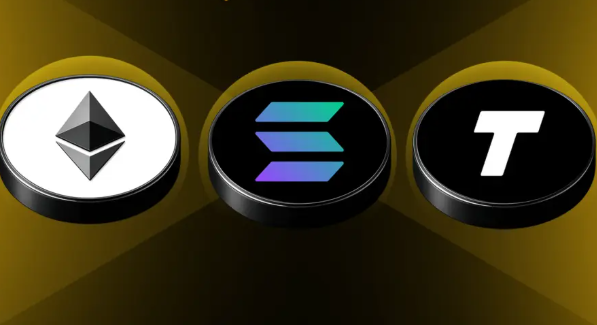
BlackRock has taken another significant step in the evolution of blockchain-based finance by introducing a new tokenized money market fund designed to support institutional stablecoin reserve management across multiple blockchain networks. The world's largest asset manager, with approximately $11 trillion in total assets under management, announced that the fund will operate on Solana, Ethereum, and Tempo, providing qualified institutional participants with access to a regulated investment vehicle backed primarily by cash and short-term U.S. Treasury securities.
The launch represents BlackRock's latest expansion into the rapidly growing market for tokenized real-world assets (RWAs). This sector has attracted increasing attention from banks, asset managers, fintech companies, and blockchain developers seeking to modernize traditional financial infrastructure through distributed ledger technology. According to industry trackers, the tokenized RWA market surpassed $20 billion in total value during 2024, with tokenized U.S. Treasuries representing one of the fastest-growing segments.
According to information released alongside the announcement, the new fund requires a minimum investment of $3 million and has been structured to comply with the framework established under the GENIUS Act. This legislation is designed to establish regulatory standards for payment stablecoins and reserve management in the United States, and its passage through Congress in 2025 provided one of the clearest federal regulatory frameworks for stablecoin issuers to date.
The announcement comes as BlackRock continues building on the success of its existing tokenized liquidity fund, BUIDL, which was launched in March 2024 on Ethereum and has grown to more than $2.6 billion in assets under management (AUM), making it one of the largest tokenized investment products currently operating within the digital asset industry. Since BUIDL's initial deployment, it has expanded to additional blockchain networks including Avalanche, Optimism, Polygon, and Arbitrum.
The development attracted considerable attention across financial markets after being highlighted by digital asset market commentator Coin Bureau on X:
https://x.com/coinbureau/status/2084401423127543939
While the social media post contributed to wider awareness of the launch, the broader significance stems from BlackRock's continuing efforts to bridge traditional finance with blockchain technology through regulated institutional investment products. Industry analysts describe the initiative as another indication that major global financial institutions are increasingly embracing blockchain infrastructure as tokenization moves from experimental pilot programs toward broader institutional adoption.
BlackRock Deepens Its Commitment to Tokenized Finance
Over the past several years, BlackRock has steadily expanded its involvement in digital assets and blockchain-based financial products. Initially entering the sector through cryptocurrency-related investment products and digital asset partnerships, the asset manager has increasingly shifted its attention toward tokenized securities, digital cash management solutions, and blockchain settlement infrastructure.
The introduction of this latest money market fund demonstrates that BlackRock views tokenization as more than a temporary technological trend. Instead, the company appears to be positioning blockchain infrastructure as an important component of future institutional financial markets. Unlike cryptocurrencies themselves, tokenized money market funds represent ownership interests in traditional financial assets that exist on blockchain networks. Investors receive blockchain-based digital tokens representing shares in portfolios consisting primarily of highly liquid, low-risk assets such as cash and U.S. Treasury securities. This structure combines traditional investment management with blockchain-based settlement and ownership records.
Understanding Tokenized Money Market Funds
Money market funds have long served as conservative investment vehicles for institutions seeking liquidity, capital preservation, and relatively stable returns. Traditionally, these funds invest in short-duration government securities, Treasury bills, repurchase agreements, and cash equivalents.
Tokenization introduces blockchain technology into that familiar investment structure. Rather than maintaining ownership solely through conventional financial databases, investors hold digital tokens representing their ownership interests. These tokens can potentially be transferred, settled, and recorded more efficiently using blockchain infrastructure. Supporters argue that tokenization reduces operational costs, accelerates settlement times, improves transparency, and enhances accessibility for institutional participants. As financial markets increasingly digitize, tokenized money market funds are emerging as one of the fastest-growing categories within the real-world asset sector.
Multi-Blockchain Strategy Expands Accessibility
One of the most notable aspects of BlackRock's latest fund is its deployment across multiple blockchain networks. The investment product will be available on Ethereum, Solana, and Tempo, reflecting an increasingly network-agnostic approach to blockchain infrastructure.
Ethereum remains the largest smart contract platform by institutional adoption and continues serving as the primary blockchain for tokenized financial assets. Its mature developer ecosystem, extensive security history, and broad institutional support make it a natural foundation for regulated financial products.
Solana, meanwhile, offers substantially faster transaction processing and lower network fees. These characteristics have made the blockchain increasingly attractive for financial applications requiring high transaction throughput and efficient settlement. Tempo represents an additional blockchain infrastructure layer supporting institutional financial applications, further expanding interoperability and flexibility.
By operating across multiple networks simultaneously, BlackRock provides institutional clients with greater choice while reducing dependence on any single blockchain ecosystem.
Designed for Stablecoin Reserve Management
A key objective of the new fund is supporting stablecoin reserve management. Stablecoins are digital assets designed to maintain stable values, typically by holding reserve assets including cash, Treasury securities, and highly liquid financial instruments. Major stablecoin issuers such as Circle, which manages USDC, already hold significant portions of their reserves in short-term Treasury instruments managed by traditional asset managers.
Regulatory developments have increased attention on how stablecoin issuers manage those reserves. Institutional-quality investment products backed by government securities provide one potential solution for maintaining reserve transparency and financial stability. BlackRock's new fund enables qualified stablecoin issuers to invest reserve assets in highly liquid portfolios while benefiting from blockchain-native settlement infrastructure. Industry participants increasingly expect regulated reserve management solutions to become central components of the next generation of digital payment systems.
Structured to Meet GENIUS Act Requirements
Another important feature of the new investment vehicle is its reported compliance with the GENIUS Act. The legislation establishes regulatory standards governing payment stablecoins and reserve asset management within the United States. Although implementation of various provisions will continue evolving through regulatory guidance, the legislation aims to improve transparency, investor protection, reserve quality, and financial stability.
By designing the fund to satisfy these standards, BlackRock positions the product for institutions seeking compliant blockchain-based reserve management solutions. Regulatory certainty remains one of the largest factors influencing institutional adoption of digital assets. Products aligned with established legal frameworks are generally viewed as more attractive by banks, payment companies, and regulated financial institutions.
Building Upon the Success of BUIDL
BlackRock's latest launch follows the rapid growth of its earlier tokenized investment product, BUIDL. Since its introduction in March 2024, BUIDL has accumulated more than $2.6 billion in AUM, becoming one of the largest tokenized funds operating globally.
The success of BUIDL demonstrated that institutional investors are increasingly comfortable allocating capital through blockchain-based investment structures. Its growth has also encouraged broader participation throughout the real-world asset ecosystem. Competitors including Franklin Templeton, which offers its own tokenized government money fund BENJI across multiple blockchains, and Ondo Finance, which provides tokenized Treasury products, have similarly experienced growth, signaling broader demand for blockchain-native access to government-grade yield. Many industry observers view BUIDL as evidence that tokenization can attract substantial institutional capital when combined with established asset managers, regulated custody providers, and high-quality underlying investments. The introduction of a second major tokenized fund suggests BlackRock sees continued long-term demand for blockchain-enabled financial products.
Real-World Asset Tokenization Continues Expanding
Tokenized real-world assets have become one of the fastest-growing sectors within digital finance. Rather than focusing solely on cryptocurrencies, financial institutions increasingly tokenize traditional assets including government bonds, private credit, investment funds, real estate, commodities, and equities.
Blockchain technology enables ownership records to exist digitally while maintaining legal claims to underlying financial assets. Supporters believe tokenization could eventually modernize settlement systems that have changed relatively little over several decades. Potential benefits include faster settlement, lower transaction costs, greater transparency, continuous market access, improved collateral management, and enhanced operational efficiency. Consulting firms and financial institutions estimate that tokenized assets could represent trillions of dollars in market value over the coming decade if institutional adoption continues accelerating.
Institutional Adoption Accelerates
BlackRock is not alone in pursuing blockchain-based financial infrastructure. Major global banks including JPMorgan and Goldman Sachs, asset managers, exchanges, payment companies, and financial technology firms have all expanded investments in tokenization. JPMorgan's Onyx platform and Goldman Sachs's GS Datalake initiative represent significant institutional blockchain settlement projects already in operation. Institutions increasingly recognize that blockchain technology offers practical applications extending well beyond cryptocurrencies. Asset tokenization, digital identity, programmable payments, collateral management, and settlement optimization have all emerged as important areas of development.
As regulatory frameworks become more clearly defined, additional institutional participation appears increasingly likely. BlackRock's latest initiative may encourage other traditional financial institutions to accelerate similar blockchain strategies.
Why U.S. Treasuries Remain Central
The fund's investment strategy focuses primarily on cash and U.S. Treasury securities. Treasuries remain among the safest and most liquid financial instruments available globally. Because stablecoin reserve management requires highly secure and liquid assets, government securities have become preferred reserve investments for many regulated issuers.
Using Treasury-backed portfolios also provides transparency regarding asset quality while supporting liquidity during periods of market stress. As demand for institutional stablecoins expands, Treasury-backed reserve management solutions are expected to become increasingly important.
Conclusion
BlackRock's introduction of a new tokenized money market fund across Ethereum, Solana, and Tempo represents another major milestone in the institutional adoption of blockchain-based financial products. Designed to support stablecoin reserve management through investments in cash and U.S. Treasury securities, the fund reflects growing demand for regulated digital financial infrastructure that combines the security of traditional assets with the efficiency of blockchain technology.
With a $3 million minimum investment requirement and a structure designed to comply with the GENIUS Act, the new product further strengthens BlackRock's position as one of the leading institutional participants driving tokenization across global capital markets. Combined with the continued expansion of the company's BUIDL fund, which now manages more than $2.6 billion in assets, the latest initiative highlights how tokenized real-world assets are rapidly becoming an integral part of the future financial system.

