BlackRock Lowers IBIT Bitcoin Conversion Minimum to $1 Million
Key Takeaways
- •BlackRock cut the minimum in-kind Bitcoin conversion size for IBIT from $25 million to $1 million in July.
- •The revised threshold opens the process to family offices, boutique crypto funds, wealth managers, and other high-net-worth Bitcoin holders.
- •BlackRock said IBIT has facilitated more than $5 billion in in-kind conversions, up from $3 billion since October 2025.
- •The process still requires an authorized participant or market maker, and retail investors cannot use it directly.
- •The lower minimum does not by itself ensure new buying pressure, Bitcoin inflows, or higher prices.
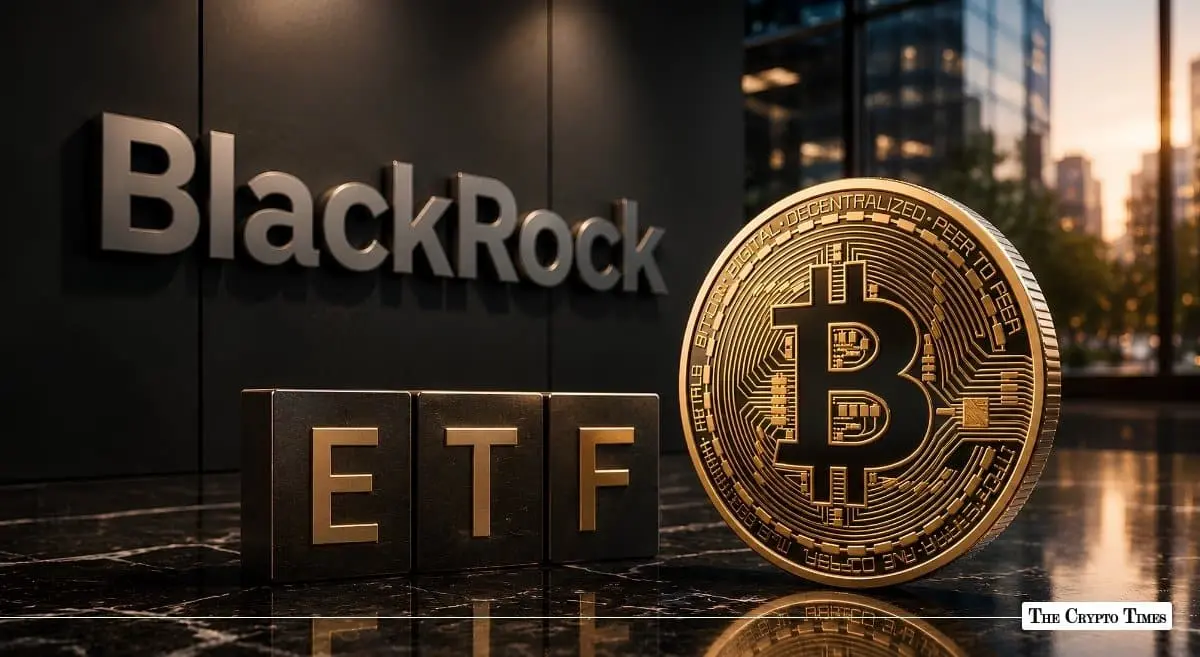
BlackRock has cut the minimum size for in-kind Bitcoin conversions into shares of its iShares Bitcoin Trust, known as IBIT, from $25 million to $1 million, a 96% reduction that took effect in July.
The change lowers the barrier for a process in which a holder contributes Bitcoin directly to the fund and receives IBIT shares in return, rather than first selling BTC for cash and then buying the exchange-traded fund on the open market.
🎯JUST IN: BlackRock lowered the minimum for converting $BTC directly into $IBIT ETF shares from $25 million to $1 million. That makes institutional Bitcoin access meaningfully easier as more than $5 billion has already moved into IBIT through in-kind conversions. pic.twitter.com/yDdEu1fAE6 — CryptosRus (@CryptosR_Us) August 25, 2026
🎯JUST IN: BlackRock lowered the minimum for converting $BTC directly into $IBIT ETF shares from $25 million to $1 million.
That makes institutional Bitcoin access meaningfully easier as more than $5 billion has already moved into IBIT through in-kind conversions. pic.twitter.com/yDdEu1fAE6
— CryptosRus (@CryptosR_Us) August 25, 2026
At the previous $25 million level, the mechanism was effectively limited to the largest institutional holders and market makers. At $1 million, it becomes relevant to family offices, boutique crypto funds, wealth managers, and other high-net-worth Bitcoin holders who previously had no practical way to access such a structure.
The lower threshold expands who can use the process, but it does not by itself create buying pressure, guarantee conversions, or determine how much Bitcoin will ultimately move into IBIT.
What the IBIT $1 Million Conversion Minimum Changes
In-kind creation involves an authorized participant or market maker transferring Bitcoin from an investor to the fund’s custody and issuing IBIT shares in exchange.
This structure allows investors to avoid converting BTC into dollars, unlike standard ETF purchases. BlackRock’s IBIT has facilitated more than $5 billion in conversions, up from $3 billion since October 2025, according to Robbie Mitchnick, BlackRock’s head of digital assets, who said he expects continued growth due to expanded access.
The process can take more than a week because it requires an authorized participant to manage Bitcoin custody and share issuance.
Although the lower minimum reduces the entry barrier, it remains unclear how many new holders will use the change or how much of the $5 billion total reflects transactions below the previous $25 million threshold.
Why the Lower Threshold Matters for Smaller Investors
Institutional adoption of Bitcoin ETFs is increasingly attracting professional and high-net-worth investors, especially now that the minimum has fallen from $25 million to $1 million.
The shift allows investors to keep Bitcoin exposure while reducing concerns about private keys and custody, using the regulated structure of exchange-traded products.
Concerns about real-world risks, including kidnappings and custody failures, have led some holders to view ETFs as a safer alternative.
Other firms have also lowered their minimums. Bitwise has reduced its threshold from $100 million to $3 million, while 21Shares says average in-kind transaction amounts are around $5 million.
Morgan Stanley has said in-kind conversions account for about 5% to 7% of its $560 million in Bitcoin ETF holdings, although it also said client education is still needed for these processes.
Grayscale has reported a rapid increase in in-kind transactions, with significant growth from March to June.
These developments point to a broader move toward standardizing the creation process for Bitcoin and Ether ETFs, with IBIT emerging as a major vehicle for institutional flows as interest in Bitcoin ETFs continues to grow, particularly around BlackRock.
Investors are chasing the crypto rally: Call options volume in the largest Bitcoin ETF, $IBIT , surged to 1.58 million contracts on Wednesday, its largest daily volume on record. $IBIT saw call options volume exceed 1 million contracts in each of the last 3 trading sessions from… pic.twitter.com/aqKJkMNj2V — The Kobeissi Letter (@KobeissiLetter) August 24, 2026
Investors are chasing the crypto rally:
Call options volume in the largest Bitcoin ETF, $IBIT , surged to 1.58 million contracts on Wednesday, its largest daily volume on record. $IBIT saw call options volume exceed 1 million contracts in each of the last 3 trading sessions from… pic.twitter.com/aqKJkMNj2V
— The Kobeissi Letter (@KobeissiLetter) August 24, 2026
What the Lower IBIT Threshold Does, and Does Not, Show
BlackRock’s reduction of the in-kind conversion minimum from $25 million to $1 million increases access to a regulated Bitcoin ETF for more investors and has already coincided with more than $5 billion in conversions.
However, the change does not guarantee new Bitcoin inflows or higher prices. Recent Bitcoin gains near $80,000 are tied to other market factors.
The process still requires intermediaries, since retail investors cannot complete in-kind swaps directly.
Future ETF flow data and issuer reports will show whether the lower minimum leads to a higher volume of conversions.
