From Space Tickets to a $69 Million NFT: 7 Bizarre Crypto Whale Purchases
Key Takeaways
- •The Winklevoss twins each paid 312.5 BTC for Virgin Galactic spaceflight tickets in 2014, but the flights were repeatedly delayed until the VSS Unity was retired from spaceflight in June 2024.
- •Justin Sun paid $6.24 million at Sotheby's in November 2024 for Maurizio Cattelan's banana artwork 'Comedian' and later took a bite of it at a press conference in Hong Kong.
- •Bitcoin pioneer Hal Finney was cryopreserved after his death in August 2014, with costs covered partly by donated Bitcoin, and Peter Thiel and Roger Ver are also set to undergo cryopreservation.
- •Investors including Wintermute co-founder Yoann Turpin spent $5 million on a Triceratops fossil in 2025, reflecting a reported shift by some crypto-wealthy collectors from NFTs toward scarce physical assets.
- •MetaKovan paid $69 million, or 42,329.453 Ether, for Beeple's digital collage at Christie's in March 2021, making it the most expensive NFT ever sold at the time.
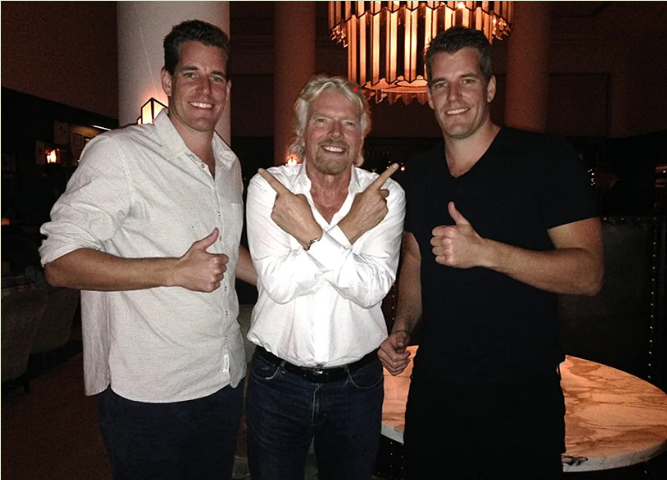
The adage that a fool and his money are soon parted may deserve an extension for crypto's multi-millionaires and billionaires, a cohort that has developed a taste for spending fortunes on some truly bizarre things.
From a Bitcoin-funded trip to space to a $69 million nonfungible token (NFT), these are seven of the strangest ways crypto fortunes have been allocated so far.
1. A trip to space that never took off
For some early Bitcoin adopters, the ultimate luxury purchase was not a Lamborghini or a Malibu mansion, but a ticket off the planet.
In November 2013, British entrepreneur and Virgin Group founder Richard Branson announced that Virgin Galactic would accept BTC as payment for spaceflight tickets — one of the earliest instances of a major brand accepting cryptocurrency for such a high-priced consumer purchase. At $250,000 per seat, the offer piqued the interest of some of crypto's earliest investors. In March 2014, Gemini co-founders Cameron and Tyler Winklevoss each purchased a ticket with Bitcoin for the journey into space — one they never actually took. The purchase was documented by Winklevoss Capital.
The twins paid 312.5 BTC each, but the flights were repeatedly delayed until the Virgin Galactic VSS Unity was officially retired from spaceflight in June 2024.
Other crypto figures did make it into space. Tron founder Justin Sun flew briefly aboard Blue Origin in 2025 for $28 million, while f2pool co-founder Chun Wang commanded SpaceX's Fram2 mission, the first human spaceflight to fly over both of Earth's poles. It is not known how much he paid for the privilege, but estimates suggest the four-person mission would cost around $220 million.
2. A $6.2 million banana
Everyone has heard of Bitcoin Pizza Day, when developer Laszlo Hanyecz famously spent 10,000 BTC on two pizzas. Bitcoin Banana Day receives considerably less attention, yet few purchases capture the intersection of crypto and extreme wealth like Justin Sun's spend on, of all things, a banana.
In November 2024, the Tron founder paid $6.24 million for Italian artist Maurizio Cattelan's “Comedian,” a work consisting of a banana duct-taped to a wall, which sold at Sotheby's in New York. The work had already drawn global headlines when it debuted at Art Basel Miami Beach in 2019, where it sold for a reported $120,000. Sun subsequently made good on a promise to eat the artwork, taking a bite out of the yellow fruit at a press conference in Hong Kong.
Coming from almost anyone else, the act might have read as a Dada-esque statement on the transience of worth in a consumption-driven society. Coming from Justin Sun, it was probably a publicity stunt — though a $1.50 banana from the local 7-Eleven would hardly have attracted the same attention.
Notably, what Sun actually bought was neither the banana nor the duct tape, but a certificate of authenticity containing instructions on how to tape a banana to a wall.
3. A chance to come back from the dead
Some people spend their fortunes trying to live more comfortably; others are more interested in the chance to live again.
Hal Finney, one of Bitcoin's earliest contributors, the author of the oft-quoted January 2009 “Running bitcoin” tweet, and the recipient of the first Bitcoin transaction from Satoshi Nakamoto, was cryopreserved after his death in August 2014. He had been diagnosed with amyotrophic lateral sclerosis (ALS) in 2009, five years before his death. Finney had been a member of the Alcor Life Extension Foundation, a Scottsdale, Arizona-based nonprofit, for more than two decades, and after he died, his body was preserved in the hope that future medical technology might one day make revival possible.
His cryopreservation was paid for through a combination of life insurance and Bitcoin donated by fans. Crypto investor Peter Thiel and “Bitcoin Jesus” Roger Ver are also set to undergo the process. Ver told Cointelegraph Magazine in 2021 that he had seriously considered ending his life and being cryopreserved for later revival, in order to avoid being sent to jail as a 23-year-old.
4. A skeleton of a Triceratops
Some collectors want paintings on their walls, others want bananas, and still others want something that has been dead for 69 million years.
In 2025, a group of investors including Yoann Turpin, co-founder of cryptocurrency market maker Wintermute, spent $5 million on a dinosaur skeleton, according to Bloomberg. The purchase reflected a shift Bloomberg reported, with some of crypto's wealthy turning from digital collectibles like NFTs toward scarce physical assets. The Triceratops fossil is one of only around two dozen known specimens, and it was shipped from Wyoming to Turpin's storage facility in Singapore.
Beyond the novelty value, Turpin reportedly said the fossil's appeal includes its scarcity, which he likened to Bitcoin's limited supply — one dinosaur skeleton will always equal one dinosaur skeleton.
5. A $1.5 million Titanic survivor's watch
From one enthusiastic collector of old relics to another. Patrick Gruhn, former head of FTX Europe, spent a chunk of his crypto fortune on a gold pocket watch recovered from the body of John Jacob Astor IV, the wealthiest passenger aboard the Titanic, who went down with the ship in April 1912.
Gruhn spent $1.5 million on the timepiece at auction in 2024, reportedly buying it as a gift for his wife, partly out of a fascination with the Astor family's history.
6. The world's largest black diamond
HEX founder Richard Heart's taste in luxury goods could hardly be called understated. In February 2022, he acquired The Enigma, a 555.55-carat black diamond, for approximately $4.3 million at a Sotheby's online auction (source: Rapaport).
The enormous stone, also known as a carbonado diamond, is one of the largest faceted diamonds ever offered at auction, and theories about its origins stretch from deep within the Earth to outer space.
Heart later renamed the stone the HEX.com diamond, tying the unusual purchase to his cryptocurrency project. In 2023, the US Securities and Exchange Commission launched a civil case alleging that he misappropriated investor assets, including funds used to purchase the diamond. Heart was arrested in Turkey earlier this year due to an Interpol Red Notice connected to separate Finnish tax fraud charges.
7. A $69 million NFT
What do you buy for the person who has it all? Perhaps a $69 million NFT.
That is what cryptocurrency investor MetaKovan paid at a Christie's online auction in March 2021 for EVERYDAYS: THE FIRST 5000 DAYS, a digital collage by the artist Beeple composed of 5,000 images created over 13 years. At 42,329.453 Ether, the sale made it not only the most expensive NFT ever sold at the time, but also one of the most expensive artworks by a living artist, and it brought NFTs to the attention of mainstream media around the world.
The owner has no intention of selling the work, though it seems unlikely to fetch a similar price today. Even so, he has bought himself a notable place in art and crypto history.
Source: Cointelegraph

