Bitwise Solana Staking ETF Approved as Loan Collateral at 25% LTV
Key Takeaways
- •Shareholders of the Bitwise Solana Staking ETF can now pledge their BSOL holdings as loan collateral, borrowing up to 25% of the shares' value through a participating bank.
- •BSOL differs from conventional spot ETFs by incorporating on-chain staking rewards into the fund structure, giving holders exposure to both price movements and staking yield.
- •The conservative loan-to-value cap is designed to protect the lender by maintaining a wide buffer between the loan amount and collateral value in case of ETF price declines.
- •This collateral eligibility determination reflects a risk-management assessment by a lender and should not be interpreted as an endorsement of the fund's expected returns.
- •The move aligns with a growing trend of staking-linked exchange-traded products gaining institutional traction, alongside comparable offerings from BlackRock and other Bitwise funds.
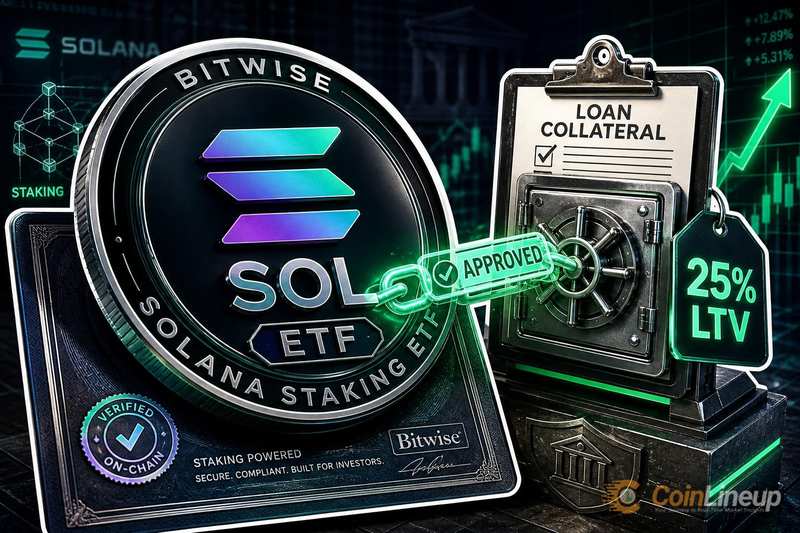
The Bitwise Solana Staking ETF (BSOL) has been approved as eligible loan collateral at a 25% loan-to-value (LTV) ratio, allowing shareholders to pledge their holdings and borrow against them for the first time.
According to Crypto Briefing, a bank has enabled borrowing against the fund by accepting it as collateral. The 25% LTV cap means a borrower can access up to one-quarter of the pledged shares' value. While this collateral eligibility expands the ETF's utility beyond passive holding, it does not constitute an endorsement of the fund's price performance.
Solana staking ETFs such as BSOL differ from plain spot ETFs by incorporating staking rewards into the fund structure, meaning holders gain exposure to both the asset's price and the yield generated through on-chain staking. The ability to pledge such a yield-bearing instrument as collateral marks a step in integrating crypto-linked exchange-traded products into conventional credit infrastructure, where eligibility has historically been limited to more established securities.
Understanding the 25% LTV Cap
Loan-to-value represents the ratio of the borrowed amount to the value of the pledged asset. At a 25% LTV, a holder pledging $10,000 worth of BSOL shares could borrow up to $2,500.
Such a conservative cap reflects a cautious lending posture. The lender maintains a wide buffer between the loan amount and the collateral value, reducing the likelihood that a decline in the ETF's price would push the position underwater. This is consistent with how traditional lenders typically apply significant haircuts to volatile or newly established asset classes when extending credit against them.
This approval is a collateral determination, not a statement regarding the fund's expected returns. Accepting an asset as loan security speaks to how much credit a lender is willing to extend against it — a calculation separate from any judgment on the asset's future market direction.
Implications for Solana ETF Utility
The Bitwise Solana Staking ETF began trading under the ticker BSOL and tracks a staking strategy tied to Solana. With collateral eligibility, holders can raise liquidity without selling their shares and forfeiting exposure to the underlying strategy.
The development aligns with a broader trend of staking-linked exchange-traded products gaining institutional traction. Comparable offerings include the BlackRock Ethereum staking ETF and Bitwise's own Hyperliquid staking ETF. Bitwise has also moved to incorporate staking into its NEAR ETF filing, reinforcing the firm's focus on yield-bearing fund structures.
The acceptance of BSOL as loan collateral can be interpreted as a risk-management signal: a lender has evaluated the fund and deemed it suitable to secure credit, albeit under a conservative 25% ceiling. However, this signal should not be extrapolated into a broader market conclusion without further sourced evidence, particularly given the limited public detail surrounding the arrangement.
For related coverage, see Bitwise Says Crypto Logged Its Longest Losing Streak Since 2022 and Bitwise Says HYPE Joined the Bitwise 10 Crypto Index ETF.

