Bitwise Chainlink ETF Draws Inflows While Falling LINK Price Shrinks Net Assets
Key Takeaways
- •The Bitwise Chainlink ETF drew about $10 million in inflows over two days, but its total net assets dropped from249.41 million to $229.38 million because the LINK token's price fell over the same period.
- •Cumulative net inflows into the ETF have reached approximately $179.61 million, and Arkham's on-chain records show Bitwise received a $1.17 million LINK transfer from market maker Wintermute, one of several recent deposits tied to the product.
- •Chainlink secures roughly 60.28% of all tracked oracle value in decentralized finance, equivalent to about $36.6 billion across more than 530 protocols, far ahead of internal oracles at 13.10% and Chronicle at 8.19%.
- •Chainlink's recently launched CCIP v2.0 gives institutions greater control over cross-chain asset transfers and compliance rules linked to tokenized assets, and wider adoption could generate recurring fees for the network.
- •The article cautions that market share and adoption do not automatically translate into higher LINK demand, and without stronger demand the token's price may face pressure from lower trading volume.
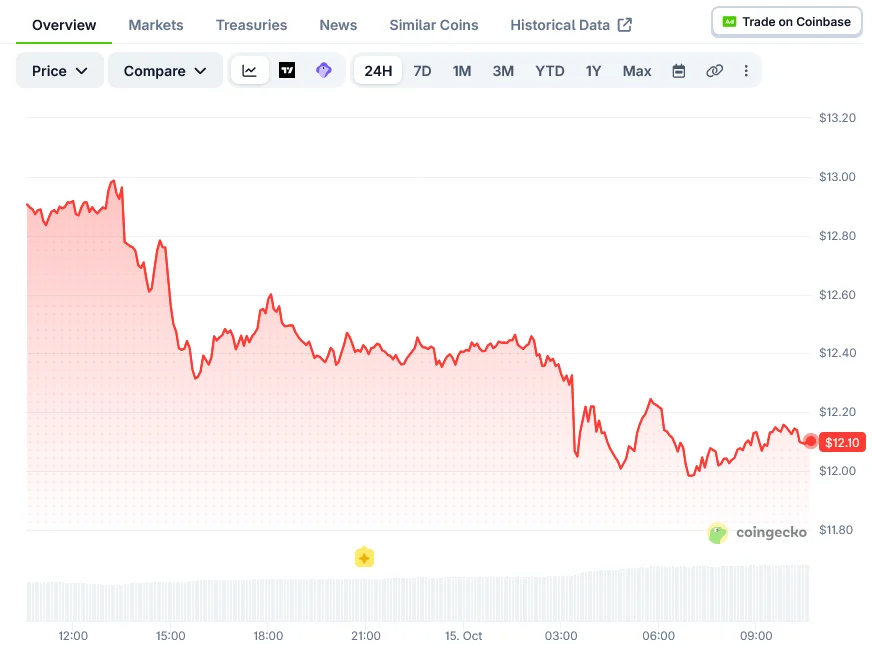
The Bitwise Chainlink ETF, a product from crypto asset manager Bitwise, added roughly $10 million in new capital over two days, according to data from SoSoValue, a platform that tracks crypto fund flows. Even so, the value of the fund's holdings declined over the same period. The gap comes down to the price of Chainlink's LINK token: with LINK lower, the fund's assets lost dollar value even as fresh money arrived.
The fund's holdings are tied to the token, so its net asset value moves with LINK's market price. Inflows and price action can therefore pull in opposite directions, as they did across this two-day stretch. For token-backed funds, the two figures answer different questions: inflows measure new capital committed, while net assets measure what existing holdings are worth at the current token price. The structure also shapes access — an ETF gives investors exposure to LINK through a fund vehicle rather than direct token custody, which is why both numbers are tracked as the product matures.
On-chain records from blockchain tracker Arkham show Bitwise received a $1.17 million LINK transfer from market maker Wintermute. The transfer is one of several recent deposits tied to the ETF. Market makers like Wintermute are firms that provide liquidity across trading venues, and on-chain trackers such as Arkham make these transfers publicly visible. That pattern of repeated deposits points to steady investment in the product and signals ongoing institutional interest in Chainlink.
Cumulative net inflows into the Chainlink ETF stood at approximately $179.61 million. Total net assets, however, fell from $249.41 million to $229.38 million — investors added exposure while the dollar value of the fund shrank. Without stronger demand, LINK's price may face pressure from lower trading volume.
Chainlink Controls Most of the Oracle Market
Chainlink is the largest oracle provider in decentralized finance (DeFi). Oracles are services that bring outside data, such as asset prices, onto blockchains, where smart contracts rely on them for accurate inputs. Lending markets, derivatives platforms, and tokenized assets all depend on this external data, which is why oracle reliability carries weight across the DeFi ecosystem rather than within any single protocol.
Data from DeFiLlama, an analytics platform for decentralized finance, shows Chainlink secures about 60.28% of all tracked oracle value, equivalent to roughly $36.6 billion across more than 530 protocols. Internal oracles account for 13.10% of tracked value, and Chronicle holds 8.19%, leaving competitors trailing by a wide margin. That dominance gives Chainlink a strong as DeFi activity grows.
Market share, though, does not automatically raise demand for LINK, Chainlink's native token. The token's value depends on whether that usage turns into demand for the asset itself.
CCIP v2.0 Targets Institutions
Chainlink is moving beyond DeFi price feeds into financial infrastructure for institutions. Its Cross-Chain Interoperability Protocol, known as CCIP, supports transfers between blockchain networks. Chainlink's oracle services also supply data for tokenized equities and treasuries — traditional assets represented on a blockchain, an area that has expanded as financial institutions experiment with on-chain settlement.
The recent launch of CCIP v2.0 gives institutions more control, covering cross-chain asset transfers and compliance rules linked to tokenized assets. Wider use of CCIP could create recurring fees as institutions move past pilot projects, and more usage would mean more ongoing revenue for the network.
Adoption alone does not guarantee higher token demand, however. Growth in CCIP usage, service revenue, and LINK-based payments would offer clearer signs of benefit to holders.
For now, the Bitwise Chainlink ETF holds $229.38 million in total net assets, down from $249.41 million, even after the latest $10 million in inflows. The same public records behind these figures — SoSoValue's flow data, Arkham's on-chain history, and DeFiLlama's oracle metrics — remain the reference points for tracking whether deposits, net assets, and network usage move together or apart from here.
This article first appeared on Blockonomi.

