BitMEX to Shut Down as Customers File $40 Million Fraud Lawsuit
Key Takeaways
- •BitMEX will stop operations on 23 September and has already halted new account registrations.
- •BKX Services and David Namdar allege BitMEX’s liquidation system improperly retained customer collateral and diverted surplus bitcoin into its insurance fund.
- •The lawsuit names HDR Global Trading and co-founders Arthur Hayes, Ben Delo, and Samuel Reed, and seeks to cover U.S. customers who traded bitcoin swaps since 23 July 2018.
- •The plaintiffs’ combined claims total 622.66 bitcoin, estimated at about $40.7 million at current prices.
- •BMEX, the exchange’s native token, dropped roughly 90% within hours of the shutdown announcement as trading volume rose more than 300%.
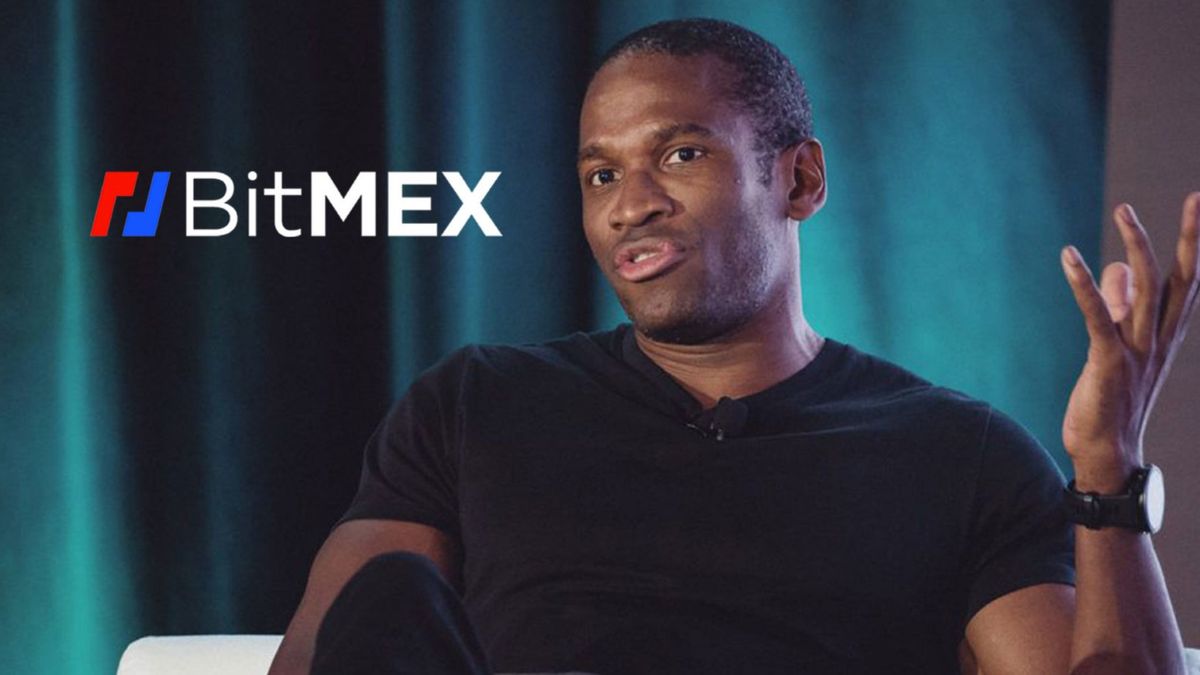
On the morning of 23 July, BitMEX informed its customers that it would cease operations after eleven years as a pioneer in perpetual futures and cryptocurrency exchange services. By that same evening, two customers had filed a lawsuit against the exchange in a Manhattan federal court, accusing it of deliberately engineering a system to profit from client liquidations.
The complaint was filed in the Southern District of New York by BKX Services, a now-defunct tokenisation project, and David Namdar, an independent trader. The plaintiffs allege that BitMEX designed a system intended to retain customers' collateral and divert surplus bitcoin into its own insurance fund. They further claim that an internal trading desk had access to private customer data and continued trading during server freezes that locked ordinary users out of their positions. The insurance fund mechanism that BitMEX pioneered has since become standard across nearly every major crypto derivatives exchange, making the legal challenge to its design one that competitors and regulators are likely to monitor.
According to the plaintiffs, "BitMEX deliberately developed a system that profited from the liquidations."
BitMEX allowed traders to borrow up to 100 times their collateral. The plaintiffs state that their positions were liquidated while their collateral was still worth roughly double what they had actually lost, with BitMEX retaining the remainder. BKX Services claims it is owed at least 305.81 BTC, while Namdar reports losses exceeding 316.85 BTC. Combined, the claims total 622.66 bitcoin, approximately $40.7 million at current prices.
The complaint extends beyond the exchange itself. It names parent entity HDR Global Trading and all three co-founders individually: Arthur Hayes, Ben Delo, and Samuel Reed. The proposed class encompasses every US customer who traded BitMEX's bitcoin swaps since 23 July 2018 — a period covering nearly the exchange's entire operational history.
A judge has yet to rule on whether the case may proceed as a class action, and BitMEX has not released a public statement on the matter.
A Recurring Pattern of Legal Challenges
This is not the first time BitMEX has faced accusations of this nature. In 2020, trader Brett Messieh and a group of co-plaintiffs filed a substantially similar class action alleging liquidation abuse under the Commodity Exchange Act. That case ran for five years and concluded quietly in June 2025 without a judge ever ruling on the core liquidation claims. It remains unclear from public records whether the Messieh case ended in a settlement or was dismissed on procedural grounds.
The current complaint marks the second time in six years that BitMEX's liquidation system has been accused of being structurally rigged, and the first case never reached a verdict.
In a separate and distinct matter, October 2020 saw federal prosecutors charge Hayes, Delo, Reed, and early employee Gregory Dwyer under the Bank Secrecy Act. Prosecutors accused BitMEX of operating as a de facto money-laundering platform that allowed trading with virtually no identity verification. All four individuals eventually pleaded guilty. Hayes received six months of home confinement and two years of probation. Delo was sentenced to 30 months, and Reed to 18 months. Each founder paid a $10 million personal fine, in addition to a separate $100 million that the exchange paid to the CFTC and FinCEN in 2021, and a further $100 million ordered by a federal judge in January 2025 for related violations.
In March 2025, President Trump pardoned all four individuals. Delo described the pardon as vindication, stating that the group had been "wrongfully targeted" under what he characterized as an obscure and antiquated law. That pardon came approximately sixteen months before the same founders were named personally in the new fraud complaint, which alleges not a failure to screen traders but a deliberate scheme to manipulate trade outcomes.
Shutdown Timeline and Operational Details
BitMEX confirmed on 23 July that it will cease all operations on 23 September and has stopped accepting new account registrations with immediate effect. In its announcement, the company stated it was closing "with a very heavy heart" following what it described as a strategic review by HDR Global Trading, and instructed users to begin closing positions and withdrawing funds without delay.
Starting 26 August, the exchange will no longer allow new positions to be opened, permitting only reduce-only orders. Any positions remaining open after the September deadline will be force-closed. BitMEX has cautioned that Bitcoin network congestion could slow withdrawals as its entire user base attempts to exit simultaneously, though it maintains that its proof of reserves demonstrates customer assets are fully covered. The wind-down bears watching as a test of whether an exchange can execute an orderly shutdown while a live fraud action is pending in federal court.
The shutdown did not come without warning. Three weeks before the announcement, BitMEX had already lost its CEO, CFO, and head of growth in a single departure, leaving general counsel Peter Wilkinson to assume the role of CEO. The exchange had been steadily losing ground for years as liquidity providers, market makers, and large traders migrated to faster competitors and decentralised platforms offering deeper order books and fewer regulatory complications. BitMEX had attempted multiple reinventions — launching spot trading, a mobile app, and the BMEX token — but none arrested the decline.
At its 2019 peak, BitMEX processed over $1 trillion in annual trading volume and held approximately 57% of the global cryptocurrency derivatives market.
Market Reaction and Industry Response
BMEX, BitMEX's native token, fell approximately 90% within hours of the shutdown announcement as holders rushed to exit, with trading volume surging more than 300% in the process.
Changpeng Zhao, co-founder of Binance, posted a reflective thread on X, recalling how BitMEX pioneered 100x perpetual contracts in 2014 — an era when deposits were bitcoin-only, withdrawals cleared through a multisig wallet once daily, and Friday delivery futures produced intense trading activity.
Regardless of how BitMEX is ultimately remembered, the observations highlighted in CZ's post serve as a reminder that much of today's derivatives exchange infrastructure was originally built by BitMEX. The perpetual swap it invented now accounts for the vast majority of crypto derivatives volume worldwide, traded on platforms that long ago eclipsed their predecessor in scale and liquidity.

